Original article: Chile vende 30 carros Marder a Alemania en reserva total: blindados podrían terminar reforzando al Ejército ucraniano
Chile Sells 30 Marder Armored Vehicles to Germany Amid Speculation About Support for Ukraine
In a highly confidential operation, President Gabriel Boric’s administration has approved Germany’s request to purchase 30 Marder infantry fighting vehicles. The implications of this deal go beyond mere commerce, delving into the intricate geopolitical landscape surrounding the war in Ukraine.
Although multiple sources have confirmed the transaction, neither the Army nor the Ministry of Defense has provided any information regarding it.
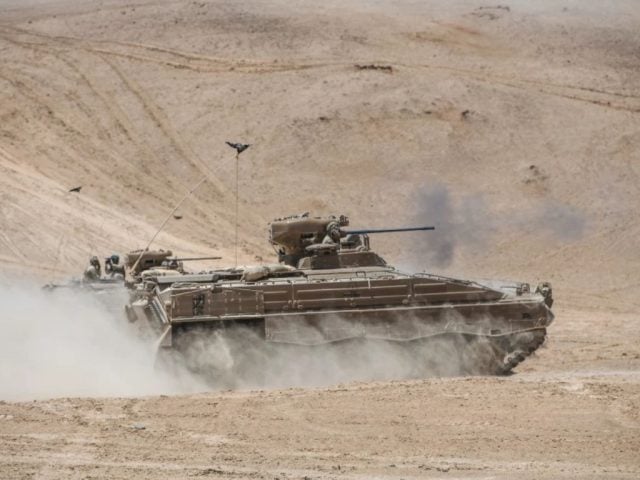
The Marders, produced by Rheinmetall—a major player in Germany’s defense industry—are infantry combat vehicles that operate alongside Leopard tanks in the field.
Specifically, the model in question is the 1A3, currently in service with the Chilean Army, capable of transporting up to eight personnel: a driver, a gunner, a vehicle commander, and five infantry soldiers.
According to sources consulted by El Mostrador, it is likely that the Chilean Marders will join the ranks of the Ukrainian Army or, alternatively, will replace existing armored units—both Marders and other types—that have already been supplied to Ukraine by the German military.
The Chilean Marders
The history of these armored vehicles in Chile dates back to 2009, when, alongside the sale of 60 Leopard tanks, Germany sold 146 used Marder vehicles to Chile at a remarkably low price: 50,000 euros each, despite their standard cost at the time being around 400,000 dollars. As reported by the German weekly Der Spiegel, Chile spent a total of 7.3 million dollars for these vehicles, which were valued at over 60 million dollars.
As a result, the Army had to invest significantly in upgrading and refurbishing the units, which was carried out by the manufacturer itself.
Subsequently, the military acquired additional Marder vehicles, bringing their total to 270 units, as reported by the Infodefensa portal, cited by El Mostrador. These vehicles are operated in armored infantry battalions located in Arica, Pozo Almonte, and Antofagasta. In fact, earlier this year, Defense Minister Adriana Delpiano inspected the latest upgrades made to the Marders at the Armored Brigade in Arica.
Sale or Trade?
This request coincides with recent developments in the region: Bolivia’s acquisition of Iranian Shahed drones (which Russia is using in its operations in Ukraine) and Argentina’s ongoing modernization of its air defense systems, including the purchase of 24 second-hand F-16 Fighting Falcon aircraft from Denmark, with the first six units expected to arrive on December 5th.
During the same event revealing the F-16s, Javier Milei’s government will showcase the first eight units of the Stryker 8×8 M1126 wheeled armored vehicles purchased from the United States, part of a larger total of 209. Additionally, Peru announced in September the purchase of 12 F-16 Block 70 aircraft in a deal exceeding 3.4 billion dollars.
Furthermore, attention is drawn to Bolivia’s acquisition of Iranian Shahed drones (the same ones that Russia uses to attack Ukraine) and Argentina’s efforts to revamp its aerial warfare capabilities with its first purchase of second-hand F-16s from Denmark.
Criticism: «It Seems to Be Robbing Peter to Pay Paul»
The decision to part with some of the Marders has not been without criticism. Experts are expressing concerns about the operation, assessing that it weakens land defenses along the northern border.
A military analyst consulted by El Mostrador, speaking on the condition of anonymity, stated that «the only way a deal of this nature would be favorable for Chile is if it increases its military capabilities, but that does not appear to be the case here. It seems to be robbing Peter to pay Paul.»
The expert added that it is essential to consider that «in terms of armored capabilities, the tank is the primary weapon, but it forms a unit alongside the infantry (which should be in armored vehicles) and the armored artillery, especially when Peru already has a significant military presence in its southern region.»
Silence from the Army and the Ministry of Defense
When approached about the operation, the Chilean Army distanced itself from the issue, stating that matters concerning purchases, sales, and contracts fall under the purview of the Ministry of Defense. Therefore, it is not the Army’s place to comment on the matter.
The response from the Ministry of Defense was similarly evasive. Adriana Delpiano’s office indicated that the only information they could provide was that «matters related to strategic capabilities are confidential,» without specifying the total number of vehicles involved, the timelines, costs, or whether it is indeed a sale or a trade in exchange for anti-air technology.
As long as the operation remains shrouded in secrecy, doubts will persist regarding the fate of the Chilean Marder infantry combat vehicles.
Obtén tu Pasaporte y apoya a El Ciudadano
Elimina la publicidad, accede a contenido exclusivo y sé parte de la comunidad.
Cancela en cualquier momento · Sin permanencia