Original article: El triste ocaso del Partido Radical: El legado mancillado por grupo minoritario de militantes que hoy abraza a la ultraderecha mientras colectividad desaparece
The Decline of the Radical Party: As the Collective Fades Away, Former Leader Embraces the Far Right
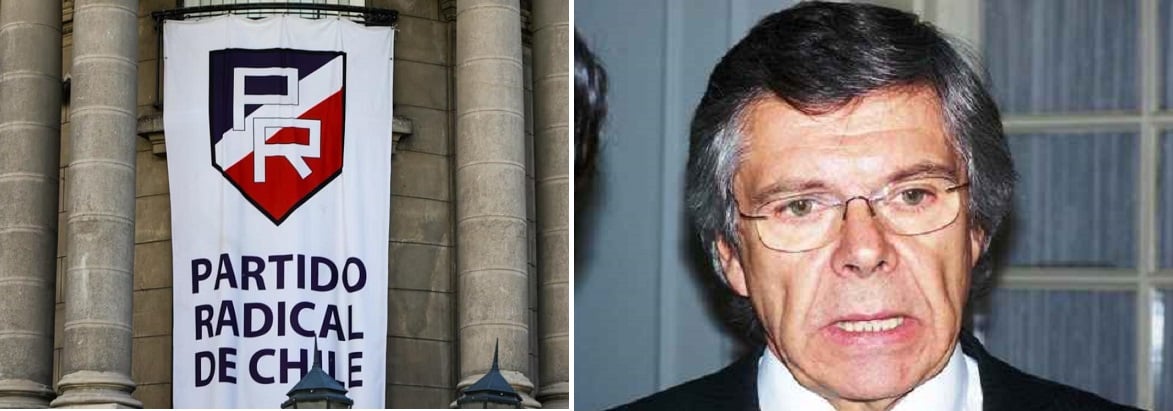
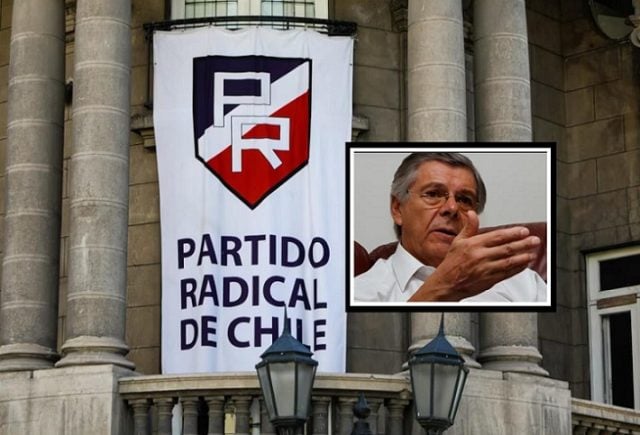
After 162 years of history, the Radical Party (PR), one of Chile’s oldest and most influential political organizations, has officially begun its dissolution process. This decision, made by the National Board and the National Executive Council, follows the failure to secure the required four parliamentary seats in the recent elections, prompting the cancellation of its legal personality.
In a statement addressed to its members, the leadership acknowledged a «complex scenario» with a sense of responsibility and realism, asserting that despite these challenges, «from today, we will look at ourselves as a collective again, listening to each other and uniting,” concluding with a promise of resilience: “We will rise again.«
This administrative decline stands in stark contrast to the lasting legacy of the party, the birthplace of figures like Pedro Aguirre Cerda, whose government (1938-1941) is remembered as one of the most progressive and visionary of the twentieth century. Under the motto «To Rule is to Educate,» his administration championed an unprecedented expansion of primary education, building over 500 schools and increasing total enrollment from 663,777 to 722,170 students, according to data from Rafael Echeverría. Additionally, he founded the Production Development Corporation (CORFO), launching an ambitious industrialization plan.
Aguirre Cerda’s impact extends beyond the economic and educational realms. Culturally, he actively promoted Gabriela Mistral’s candidacy for the Nobel Prize and established the National Literature Award. In a profound display of solidarity and anti-fascism, he coordinated the journey of the Winnipeg cargo ship to bring Spanish Civil War refugees and welcomed Jews fleeing Nazism. Furthermore, in 1940, he reaffirmed Chile’s sovereignty over Antarctic territory, solidifying a principled foreign policy.
However, the party that once embodied the struggles for social justice and democracy has faced a series of strategic blunders and ideological distortions in recent years. A pivotal turning point was the inclusion in their lists for the 2021 elections of figures like Andrés Jouannet in La Araucanía, who, elected as an independent with Radical backing, later shifted to help found the Amarillos por Chile party and became a spokesperson for the right-wing candidacy of Evelyn Matthei.
This ideological drift intensified with the influence of former senator Ricardo Navarrete, a longtime militant and former party official who held prominent positions such as Undersecretary of Investigations and Ambassador to Colombia. Navarrete had previously been at the center of controversy in 2009 when the then-deputy Sergio Aguiló, along with other human rights defenders from the ex-Concertación, accused him of deliberately distorting «the truth» before the Chamber’s Human Rights Committee regarding a child prostitution network, stating: «I want to be clear, the undersecretary lied to us,» calling for his resignation.
The culmination of this ideological distortion was marked when Navarrete publicly opted to be «In Favor» of the right-wing constitutional proposal of the Republican Party during the second constitutional process, an initiative that was widely «Against,» a stance adopted by all the ex-Concertación parties.
Today, alongside a small faction of militants, he signed an «Open Letter of Support for José Antonio Kast,» publicly urging voters to back the far-right candidate in the runoff, using the Radical Party’s name. This action signifies an appropriation of the historical party’s name and symbol to align with positions diametrically opposed to its foundational tradition, which was widely circulated by far-right channels.
The contrast could not be more dramatic: the collective that under Aguirre Cerda’s leadership opened doors to refugees fleeing European fascism now sees a residual faction of its name aligning with a candidacy that represents ideologies similar to those the party originally fought against.
Faced with this scenario, the official dissolution closes a 162-year chapter but leaves a deep wound in the Chilean political spectrum. The promise to «rise again» clashes with the harsh reality of a tarnished legacy at its end. History will remember the Radical Party for its fundamental contributions to democracy and social justice but also for its recent contradictions.
“Minority Group”
The Radical Party issued a public statement reaffirming its historical commitment to coherence, discipline, and the social democratic principles that define it. “We reject the support from some militants for José Antonio Kast, an act that undermines collective agreements and weakens the unity of radicalism,” they stated.
They added: “Now more than ever, we defend our identity, our values, and the respect for the democratic decisions of the collective. We continue to work for a serious, firm radicalism that serves Chile.”
See post and statement:
Obtén tu Pasaporte y apoya a El Ciudadano
Elimina la publicidad, accede a contenido exclusivo y sé parte de la comunidad.
Cancela en cualquier momento · Sin permanencia