Original article: Turismo y BRICS: ¿por qué los países del grupo se están convirtiendo en destinos populares para viajes y vacaciones?
This article was prepared by Svetlana Jristoforova
By 2025, international tourists are expected to generate record revenues for Brazil; Indonesia reported a 10% increase in tourist influx compared to the previous year; China is experiencing a surge in Russian tourism following the lifting of visa requirements; and Russia is boosting its business travel segment. What factors are making BRICS countries increasingly attractive as destinations, and how will this impact their economy, environment, and social development?
Brazil
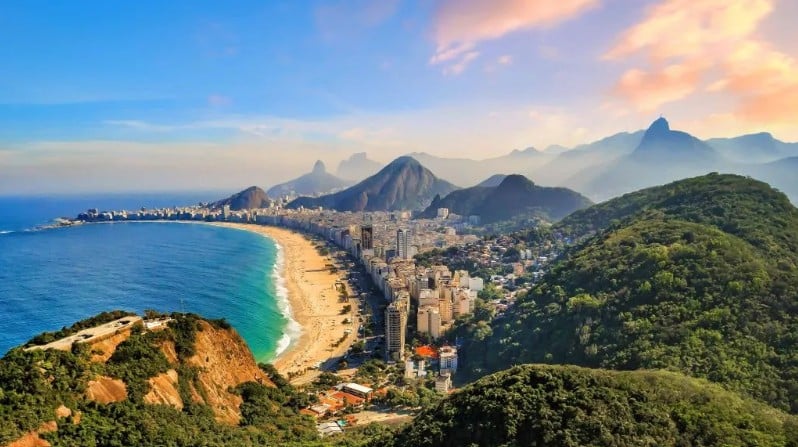
With its national parks in the Amazon basin, the stunning canyons and mountains of Santa Catarina, the world’s largest Iguazu Falls, and the vibrant beaches and famous carnival in Rio de Janeiro, Brazil is quickly becoming one of the most sought-after tourist destinations.
From January to September 2025, foreign travelers generated record revenues for the country, amounting to 32.5 billion reais (approximately $6.03 billion). This marks the highest volume recorded in history, reflecting an 11.7% increase compared to the same period in 2024, according to Brazil’s Ministry of Tourism.
Tourists spent money on domestic travel, accommodation, food, leisure, and shopping, with statistics indicating that the majority of visitors were from overseas. This is further confirmed by another landmark statistic: international arrivals hit 7,099,237 in the first nine months of the year, a 45% increase over the same prior period.
In an exclusive interview with TV BRICS, Professor Mark Howard Levin from Minzu University of China highlighted the growing interest among Chinese tourists in Brazil.
“We are witnessing significant efforts to develop tourism and infrastructure in Brazil. If we look at the number of Chinese tourists, their numbers grew by 80% in just one year (from 2023 to 2024),” noted Levin.
Indonesia
Indonesia is also reporting record tourism numbers. In the first nine months of 2025, the country welcomed 11.43 million tourists, an increase of 10.22% from the same period the previous year. In September alone, Indonesia was visited by 1.39 million foreigners. This destination is quickly gaining popularity among Russian travelers; between January and June 2025, the country welcomed 117,121 Russian tourists, a 35.4% increase from the same period last year.
China
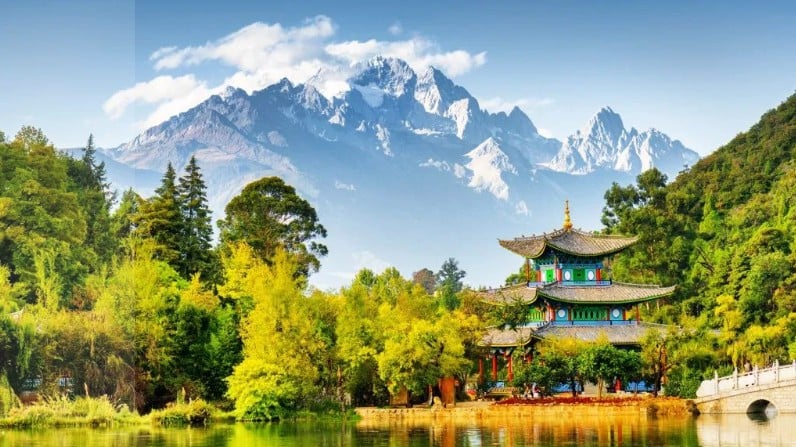
China has become one of the most sought-after destinations for Russian tourists by autumn 2025. Following the introduction of an experimental visa waiver regime for Russian citizens, the country’s popularity is rivaling that of Thailand. Demand for travel to China from Russians surged between 50% and 100%. Travelers are not only seeking cultural routes in cities like Beijing and Shanghai but also culinary tours, ecotourism, visits to major international exhibitions, and business events.
“Expanding the visa exemption regime for longer periods acts as an invitation to tourists. China offers great diversity: from cultural programs, especially in regions with ethnic minorities, to winter tourism, ‘red tourism’, and more. The development of China’s tourism sector is propelled by the increase in new modern airports and the expansion of the high-speed train network,” said Mark Howard Levin.
Russia
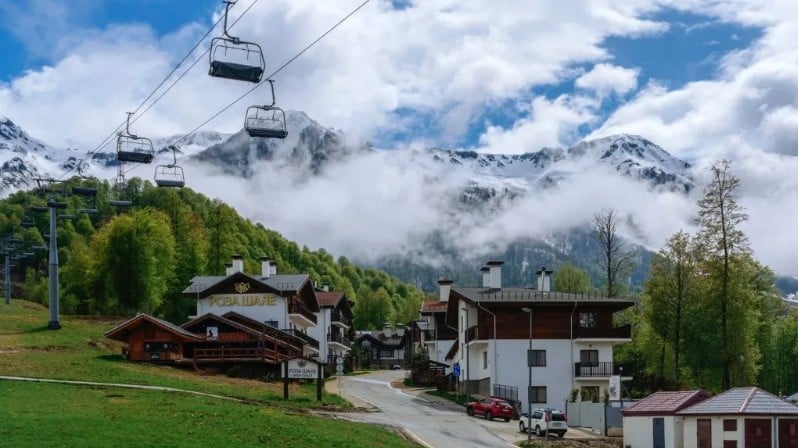
Business tourism is becoming the main driver of the hospitality sector in Russia. The majority of foreign visitors arrive to participate in forums and conferences, many linked to BRICS activities.
The geography of these events is continuously expanding, including cities like Murmansk, Sakhalin, St. Petersburg, and Moscow. Organizers often complement programs with cultural and culinary tours as regional authorities aim for participants to return privately with friends and family.
“Notably, according to my estimates, business tourism represents over half of the tourist flow. This is a result of developing cooperation within BRICS, which covers various areas beyond tourism,” commented Lubarto Sartoyo, an expert in foreign trade, law, IT, and creative industries, in an exclusive interview with TV BRICS.
Russian hoteliers are also noting changes in guest profiles over the past two years. Currently, the majority of tourists come from the United Arab Emirates, China, Saudi Arabia, Iran, and India, reflecting a stable trend driven by changes in visa policies and the increase in electronic visas.
India
Like many BRICS countries, India is witnessing growth in its tourist flow. In 2024, the country welcomed a record 9.9 million international tourists, thanks to active efforts in developing the tourism sector. The government is focusing on participation in major international tourism fairs, establishing links with tour operators, launching advertising campaigns, and improving air connectivity through direct flights.
“In the case of India, international tourism has doubled in the last ten years, from 2014 to 2024. This is explained by the abundance of well-known historical sites and the expansion of the electronic visa policy, granted to citizens of nearly 170 countries within 72 hours,” explained Mark Howard Levin.
Ethiopia
Over the last five years, according to the UN World Tourism Organization report, the flow of foreign tourists to Ethiopia has grown by 40%. This growth is attributed to the government prioritizing tourism for economic development. As a result, roads have been improved, international flights have increased, and Addis Ababa has become a transit hub. Additionally, Ethiopia is regarded as having the best cuisine in Africa and the tastiest coffee, which originates from the region.
South Africa
By the end of 2024, the number of foreign tourists visiting South Africa increased by 5.1% compared to the previous year, totaling 8.92 million people, as reported by the Ministry of Tourism according to Xinhua News Agency, a partner of TV BRICS.
South Africa offers tourists a variety of leisure activities, such as safaris or shark diving. The country also features numerous beach vacations and wine tourism.
Other BRICS Countries
Overall, according to experts, international tourism continues to grow globally, surpassing pre-pandemic levels. In the first half of 2025 alone, nearly 690 million people traveled internationally, a 5% increase or 33 million travelers from the previous year, reported the UN World Tourism Organization.
It is no surprise that many BRICS countries are betting on tourism. For example, Iran allocated over $200 million to develop the sector in 2024. “A significant portion of these resources has been directed towards expanding accommodation capacity for tourists, including an increase in the number of five-star hotels,” noted Mark Howard Levin in an interview with TV BRICS.
Egypt aims to position itself as a global leader in tourism by 2030, aspiring to welcome up to 30 million tourists annually. In the first half of 2025, the country has already opened 5,000 new hotel rooms and plans to open an additional 18,000 by year-end.
The United Arab Emirates is in competition with Egypt: Dubai announced plans to ramp up its incoming tourist flow to 40 million by 2030. If successful, the tourism sector’s contribution to the economy could reach approximately 400 billion dirhams (around $108.92 billion).

Benefits of Sustainable Tourism
Tourism brings significant benefits to BRICS countries, not only from an economic perspective but also as a driver for technological growth and environmental improvements.
“Sustainable tourism can contribute to environmental protection and more efficient resource use. Some hotels are utilizing solar or wind energy and encourage public transport usage,” emphasized Mark Howard Levin.
UN representatives state that the goal of global tourism development is to engage travelers in conscious consumption.
“More and more people are reflecting on their carbon footprint. Some environmentally conscious tourists are impacted by flight durations or large resorts with high resource consumption, causing a certain feeling of guilt. This, of course, drives the development of green tourism,” explained Lubarto Sartoyo, Director of the Southeast Asia Business Structures and Entrepreneurs Alliance.
The UN has already launched a global initiative to reduce plastic waste in tourism: over 260 companies and destinations have managed to eliminate single-use plastics. Furthermore, under the Glasgow Declaration on climate action in tourism, more than 900 organizations have committed to reducing emissions by 2030 and achieving carbon neutrality by 2050.
Sustainable tourism also promotes the development of smart cities, where digital technologies, artificial intelligence, and big data work together. A key component is low carbon footprint transportation.
“Previously, there was no express service from the airport to the center in Moscow; now it is fast and convenient, and upon arrival, you can use an eco-friendly electric bus or an electric scooter. These technologies reduce tourists’ stress from navigating an unfamiliar city,” explained Sartoyo.
China leads among BRICS in electric mobility: with 22 million electric vehicles, over 600,000 electric buses, and 3.9 million charging stations (1.2 million fast chargers). In India, Russia, and Brazil, the number of stations and electric vehicles is much lower. India boasts 8,400 electric buses, South Africa has 2,200, and Russia records 1,882; in South Africa, there are 0.04 electric buses per inhabitant, a notable figure according to analysts.
Other BRICS nations are also advancing in electric transport. In April 2025, the United Arab Emirates tested a next-generation electric bus equipped with digital cameras, a projection screen on the windshield, and smart safety systems, connecting metro stations with key tourist sites.
Experts emphasize that electric transportation and shared biking are not everything tourists expect from modern cities. Many desire free Wi-Fi in streets, informational transport schedules, contactless payment for fares, and other necessary services for comfortable travel and a homely feel. Cities and regions that develop these technologies will automatically become more attractive to tourists.
Tourism and Culture
Tourism in BRICS countries not only strengthens the economy but also promotes cultural exchange and people-to-people diplomacy. “Despite the differences in distance, income levels, and cultural codes, visa liberalization, the creation of convenient digital services, and increased information dissemination would undoubtedly bring peoples closer,” stated Dmitri Polikanov, Deputy Director of Rossotrudnichestvo.
Experts highlight that tourism can be an effective form of citizen diplomacy, helping BRICS consolidate economic ties and generate a positive image among nations.
The tourism sector is poised for sustainable development within the group. At the BRICS Ministers of Tourism meeting in May 2025, the Cerrado Declaration on Sustainable Tourism was approved, outlining three areas of cooperation:
1. Regional tourism development: improving infrastructure, expanding the tourism offering, and training personnel.
2. Promoting sustainable and regenerative tourism: exchanging experiences, adopting green practices, and supporting local communities.
3. Attracting digital nomads: simplifying visas, improving internet connectivity, and creating conditions for remote work.

Challenges and Risks
The large joint tourism projects among BRICS countries appear to be a question of the near future. However, it is already evident that the tourism industry in these “group of ten” nations is one of the most promising.
“The tourism industry of BRICS is growing and will continue to do so. It is currently estimated at $5.4 trillion and has tremendous potential to nearly double to $8–10 trillion by 2035,” stated Liubarto Sartoyo.
The reasons for this growth are evident. The population of BRICS countries is increasing, with a high percentage of active young people with middle incomes. This group forms the base for both domestic and international tourism. Additionally, experts suggest that the ratio of educated populations in BRICS is rising, driving cultural and educational tourism growth.
Nevertheless, as BRICS countries strive for tourism development, they may confront several issues.
Infrastructure challenges persist, related to the need for developing roads, hotels, and airports, and not all countries possess adequate resources for this.
Moreover, as more countries enter the potentially lucrative tourism market, competition will intensify, and tourists will become more discerning.
This indicates that the tourism sector in BRICS, despite its profitable potential and outlook, will require a consolidated approach, the development of joint programs, staff training, and modernization of technologies and urban infrastructure. Consequently, substantial investments will be needed.
Obtén tu Pasaporte y apoya a El Ciudadano
Elimina la publicidad, accede a contenido exclusivo y sé parte de la comunidad.
Cancela en cualquier momento · Sin permanencia