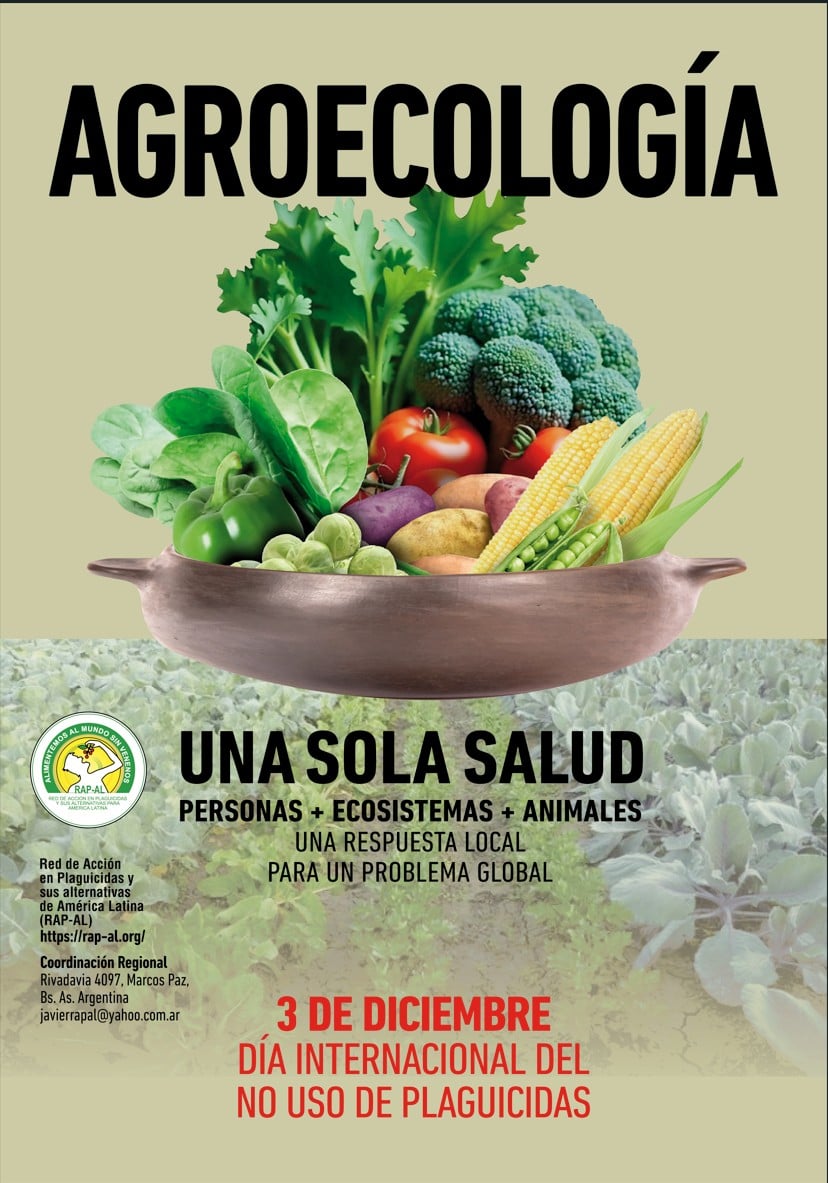
Original article: 3 de Diciembre, Día por el No Uso de Plaguicidas: Exigen inmediata prohibición de productos altamente peligrosos y su reemplazo por alternativas agroecológicas
By Javier Souza Casadinho and María Elena Rozas, Latin American Network for Action on Pesticides and their Alternatives (RAP-AL)
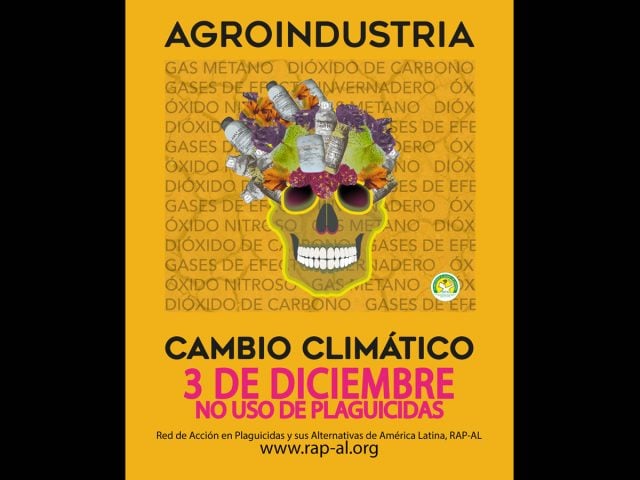
As we observe December 3, a day commemorating the tragic and widely forewarned catastrophe of Bhopal in India, where a fire erupted at the American company Union Carbide’s factory, resulting in the deaths of thousands and significant contamination of water, air, and food, RAP-AL demands an immediate ban on pesticides, starting with the Highly Hazardous ones. We advocate for their replacement not with new chemicals but with agroecological strategies, practices, and technologies.
Highly hazardous pesticides, due to their chemical, physical, and toxicological properties, have profound socio-environmental impacts, leading to adverse effects on human health, including immune, nervous, reproductive, and endocrine system anomalies, as well as increased cancer risks and other diseases.
These pesticides also harm avifauna and bees, essential for pollinating many of the plants we depend on for food. Moreover, they affect other living beings because of their capacity to accumulate in sediments.
The socio-environmental issues linked to highly hazardous pesticides extend beyond their use in agricultural activities and household settings (domestic pesticides), as manufacturing, storage, transport, and disposal phases can lead to fires, spills, and other accidents. This is evidenced by numerous incidents across Latin America.
While eliminating highly hazardous pesticides necessitates research, adaptation, and the adoption of agroecological practices, political will is also crucial to prohibit these pesticides.
This political will must recognize the impact of these toxins and develop technological, food, credit, and land policies that enable producers to transition towards sustainable, resilient, and viable agroecosystems, as demonstrated by RAP-AL’s work within the PAN International framework, presented at the UN Climate Change Conference COP30.
The recent formation of the Global Alliance on Hazardous Chemicals (GAHHP), comprising civil society actors, governments, and universities to address highly hazardous pesticides, provides encouragement and a conducive path for fruitful discussions.
However, we believe that this will be inadequate unless citizens can influence their governments to make sound decisions, starting with the recognition that the socio-environmental effects of pesticides, including their ramifications for climate change, are undeniable realities that require coordinated action from all governments and civil society.
Finally, in light of the disappointing outcomes from the recent Climate Change meeting in Brazil, which proved insufficient to curb greenhouse gas emissions, we call for immediate measures to transform agricultural production models based on deforestation, genetically modified and edited seeds, fertilizers, and pesticides, towards an agroecological paradigm. This approach promotes the well-being of all beings inhabiting our unique planet Earth, rooted in healthy soils and plants.
Javier Souza Casadinho and María Elena Rozas
Latin American Network for Action on Pesticides and their Alternatives (RAP-AL).-
Obtén tu Pasaporte y apoya a El Ciudadano
Elimina la publicidad, accede a contenido exclusivo y sé parte de la comunidad.
Cancela en cualquier momento · Sin permanencia
Artículos Relacionados
Proposed Legislation Aims to Regulate Hazardous Chemicals in Plastics for the First Time in Chile
Hace 6 días