Original article: Ajuste de combustibles en Bolivia pone contra las cuerdas a Rodrigo Paz: crecen protestas y llamados a que deje la Presidencia
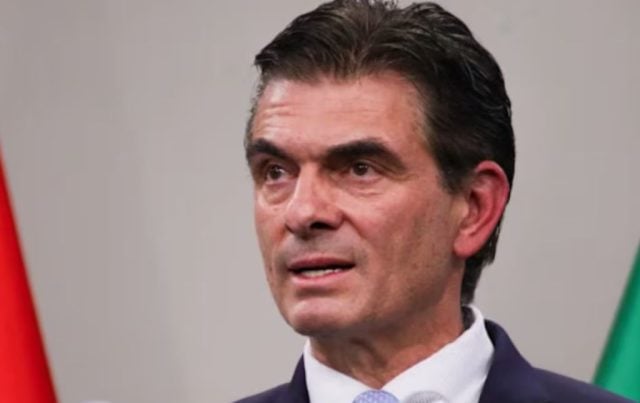
Bolivia’s President Rodrigo Paz Pereira, who has been in office for just over a month, finds himself on the brink of a profound political and social crisis following the issuance of Supreme Decree 5503, dubbed the «Decree for the Homeland,» which removes fuel subsidies and causes an immediate spike in fuel prices.
As a result, the price per liter of gasoline soared from 3.70 to 6.96 bolivianos, while diesel prices jumped from 3.72 to 9.80 bolivianos. These new rates will be in effect for six months and allow for the unrestricted importation of fuels.
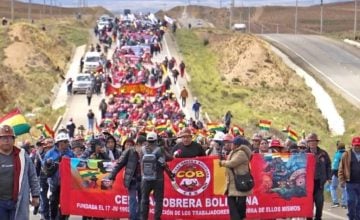
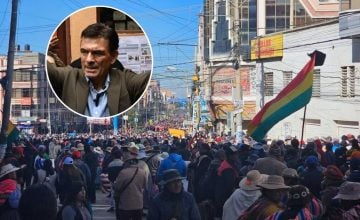
The announcement made late Wednesday triggered a swift and unanimous backlash, encompassing reactions from parliamentary opposition and leading social organizations across the country, including the Bolivian Workers’ Central (COB), unions, transport groups, neighborhood associations, and farmers. Many have called for a national state of emergency and issued a 24-hour ultimatum for the repeal of the decree, with some explicitly demanding the president’s resignation.
The discontent quickly manifested on the streets. Beginning Thursday morning, long and anxious lines formed at gas stations in major cities, while many shops, particularly food vendors, chose to close their doors to gauge market reactions. Public transportation quickly adjusted fare prices, leading to disputes and conflicts between riders and drivers, who implemented increases similar to those in fuel prices.
Vice President Turns Against Paz Over Decree That Will Result in Poverty and Unemployment
In an unusual move demonstrating the extent of the pushback, Vice President Edman Lara held a press conference alongside opposition party leaders to publicly denounce the measures included in the «Decree for the Homeland,» arguing that they would only lead to increased poverty, unemployment, and higher living costs, as reported by digital media outlet Visión 360.
Lara, flanked by representatives from Libre, Súmate, Alianza Popular, and the PDC, was emphatic, stating that «the position of all present factions (Libre, Súmate, Alianza Popular, as well as the PDC, both Deputies and Senators) categorically rejects the supreme decree abolishing the subsidy and all measures taken by President Rodrigo Paz.»
This fracture highlights President Paz’s political isolation in face of a decision that has succeeded in uniting a broad spectrum of Bolivian society against him.
Social Movements Mobilizing: Deadlines and Threats
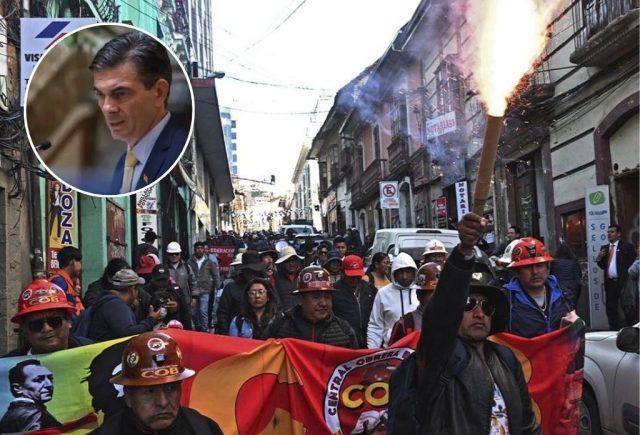
The response from social movements was rapid, coordinated, and forceful. The Bolivian Workers’ Central (COB), the country’s leading labor organization, condemned President Paz’s measure as «a cowardly act» and an «assault against the Bolivian people.» They issued a statement calling for a «national state of emergency assembly» this Friday, December 19, at 9:00 AM in La Paz, gathering all their affiliated confederations and federations.
“In light of the cowardly actions of the central government and the assault against the Bolivian people, the National Executive Committee of the COB instructs and summons national confederations, local unions, and regional union centers to the emergency national assembly in La Paz on Friday, December 19, 2025, at 9:00 AM,” the statement proclaimed, as reported by Visión 360.
Moreover, the transport sector, which is historically sensitive to fuel adjustments, has issued a direct ultimatum to the government. The Confederation of Drivers gave the government 24 hours: «We are giving the central government, President Rodrigo Paz Pereira, an ultimatum to repeal Decree 5503, otherwise, on Saturday at 10 AM in a national assembly, we will determine the actions to be taken.»
In El Alto, a stronghold of social protest, the rhetoric was even more severe. David Callisaya, a leader of the Federation of Neighborhood Councils (Fejuve), described the president’s measure as «a gasolinazo that impacts all the Bolivian people.»
Callisaya also stated that residents declared a state of emergency and warned of the government’s fragility in light of such decisions: «No national government that has assaulted the food security of the people can sustain itself.»
The farming sector was not left behind. The Confederation of Peasant Workers of Bolivia issued a statement giving the Paz administration «24 hours to repeal Decree 5503, as it is detrimental to the economy of farmers and underserved populations.»
“If the vile decree is not retracted, we demand the resignation of the President for all the negative actions taken to date, which have only harmed the majority of the population we represent,” they asserted.
Paz Under Pressure
President Rodrigo Paz, who rose to head of state a mere 40 days ago, now faces a critical test in his nascent administration. His ability to forge consensus and defuse the social time bomb he himself triggered with Decree 5503 is in question. Threats of marches, blockades, and national strikes, which could be organized and erupt as early as this weekend, jeopardize not only his administration’s economic policies but also his own continuation in office.
Obtén tu Pasaporte y apoya a El Ciudadano
Elimina la publicidad, accede a contenido exclusivo y sé parte de la comunidad.
Cancela en cualquier momento · Sin permanencia
Artículos Relacionados

Popular Uprising Forces Significant Resignations in Bolivia's Cabinet: Defense and Education Ministers Step Down
Hace 3 meses