Original article: Catástrofe por incendios forestales en Chile: Nuevamente el modelo de la industria forestal en la palestra
Wildfires 2026: The Industrial Monoculture Forestry Model Under Scrutiny Again
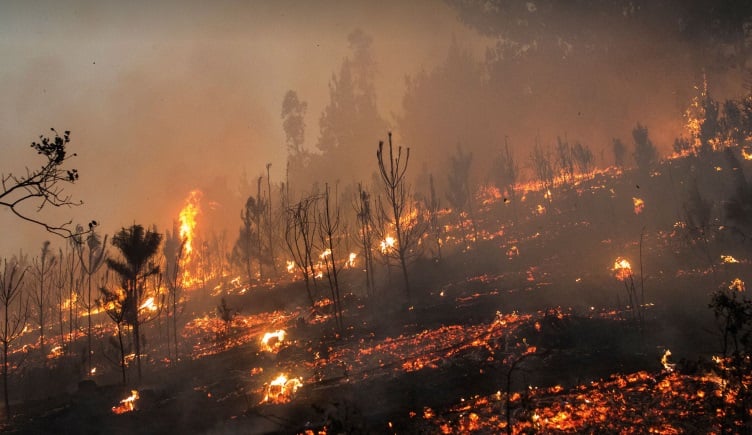
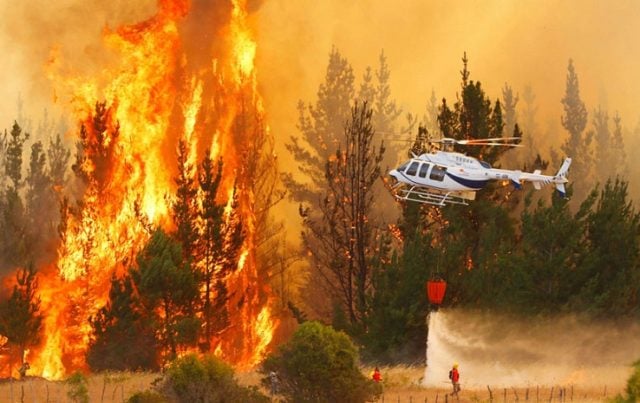
Chile is once again experiencing an ecological and social disaster of historic proportions. Since January 17, 2026, wildfires of yet undetermined origin have spread uncontrollably through communes in the Ñuble, Biobío, and La Araucanía regions, forcing entire populations to evacuate and resulting in loss of life.
Beyond the immediate emergency, voices from the affected territories point to a structural culprit: the forestry model based on extensive monocultures of exotic species.
Camila Arriagada, former Regional Councilor of Biobío, stated, “This urgently requires us to move beyond the highly deregulated forestry model, where plantations cannot be so close together, even within populated areas.”
“Entire communities have been evacuated since last night. There has been a very significant loss. Whole communities have burned down,” Arriagada emphasized, highlighting the gravity of the situation.
The Scientific Verdict: Multifaceted and Negative Impacts
A pivotal report from the Climate and Resilience Science Center (CR2), published in June 2024 by an interdisciplinary team of scientists*, featured in El Ciudadano, provides the hard evidence supporting these accusations. The analysis is compelling: pine and eucalyptus plantations, which cover about three million hectares in Chile, have had profound and negative impacts.
Researchers are clear: “Landscapes dominated by plantations of exotic species reduce water flows, and favor the ignition and spread of larger fires.” Additionally, the study reveals that the loss of native forest in Chile has been “caused 38% by the replacement of pines and eucalypts.”
Contrary to the forestry industry’s rhetoric that promotes these plantations as carbon sinks, the CR2 report presents data from the National Greenhouse Gas Inventory that demonstrates the opposite. “As these crops are harvested in short cycles, the captured carbon quickly returns to the atmosphere,” the scientists explain, concluding that these plantations behave as net carbon emitters.
Simultaneously, they worsen the water crisis. Their high water demand due to evapotranspiration negatively affects the flow of watersheds, exacerbating the scarcity faced by local communities. Furthermore, a severe erosion problem arises: clear-cutting and fires in these areas can lead to soil losses of up to “31 tons per hectare each year,” with forestry activities being the primary cause of this phenomenon.
The Perfect Fuel: Landscape Homogeneity and Pyrophytic Species
The direct connection between the forestry model and megafires is explained by two key factors. First, landscape homogeneity: vast continuous stretches of a single species create a “homogeneous and continuous vegetative cover” that acts as a carpet of fuel, compounded by the pyrophytic characteristics of these species.
The CR2 report notes that since 2010, “over 80% of megafires in Chile have occurred in regions dominated by pine and eucalyptus plantations.”
Second, there are the biological characteristics of the species. As Dr. Olga Barbosa, president of the Ecological Society of Chile, explained in 2017, “pines and eucalypts come from areas where fire is a natural disturbance… they have evolved throughout their history with fire.”
Researchers from the Austral University and the CR2 add that eucalypts, with their flammable oils and shedding bark (fuzz), not only survive fire but can promote its spread up to 500 meters, eliminating competitors.
The Industry Offensive: Pressure to Maintain and Expand an Unsustainable Model
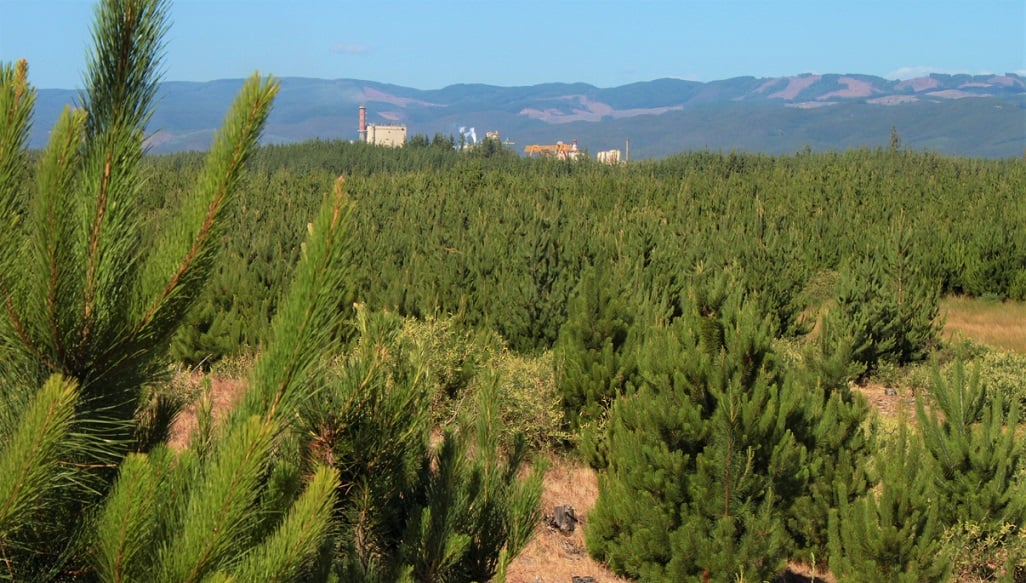
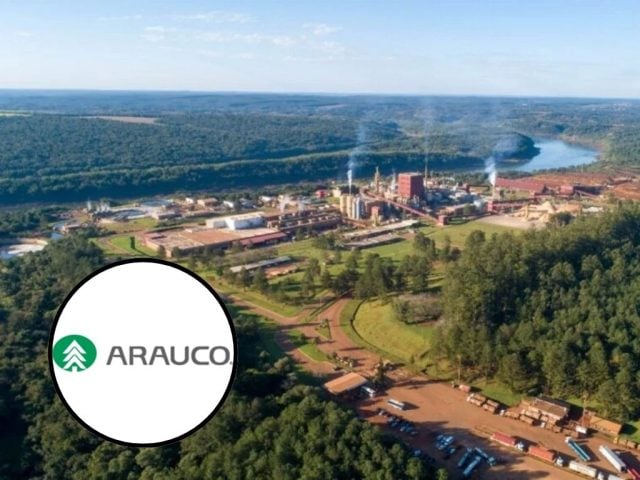
In light of this evidence, the response from the forestry industry, predominantly controlled by CMPC and Arauco groups, has not been to convert their practices but rather to launch an offensive to expand and perpetuate the model.
According to reports from November 2024, highlighted by El Ciudadano, the sector, through the Chilean Corporation of Wood (Corma), has proposed “new pressure strategies on the public apparatus” to maintain the model, framing it within a narrative of “sustainability” and carbon capture that science debunks.
While the president of Corma, Juan José Ugarte, promotes reforestation (without distinguishing between native forest and plantations) as a climate solution, scientists from the CR2 warn that these short-cycle plantations actually release carbon quickly.
Regionally in Biobío, “forest reactivation plans” aimed at creating jobs and promoting investment in rural areas have been implemented, as noted by Corma’s president in Biobío and Ñuble, Alejandro Casagrande.
These initiatives encourage public and private investment to invigorate the sector and recover hectares lost to fires. However, experts suggest these strategies do not address the underlying issues: landscape homogeneity, megafires, and water crisis, further impoverishing local territories.
Governance Failures: Excluded Communities and Fragmented Narratives
The management of fire risk suffers from severe fragmentation. A governance analysis by the CR2 from January 2023 showed that, while there is coordination among public fire-fighting organizations and knowledge centers, the connection with local communities and social organizations is weak.
The study identified “three disconnected narratives” regarding the risk: a technical-scientific (probability of damage), a political-institutional (citizen negligence problem), and a community (how to prepare for disaster). This lack of effective dialogue and integration of territories in decision-making hinders addressing structural causes, leading to reactive and disarticulated prevention strategies.
See also (Wildfires in Chile – CR2)
An Urgent Call for Transformation
The convergence of testimonies from crisis-affected communities, irrefutable scientific evidence, and the persistence of an industry seeking to maintain the status quo paints a critical picture.
Forest monocultures are not passive victims of wildfires; they are a factor that shapes the risk. Climate change acts as a multiplier of the threat, but the “homogeneity, continuity, and fuel load in the landscape,” created by the forestry model, are the key factors determining the severity of these events, according to CR2. Therefore, the solution cannot be limited to more aerial firefighters.
Overcoming this cyclical crisis requires a paradigm shift. CR2 scientists are conclusive: “It is urgent to make direct changes in management and fuel load to move towards more heterogeneous landscapes resilient to megafires.”
This means replacing some exotic plantations, restoring diversified native ecosystems that act as natural fire breaks, and territorial planning that prioritizes community safety and ecosystem health over the profitability of monoculture.
Check out the following CR2 report / PDF
Wildfires in Chile: Causes, Impacts, and Resilience (CR2)
Obtén tu Pasaporte y apoya a El Ciudadano
Elimina la publicidad, accede a contenido exclusivo y sé parte de la comunidad.
Cancela en cualquier momento · Sin permanencia