Original article: Modelo forestal y megaincendios: La otra raíz del desastre que año tras año se vuelve una triste costumbre
By Juan Pablo Orellana
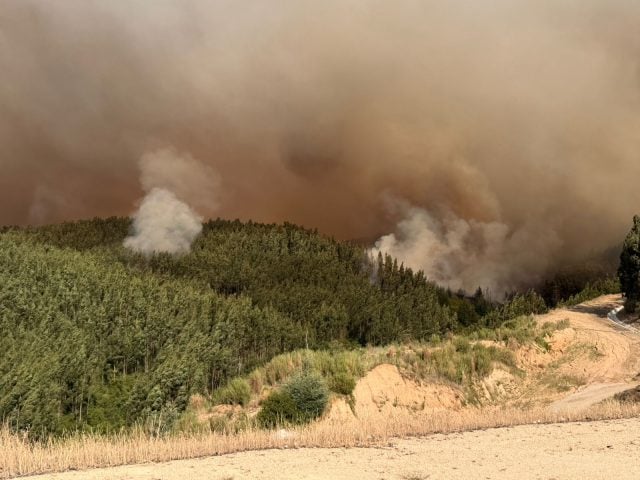
As wildfires devastate hectares and homes in Concepción province, such headlines no longer seem shocking, and we have grown accustomed to this bleak landscape, overlooking a profound debate about the structural causes that go beyond extreme weather conditions.
In the Biobío province, alongside others in the central-south region, a significant proportion of pine and eucalyptus plantations are found—species that are highly flammable, densely planted, and dominant in the Chilean rural landscape.
Territorial studies reveal that in affected municipalities such as Nacimiento, Santa Juana, and Tomé, forestry plantations account for between 67% and over 80% of land cover, displacing native forests and less fire-prone vegetation.
Nationally, scientific data is clear: although plantations only make up about 18% of the total forest area, they contribute approximately 30% of the land burned in wildfires and can nearly double their share during extreme seasons, such as in 2017 and 2023.
LET’S BE CLEAR: IT’S NOT FORESTS THAT BURN, IT’S MONOCULTURES
This pattern is not a biological coincidence but a direct result of a forestry model geared towards wood and cellulose exportation, with homogeneous monocultures acting as continuous fuel that facilitates the spread of fire from rural areas to peri-urban zones.
This is the crucial distinction between monoculture and forest, as the latter implies biological diversity that monocultures lack. Besides increasing the risk of fires, this landscape configuration multiplies damage to homes and ecosystems during crises (both social and ecological) like the one we are facing today.
In summary, the current emergency reveals a structural problem: it is not enough to reinforce brigades and aircraft if the forestry model, by design, favors vast flammable areas over diverse and resilient ecosystems.
The contradiction is evident: while the forestry sector exports over $6 billion annually, private investment in fire prevention and combat hovers around $120 million per season, a marginal figure compared to their profits and the social and environmental damage the model generates.
Without fundamental changes in land use policies, forest management, and corporate responsibility, each summer will continue to follow the same tragic logic: privatized profits and socialized catastrophes.
By Juan Pablo Orellana.-
Obtén tu Pasaporte y apoya a El Ciudadano
Elimina la publicidad, accede a contenido exclusivo y sé parte de la comunidad.
Cancela en cualquier momento · Sin permanencia