Original article: Google deberá pagar 68 millones de dólares de indemnización por espionaje: Acusan que su asistente de voz grabó ilegalmente a los usuarios
A Landmark Settlement Concludes a Class Action Lawsuit Against Google, Highlighting the Issue of ‘False Activations’ and Disclosure of Private Conversations to Third Parties, Marking a New Chapter in the Ongoing Legal Battle for Digital Privacy.
In a ruling reflecting the increasing legal scrutiny on the surveillance practices of tech giants, Google has agreed to pay $68 million to settle a federal class action lawsuit accusing it of illegally recording users’ private conversations via its voice assistant.
The case, filed in the Northern District of California, claims that the «Google Assistant» was unintentionally activated—without verbal commands—capturing intimate dialogues and sharing this data for targeted advertising and other commercial purposes, in violation of privacy laws.
The settlement, presented on Friday to federal Judge Beth Labson Freeman for approval, establishes a compensation fund for affected users.
According to court documents, coverage extends to Google device owners starting from May 2016, the time when Google Assistant was first launched.
Eligible consumers can claim compensation for up to three devices, although the individual amount will depend on the total number of claims, distributed through a «prorated allocation system» that awards points based on the severity of the intrusion.
The plaintiffs’ attorneys will request up to one-third of the settlement fund, approximately $22.7 million, in fees. Once approved, a period will be opened for users to submit their claims.
False Activations and Data Disclosure
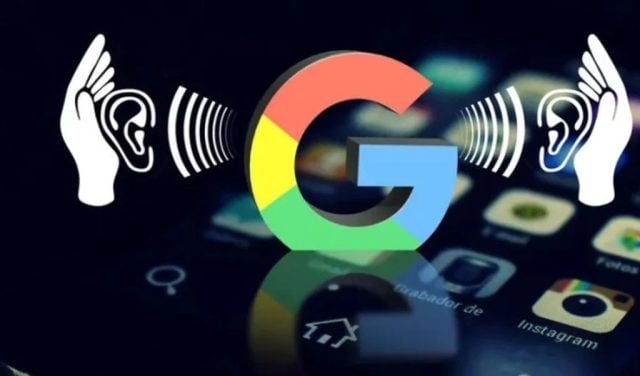
A central point of the case pertains to the phenomenon known as “false activations,” where the voice assistant allegedly activates involuntarily and records private conversations without the user uttering the designated wake word or phrase.
In fact, the legal action was initiated by several Google device owners who claimed their conversations were recorded without their knowledge. Although the company contends that Google Assistant only activates recording upon hearing specific phrases like “Hey Google” or “Okay Google”, the plaintiffs argued that devices sometimes misinterpret spoken words as commands, leading to the «false activations» and capturing discussions on personal, financial, or work-related topics.
The complainants claimed that the information was used for targeted advertising and other commercial purposes.
One trigger for the accusation was a 2019 report by the Dutch broadcaster VRT, whose journalists documented that «Google sent portions of conversations to external contractors who analyzed language patterns,» as noted by All Things Windows.
In their investigation, they «listened to over 1,000 snippets of conversations, including 153 in which participants did not say a trigger word.» Some snippets included discussions about finances, health, personal relationships, and work matters.
Google’s Defense
Google, while not admitting responsibility, opted for the settlement to avoid the risks and costs associated with ongoing litigation.
In its arguments, the company maintained that accidental activations did not violate its privacy policy, as users had consented to enable the “Voice and Audio Activity” setting.
In court documents, Google stated that since the Assistant’s launch in 2016, it has informed users that by enabling Voice and Audio Activity, they consent to the company “recording, storing, and using their audio data” to enhance voice technologies.
However, since August 2020, the company has updated its disclosures to indicate that audio “may be saved if a device incorrectly detects an activation.” Google declined to make direct comments on the settlement.
A Pattern in the Industry
It’s worth noting that Google has faced other privacy-related lawsuits in recent years. In 2025, it agreed to pay $1.4 billion to the state of Texas to settle two lawsuits alleging violations of the state’s data privacy laws.
Moreover, this marks the second major tech company to reach a privacy settlement regarding voice assistants in January 2026. Earlier this month, Apple agreed to pay $95 million in a similar lawsuit concerning its Siri assistant.
Payments to Apple users range between $8 and $40 per person. Together, both settlements total $163 million in penalties for privacy violations.
The three main voice assistant providers—Google, Apple, and Amazon—have previously acknowledged using “human contractors to review recordings,” resulting in external employees hearing medical conversations, family discussions, and intimate moments. Amazon has also modified its protocols for handling audio on its Echo devices with Alexa.
The $68 million settlement comes amidst a growing climate of distrust among Americans regarding potential surveillance through technological devices, leading to an increase in lawsuits over privacy violations.
For digital rights advocates, this case sets a crucial precedent regarding corporate responsibility in designing systems that prevent accidental activations.
Obtén tu Pasaporte y apoya a El Ciudadano
Elimina la publicidad, accede a contenido exclusivo y sé parte de la comunidad.
Cancela en cualquier momento · Sin permanencia
Artículos Relacionados

Google Introduces AI-Powered Urban Flood Alerts in Chile Ahead of Incoming Weather Fronts
Hace 2 meses