Original article: Restos humanos de mil años en el Pilmaiquén: Comunidades denuncian negligencia técnica para invisibilizar cementerio
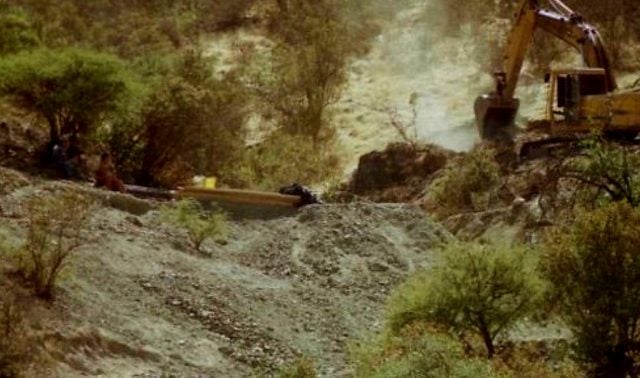
This week, human remains of a child were discovered in the area that would be flooded by the Los Lagos Hydroelectric Power Plant on the Pilmaiquén River. These remains are estimated to be nearly one thousand years old, although scientific dating is still pending.
The remains were found during archaeological excavations authorized by the National Monuments Council (CMN) within the hydroelectric project area.
This discovery could confirm what local communities have long asserted: the existence of a cemetery within the flooding zone. It also contradicts Statkraft’s narrative that archaeological findings were limited to small ceramic and lithic fragments.
Archaeological evidence demonstrates continuous habitation of the Pilmaiquén River from its origin to its confluence with the Bueno River, encompassing both the riverbank and the upper terraces of the valley. The findings indicate a millennia-old human presence in the region.
Despite this, the National Monuments Council claimed that the artifacts detected in the project correspond to sites with a low density of archaeological materials, scattered over a wide territorial area, suggesting sporadic occupation primarily during the Late Ceramic and Early Historic periods.
Covering the project, it has been stated that the remains consisted mostly of lithic materials and small ceramic fragments, and that these finds have delayed the power plant’s launch. However, the discovery of human remains of a child directly challenges this characterization and underscores a more significant archaeological and cultural heritage.
Legal Implications: Discovery of Human Remains Forces Review of Permits and Indigenous Consultation
In an interview with El Ciudadano, lawyer Felipe Guerra emphasized that the discovery confirms what has always been stated: the existence of significant cultural heritage in an area important to the communities that Statkraft intends to flood.
Furthermore, the appearance of human remains amidst pending legal proceedings increases the risk of irreversible damage and necessitates enhanced protective measures. Although these resources do not always automatically suspend administrative acts, Guerra argued that the state must proceed with particular caution to avoid undermining any potential decision by the court, also questioning why the CMN did not observe its obligation to refrain from decisions in this scenario.
For Guerra, the discovery necessitates reopening—or at least reviewing—the indigenous consultation and the agreements reached by the CMN with some organizations, which, according to the lawyer, are still in negotiations and receiving funding from Statkraft, as the finding substantially alters the dynamics of the situation.
“We are no longer discussing ‘fragments,’ but rather human remains and indigenous burial contexts, which elevates the duty of protection and participation standards required […] The Supreme Court ordered indigenous consultation for this project due to the archaeological findings, precisely because these measures directly affect the communities and their cultural ties to the territory,” he stated.
Moreover, Guerra asserted that the archaeological permits granted by the CMN, despite an ongoing judicial process, would be illegal, as they permit potentially irreversible interventions and weaken the communities’ rights to consultation and the protection of their heritage.
Along these lines, the lawyer emphasized that Indigenous Law mandates a reinforced standard regarding cemeteries, established in Article 29, letter c, of Law 19,253, which states that the excavation of historical indigenous cemeteries must comply with the procedures of Law 17,288 and requires prior consent from the affected community.
“Under international law, the state has a duty to consult in good faith and create real participation conditions when adopting measures that could directly affect indigenous peoples. In a case like this, that standard is complemented by the requirement of consent, especially when particularly severe impacts on cultural and spiritual heritage are at stake.”
Finally, Guerra noted: “The UN Declaration on the Rights of Indigenous Peoples recognizes the rights of indigenous peoples to maintain, protect, and control their spiritual practices and assets and to the repatriation of human remains through just and agreed-upon mechanisms.”
Archaeological Analysis: Territorial Complexity and the Need for Defined Contexts
From an archaeological perspective, the discovery of child remains is significant, though it is still impossible to determine their exact age. According to Rodrigo Mera, the find represents an initial clue that requires further in-depth investigation. To achieve this, it is essential to expand the study area and establish whether it indeed represents a funerary context or an accumulation of materials resulting from more recent deposition processes, which can only be resolved through specialized investigation.
In this regard, the archaeologist stressed the need for absolute dating based on clearly defined contexts. Only through analysis will it be possible to determine whether the remains are hundreds or even thousands of years old, a crucial detail for understanding the scale of the discovery and guiding subsequent study phases.
Mera also highlighted that the available evidence thus far indicates continuous occupation of the Pilmaiquén territory for over a millennium. Remains from various cultural periods have been identified on-site, ranging from early to late pottery periods, to the historical period, with finds as recent as coins from the 1940s. This overlap of evidence confirms that the area has been consistently inhabited over time, especially considering its proximity to the river and its strategic location.
In this context, the archaeologist challenged the notion that the area had only sporadic or insignificant occupations. In his view, the quantity and diversity of finds concentrated in a small space demonstrate a complexity of uses and settlements that contradicts that initial interpretation.
Lastly, Mera warned against downplaying archaeological remains based on their size or appearance. Small ceramic fragments may seem insignificant, but they contain crucial information for reconstructing the daily life of past societies. Each object crafted by people, using specific techniques and knowledge, provides fundamental pieces for understanding the history of the site, meaning that all remains hold archaeological value that should not be diminished.
Defense of Pilmaiquén: Communities’ Complaint Over the Controlled Elimination of Their Sacred Sites
In dialogue with El Ciudadano, Machi Millaray Huichalaf recalled that the hydroelectric project was never consulted, denying that the affected Mapuche communities had a say. For Huichalaf, the project was “imposed on the communities defending the Pilmaiquén River and takes place on Mapuche lands of great cultural significance.”
“The discovery of this ancestor, our Mapuche forebear willicje, confirms what we have told the Chilean state and the Norwegian multinational: our millennia-long occupation in the basin of the sacred Pilmaiquén River and the importance of our sacred ceremonial spaces ngen kintuante and ngen koyonkurra (mencahue),” declared the machi.
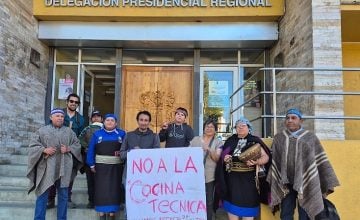
Furthermore, the machi indicated that, despite complaints from the Ayllarewe of Ngen Mapu Kintuante regarding the existence of an eltuwe (cemetery) documented in CMN records, there was persistent technical negligence. She denounced that the use of superficial probes in the inaltulewfu was a methodological choice made to obscure the burials and reduce the heritage to mere “low-density fragments.”
“The discovery of the child is not an archaeological surprise, but the inevitable consequence of a protocol designed to minimize findings, lessen our ancestral practices, and render the impact on our lives and culture invisible for our communities affected by these extractive hydroelectric projects,” she said.
For Huichalaf, the finding, along with the methodology proposed by the CMN for “archaeological rescue,” is culturally and spiritually destructive and scientifically regressive. The Machi pointed out that prioritizing immediate excavation reproduces a colonial practice that treats our ancestral finds as extractable study objects rather than sacred entities in their context.
“This option completely ignores the arsenal of non-destructive techniques available, which would allow for proper documentation while protecting the site from desecration. Insisting on rescue reveals that the official methodology does not aim for understanding or preservation, but rather managing the controlled elimination of the ‘heritage obstacle.’ The choice is clear: endorse fraudulent methodologies or lead with actions to protect a sacred site,” she concluded.
Project Overview: 190 Hectares Under Threat and the Ethical Viability of Filling
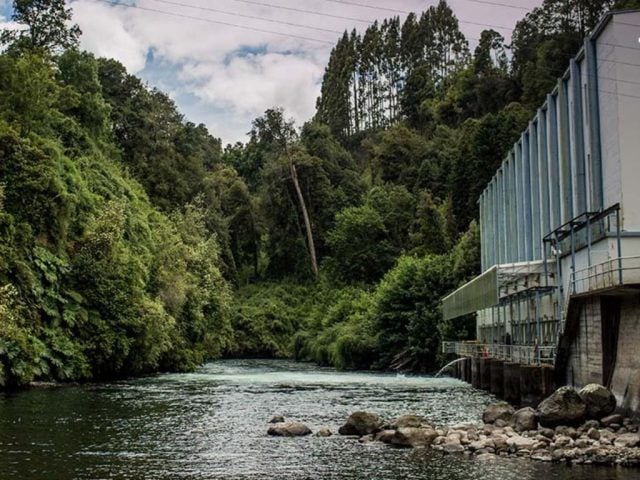
The Los Lagos Hydroelectric Power Plant is a run-of-river facility that will utilize the waters of the Pilmaiquén River and generate between 52 and 54 MW of power.
The project involves constructing a dam 35 meters high and flooding approximately 191.9 hectares. It has held a favorable Environmental Qualification Resolution since 2009.
Statkraft is under pressure to complete the archaeological rescue and comply with the authorized filling window of the reservoir, from March 21 to September 21. Failure to do so could delay the project’s initiation until late 2027.
The discovery of the child not only questions the rigor of the archaeological methodologies applied but also raises ethical concerns about the planned filling of the reservoir set for March. In light of evidence of a funerary complex at risk, the state faces the dilemma of supporting a questioned administrative process or ensuring the effective protection of an irreplaceable human and spiritual heritage.
Relacionados
Search for Executed Farmers in Paine: Minister Cifuentes Reports Archaeological Findings at Chada Hill
Hace 3 meses
Investigation into 1973 Execution of 14 Paine Farmers Reveals Human Genetic Material Linked to Ballistic Evidence
Hace 3 meses
145 Years of Temuco: Uncovering the Overlooked History of Founding Amidst Mapuche Invasion and Dispossession
Hace 3 semanas