Original article: Chile no cede a EE.UU. y mantiene evaluación del cable Hong Kong–Valparaíso: “rechazamos cualquier tipo de intervención en decisiones soberanas”
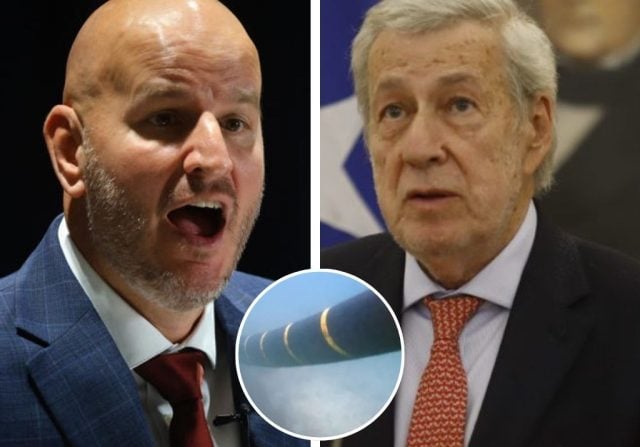
«The Hong Kong-Valparaíso transpacific submarine cable project must be evaluated on its own merits, and we will not cease processing an investment initiative due to threats or unilateral sanctions,» stated Foreign Minister Alberto van Klaveren.
The Chilean Government made it clear that it will not yield to pressures from the administration of U.S. President Donald Trump and will continue evaluating the Chile-China Express, a submarine cable project aimed at directly connecting Valparaíso with Hong Kong, establishing a direct data route across the Pacific.
«We reject any form of interference in sovereign decisions we may make in our country,» the Foreign Minister told the press.
It is important to remember that on November 26, 2035, a consortium formed by major Chinese technology companies—China Telecommunications Corporation, China Mobile Communications Group, and China United Network Communications Group—submitted a formal request to the Undersecretariat of Telecommunications (Subtel) to obtain a concession to construct the submarine cable, aimed at improving international connectivity and reducing dependence on routes passing through the United States.
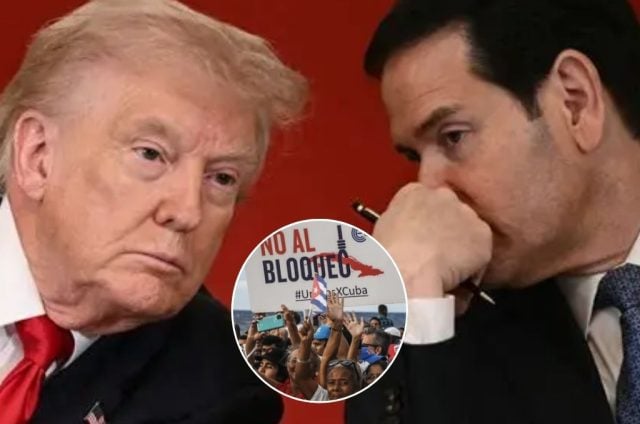
The project involves an investment of approximately $500 million and, while still under evaluation, incited anger from Washington. Last Friday, U.S. Secretary of State Marco Rubio stated it could «undermine regional security» and announced the revocation of visas for three high-ranking Chilean officials: the Minister of Transport and Telecommunications, Juan Carlos Muñoz; the Undersecretary of Telecommunications, Claudio Araya; and his chief of staff, Guillermo Petersen.
The Republican administration claimed these officials «were aware and directed, authorized, funded, and provided substantial support and/or conducted activities that compromised critical telecommunications infrastructure and undermined regional security in our hemisphere.»
On Monday afternoon, the U.S. Ambassador to Chile, Brandon Judd, held a press conference justifying the State Department’s decision.
«I want to be clear about the actions our government took at the end of last week: it is our sovereign decision who enters our country. No one is entitled to a visa. As we have demonstrated elsewhere and now here, we will protect our national security interests, which should come as no surprise to anyone,» he stated.
He also mentioned that information was provided regarding alleged cyberattacks on telecommunications systems, which were reportedly directed at private sector companies, «putting the privacy and personal information of nearly all Chileans who use a cell phone at risk of having their data stolen, their communications spied on, and their lives affected.»
Judd asserted that for years, Washington has «strongly urged the Chilean government to adopt investment evaluation mechanisms.»
«Advanced economies worldwide have a process to evaluate foreign investments to ensure their critical infrastructure—ports, electricity transmission lines, and telecommunications networks—are protected. It is good practice per OECD standards. The United States has one. Spain has one. Canada, the United Kingdom, Australia do too. But Chile does not,» he challenged.
He further stated, «A country that does not protect its critical infrastructure risks losing its sovereignty,» and subsequently addressed the argument of a threat to «regional security» that Marco Rubio used to justify sanctions against the officials of President Gabriel Boric’s government.
While not directly naming the Hong Kong-Valparaíso cable, the U.S. ambassador suggested that Washington respects «Chile’s right to engage in trade that brings prosperity and opportunities to its people.» However, he noted that threats to critical infrastructure that risk or impede sovereignty—especially telecommunications infrastructure—affect us all.
«We all have a vested interest in this region, our shared region, and the United States will always take necessary measures to protect it,» asserted Judd.
«In December, the Chilean people voted overwhelmingly for change. They voted for security and prosperity. We look forward to working with the new government to provide what the Chilean people demanded. By working together, we can ensure that this region—our shared neighborhood—is safe and prosperous for all,» he told reporters.
«Chile Will Not Halt Processing of an Investment Initiative Due to Threats»
Following the meeting, held at La Moneda with various government authorities to analyze and respond to the statements made by the U.S. ambassador in Chile, Foreign Minister Alberto van Klaveren replied to Brandon Judd, stating that the actions of the Trump administration in this case have been «inexplicable» and «arbitrary,» labeling the U.S. diplomat’s remarks as «unacceptable.»
«As a government, we absolutely reject the accusations and statements made by the U.S. Ambassador to Chile, Mr. Brandon Judd,» he stated.
In that vein, he emphasized that «we deeply regret that a discrepancy is being fueled, based on a premise that is false. No official from the Government of Chile, no state agent has collaborated in actions or measures that place our country’s security or the region’s or hemisphere’s security, or that of any country in the world, at risk.»
«The security and sovereignty of Chile are not at risk, much less that of the U.S. from any action taken by our country,» he stressed.
The foreign minister labeled the U.S. ambassador’s references to high-ranking Chilean officials as «absolutely unacceptable.» He asserted, «We believe these are unacceptable disqualifications and contrary to diplomatic practice.»
“There are some specific points raised by Ambassador Judd that we would like to respond to. Firstly, it is true that according to international law, each country decides on granting visas or addressing visa matters. What is unacceptable is for this to be used to threaten, unilaterally sanction, or even suggest a possible risk that, in this case, is not real,” he stated.
Foreign Minister van Klaveren reminded that «Chile has only approved one transpacific submarine cable project, which is the Humboldt cable, financed by the prestigious U.S. company Google, in partnership with the Chilean state through the company Desarrollo País.»
Regarding the Hong Kong-Valparaíso transpacific submarine cable project, he indicated that «it must be evaluated on its own merits,» making it clear that the government will not cease processing an investment initiative due to threats or unilateral sanctions.
«This project is still under evaluation and subject to the submission of reports from various state agencies,» he underscored.
He also reiterated La Moneda’s rejection of the Trump administration’s decision to revoke visas for high-ranking Chilean officials.
«This is not how two friendly countries, strategic allies with a 200-year history of cooperation and dialogue, address a difference. Hence, we reiterate our rejection of the measure adopted by the U.S. State Department,» he stated.
«We still find it arbitrary and inexplicable, because it refers to a decision that has not even been made, which is why we are surprised. Chile has proven to be a country with clear rules, respecting international standards in all areas,» he emphasized.
For the Foreign Minister, «Chile cannot and should not be used as a territory in dispute by powers in conflict or by global geopolitical tensions.”
«We want to remain out of these disputes, away from these conflicts while preserving the very good relations we aspire to have with the U.S. and also with other very relevant partners of our country, such as China,» he concluded in his statements to the press.
Obtén tu Pasaporte y apoya a El Ciudadano
Elimina la publicidad, accede a contenido exclusivo y sé parte de la comunidad.
Cancela en cualquier momento · Sin permanencia