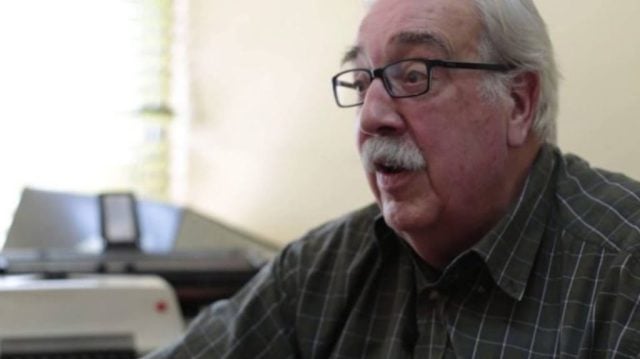
Original article: Muere Manuel Cabieses: el periodista rebelde que Pinochet quiso borrar y jamás lograron callar
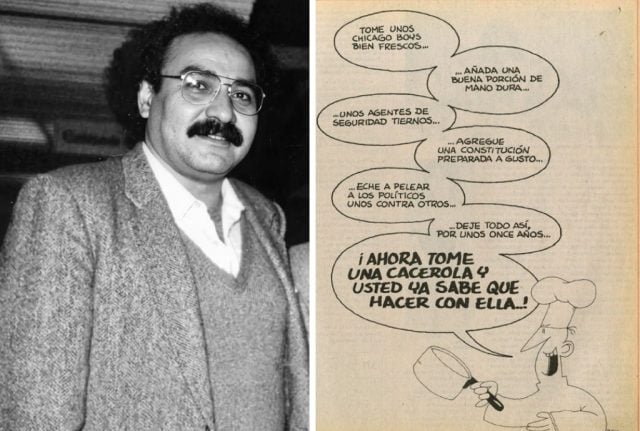
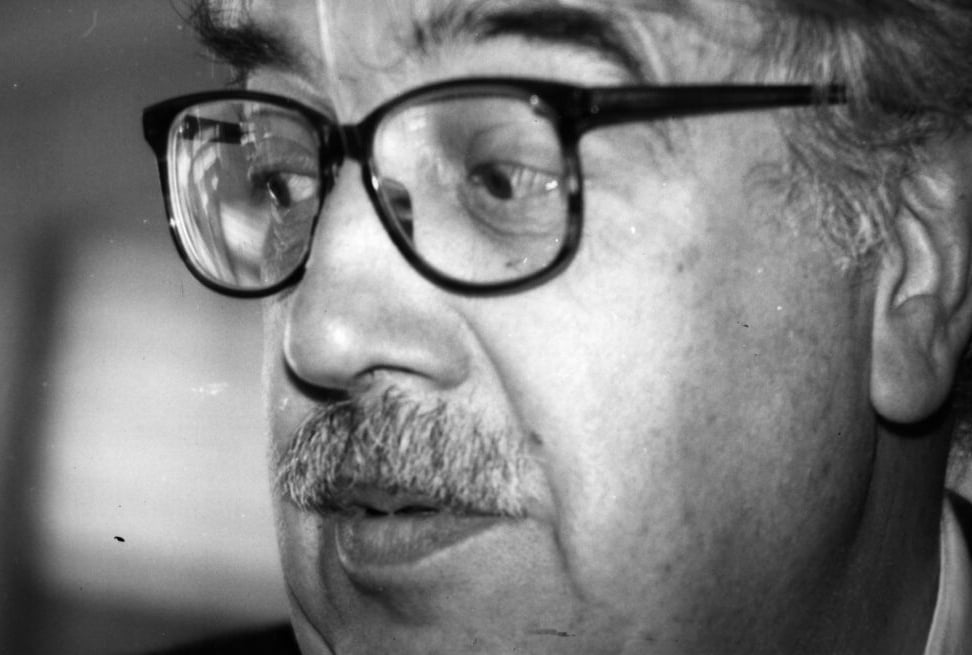
Manuel Cabieses Donoso’s passing at the age of 92 marks the end of one of the most significant careers in contemporary Chilean political journalism. The founder and long-time director of the magazine Punto Final, he served as a persistent voice of critical leftist perspectives for over five decades, standing unyieldingly against power and resisting editorial compromises. His death not only signals the loss of a journalist but also that of a key player in the political and social events that have shaped Chile over the past 70 years.
Born in 1933, Cabieses forged his journalistic career during a time when print media was hotly contested ideologically. He began his journalism journey in the late 1950s at the evening paper La Gaceta, alongside Darío Sainte–Marie, the founder and later owner of the popular daily Clarín.
He also established connections with labor press alongside Clotario Blest, the historical president of the Central Única de Trabajadores.
Following the election of right-wing businessman Jorge Alessandri in 1958, he fled to Venezuela, where he wrote his book «Venezuela Okey,» an early testament to his critical perspective on Latin American realities.
The Birth of a Stronghold: Punto Final and the Revolution in Latin America
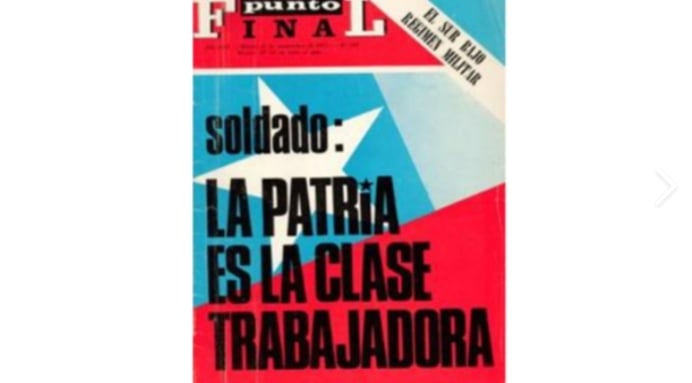
In 1965, while working at the socialist newspaper Las Noticias de Última Hora, Cabieses, together with his friend and colleague Mario Berríos, launched Punto Final, a publication that would become a platform for political analysis, denunciation, and strategic reflection for many sectors of Chilean and Latin American progressivism.
The magazine discussed revolutionary processes, social conflicts, and the tensions inherent in the Cold War era. It quickly became a gathering place for journalists and intellectuals aligned with the left, exerting considerable influence, especially by reporting on the ideological struggles linked to the Cuban Revolution and Chilean revolutionary left.
Cabieses later joined the ranks of the Movimiento de Izquierda Revolucionaria (MIR), solidifying his political commitment that extended beyond mere journalistic work.
One significant reason for his recognition was founding the magazine, whose team accomplished the remarkable feat of recovering Che Guevara’s diaries in Bolivia, allowing them to reach Cuba and be published worldwide without alterations.
During Salvador Allende’s government, the magazine critically accompanied the process of the Unidad Popular, defending the structural transformations it pursued while also reporting on the internal and external pressures it faced.
This critical support foreshadowed the independence that characterized Cabieses’ stance concerning any authority, even those he sympathized with.
September 11: The Command to Erase Everything
The 1973 coup d’état marked a turning point in Cabieses’ life and that of his publication. On September 11, 1973, the magazine appeared in some kiosks for only a few hours. Its cover featured a Chilean flag with the bold slogan: «Soldier: the Fatherland is the Working Class,» which became emblematic of his defiance. The offices of Punto Final in downtown Santiago were stormed by soldiers, who destroyed its valuable archive, attempting to obliterate not just a media outlet but the very memory of the Chilean left.
The same day of the coup, Augusto Pinochet explicitly mentioned the publication in a radio communication that revealed the dictator’s early obsession with silencing that voice. The order was issued with military severity:
«On behalf of the commander in chief, in addition to the existing measures concerning radio and television, there will be no, I repeat, no publication of any kind of press. Any that dare to be published will be confiscated and will lead to the destruction of the facilities where it was edited. Over… ehhh, everyone working at Punto Final… must be detained. Over,» he declared.
This order was not a hollow threat. The publication was immediately shut down, and its director experienced imprisonment and exile. Cabieses was arrested on September 13, 1973, just two days after the coup. He spent two years imprisoned in several concentration camps: first in Chacabuco, then in the Melinka camp in Puchuncaví, and finally in Tres Álamos, until he was expelled from the country due to an active international campaign that pressured for his release. Many of his collaborators at Punto Final, however, faced far grimmer fates: they were arrested, killed, or made to disappear by the dictatorship.
Exile and Clandestine Return
Despite the forced closure and exit from Chile, Cabieses did not mute his criticisms against the dictatorship; in fact, he maintained active political and intellectual networks that kept the international denunciation of the Pinochet regime and its crimes alive.
However, exile was not a permanent destination for him. In a show of his rebellious spirit, Cabieses left for exile but soon decided to return clandestinely to assist the resistance against the dictatorship within Chile. He joined the National Secretariat of the MIR while the organization was under intense persecution, risking his life at every step through Chilean territory.
This experience of clandestinity and resistance deeply influenced his understanding of journalism as a tool in political struggle rather than a neutral or detached exercise in social conflicts. For Cabieses, informing was always taking a side, and he consistently chose to stand with the workers, the persecuted, and the revolutionaries.
The Rebirth of Punto Final in Democracy
At the end of 1989, as the dictatorship was nearing its end, Cabieses successfully relaunched Punto Final. Its return to newsstands was met with great enthusiasm from the leftist populace, including younger generations who had only heard of the legendary publication through references.
“With the return to democracy, Punto Final reemerged as one of the few magazines that maintained an unequivocally critical editorial line, without diluting its identity in the transitions’ consensus,” noted Diario U de Chile.
In this new phase, Cabieses remained particularly active, demonstrating that his rebellion did not dwindle with the dictatorship’s fall. When the socialist camp in Eastern Europe and the Soviet Union collapsed and the effects of the U.S. blockade on Cuba were felt, he initiated what seemed to be the first solidarity campaign with the island, inviting contributions of oil to alleviate the hardships faced by the Cuban people.
Moreover, he led a vigorous campaign advocating for the establishment of a monument to Salvador Allende, an initiative not prioritized by the parties involved in the transition, which were more focused on forging agreements with the right than honoring the martyr president’s memory. Eventually, the goal was achieved, greatly influenced by sustained pressure from the pages of Punto Final.
To keep the leftist base mobilized, he organized a series of events at the Teatro Cariola in Santiago, a venue that became a stronghold of combative memory.
From this cultural space, he promoted tributes to the general secretary of the MIR, Miguel Enríquez, and to the head of the Manuel Rodríguez Patriotic Front, Raúl Pellegrin, keeping the flame of resistance alive even as traditional parties sought to bury the recent past.
Together with his friend Pedro Vuskovic, a former minister under Allende, he organized forums across the country focused on the left aimed at promoting its unitary rearticulation. From these efforts emerged committees such as the Committee for the Unity of the Left (CUI) and the Democratic Left Movement (MIDA), the first of their kind that crystallized after the dictatorship’s end, attempting to rebuild a political pole that engaged with new realities without abandoning historical principles.
The Lawsuit Over Pinochet’s Cover and the Defense of Memory
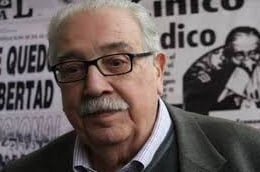
Cabieses also faced attacks from the dictator, who, even after leaving power, retained enough influence to pursue his old enemies. In 1991, the government accused the director of Punto Final before the Santiago Court of Appeals for allegedly violating the Law of Internal Security of the State by insulting the head of the Army, General Augusto Pinochet.
In its 247th edition, the magazine’s cover titled Cynical and Sadistic showcased an image of Pinochet blowing his nose with a Chilean flag. He sued over a cover headline that branded him as «Cynical and Sadistic,» accompanied by an image depicting him disrespecting the Chilean flag.
According to the complaint presented by then-interior minister Enrique Krauss, these expressions and the illustration of Pinochet on the cover were deemed injurious and defamatory. “It is clear that the crime of public outrage against the national flag has been committed, and at the same time, the commander in chief of the Army has been defamed,” he stated at the time.
The cover had been published following the cruel declarations from the army commander about the fate of the disappeared detainees, in which he justified the unjustifiable.
Cabieses faced the trial with the same fortitude shown during his time in concentration camps, transforming the judicial process into a new platform to denounce dictatorship crimes.
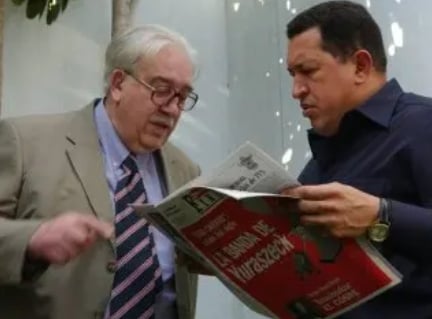
Punto Final was also the only Chilean media outlet to interview Hugo Chávez during his first visit to Chile in October 1994, long before the Venezuelan commander became an international figure and leader of the Bolivarian Revolution. This exclusive interview demonstrated Cabieses’ ability to maintain connections with emerging currents of the Latin American left, anticipating debates and processes that would later shape the region.
Alongside his editorial work, Cabieses took on union responsibilities at the College of Journalists, advocating for the government to create conditions that ensured pluralism in the media, which was concentrated in a few hands, paradoxically during a period of the country’s redemocratization.
He tirelessly denounced that political transition had not been accompanied by a democratization of discourse, and that large economic groups maintained tight control over information.
The Legacy of the Combative Journalist Whose Voice They Could Never Silence
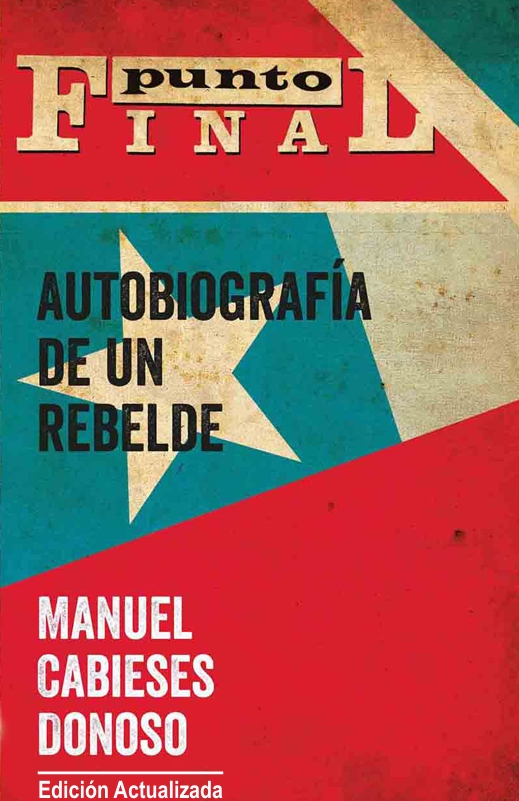
In 2015, Cabieses published the book «Autobiography of a Rebel,” which presents his memoirs of his career in Chilean journalism as well as in the social and political struggles of the left. The text not only provides an account of his life but also serves as a firsthand testimony of the major political conflicts that shook Chile and Latin America during the later half of the 20th century and into the early 21st. Within its pages, readers can find intimate portraits of key figures in the revolutionary left, alongside reflections on the significance of committed journalism in a changing world.
At the time of his passing, Cabieses was retired, following the closure of Punto Final in 2018. That year, the National Institute of Human Rights (INDH) awarded him the Journalism and Human Rights Career Award, and he was also proposed for the National Journalism Award in recognition of his impeccable and courageous career.
Nevertheless, neither the physical disappearance of the magazine nor his own death could silence the voice of the rebellious journalist who has certainly been one of the key figures in many fundamental political and social events in Chile’s last 70 years.
Pinochet attempted to erase him that September 11, 1973, when he ordered over the radio that all Punto Final staff must be detained. He aimed to erase him when he kept him in concentration camps. He sought to erase him when he was forced to leave the country. He attempted to erase him when he sued him in democracy. But he never succeeded in silencing this rebel journalist who made the written word a weapon of combat and his life a testament to coherence.
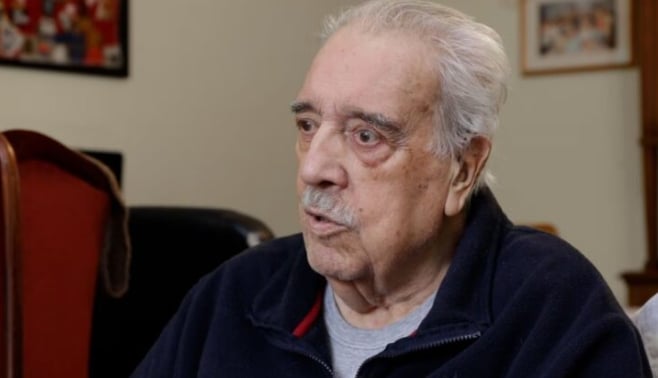
The death of Manuel Cabieses leaves a void in Chilean journalism that will be hard to fill. His legacy will remain alive in every journalist who refuses to bow to power, in every independent media outlet that fights to survive.
His remains will lie in state at the Santa Marta Parish, Celerino Pereira 1690, Ñuñoa.
Obtén tu Pasaporte y apoya a El Ciudadano
Elimina la publicidad, accede a contenido exclusivo y sé parte de la comunidad.
Cancela en cualquier momento · Sin permanencia