Original article: «Resistir en tiempos de litio»: ACNUDH visibiliza la lucha indígena en el norte de Chile por un medio ambiente sano
Indigenous Voices from Northern Chile Challenge Global Energy Transition: «Resisting in the Age of Lithium»
“Living in our territory today means resisting, continuously standing firm to survive.” This powerful statement from Zulema Mancilla, a member of the Colla community in Pastos Grandes, Atacama Region, introduces a story published by the United Nations Human Rights Office (OHCHR) that highlights the voices of Indigenous peoples in northern Chile amidst the ongoing lithium mining expansion in their ancestral lands.
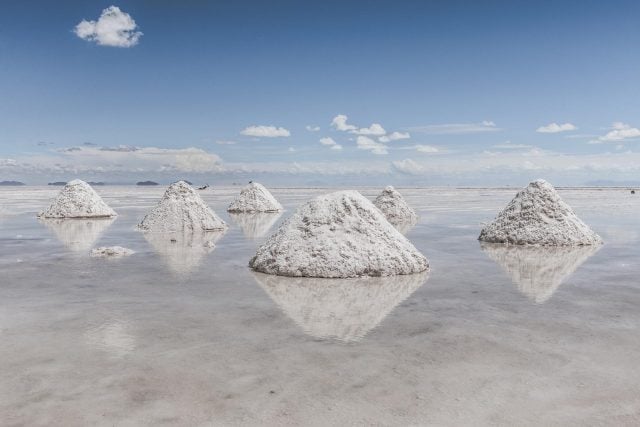
At over 3,600 meters above sea level in altiplanic salt flats inhabited by Colla, Quechua, Aymara, and Atacameña communities, lithium—the so-called «white gold» touted as a strategic mineral for global decarbonization—takes on a new significance. “If lithium mining goes ahead, it will create an enormous sacrifice zone for our people,” warns Juana Mamani Flores from the Aymara community of Panavinto in Tarapacá. The report captures the concerns of Indigenous leaders like Samuel García and Eva Mamani, who recalls her grandmother’s teaching that “the waters have a spirit, the bushes have a spirit, every cactus, everything holds a spirit.”
Jan Jarab, the OHCHR Representative in South America, asserts that the discussions surrounding the salt flats extend beyond Chile and pose a broader question: “How can we ensure that the energy transition does not replicate historical patterns of extractivism where benefits are globalized while costs are localized?” The publication stresses the need for prior, free, and informed consultation and human rights standards to ensure that clean energy is not built upon new sacrifice zones.
We encourage you to read the full report on the OHCHR website, where the intricate dilemma between energy transition and land rights, the voices of resistors, and the call for global ethical coherence are examined in depth.
Resisting in the Age of Lithium: The Right to a Healthy Environment in Indigenous Territories of Chile
Source: OHCHR
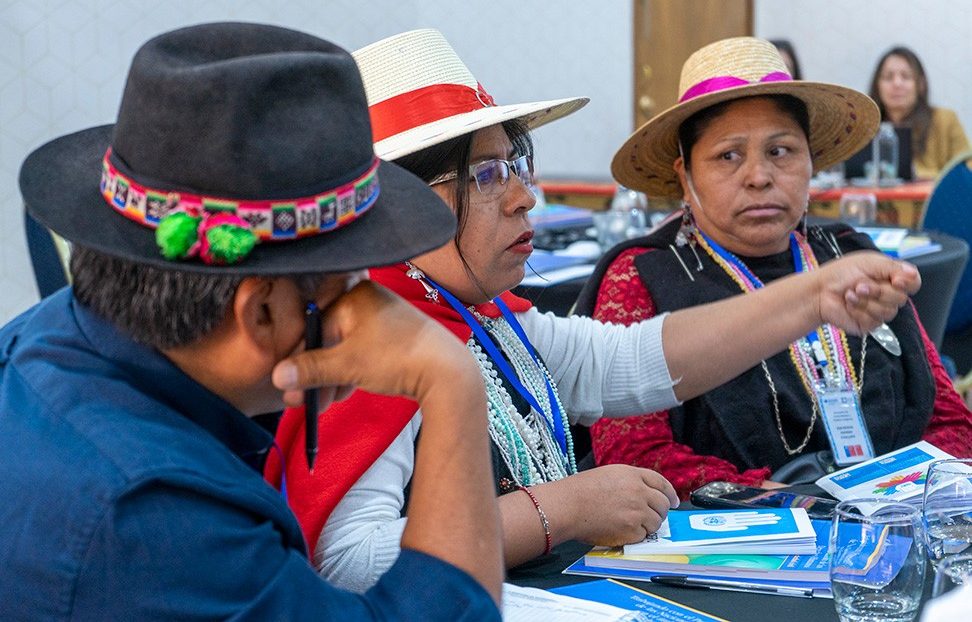
“To live in [our] territory today means to resist, to continuously stand firm in order to survive,” stated Zulema Mancilla, member of the Colla Indigenous community of Pastos Grandes in northern Chile’s Atacama Region.
Her territory is located in the high mountains around the Maricunga Salt Flat, a fragile high-altitude ecosystem surrounded by volcanoes, high-altitude lakes, and wetlands. Here, water does not flow into the ocean but accumulates and evaporates in the salt flat, creating a delicate balance between underground aquifers, the salty desert, and the scarce water sources that sustain traditional livelihoods.
“We face significant water issues. Since the mining companies extract groundwater, there is little water reaching us below, where we resist and live,” Mancilla expressed. “We will never be content with being polluted and having the natural resources of our territory extracted.”
However, Mancilla also noted that if they can influence decisions, they can help protect their territory. It is encouraging for her to see their concerns reflected in the terms and clauses of the contract for lithium operations in their lands.
In the international debate on energy transition, lithium is presented as a strategic mineral for manufacturing electric vehicle batteries and energy storage systems. Chile is one of the world’s leading producers. As the world accelerates its decarbonization efforts, global demand for lithium is increasing.
“Yet in the altiplanic salt flats—territories inhabited by Colla, Quechua, Aymara, and Atacameña Indigenous Peoples—this expansion takes on another dimension: water, territory, cultural continuity,” explained Jan Jarab, the OHCHR Representative for South America.
Water, Livelihood, and Worldview
Further north, in the Altiplano of Tarapacá, the commune of Colchane is situated at over 3,600 meters above sea level, near the Bolivia border. Here, Aymara communities depend on raising llamas and alpacas, quinoa cultivation, and wetlands that support life in one of the driest regions on the planet.
“Our animals drink from the water in the salt flat, and we also drink, we have fresh water there,” said Juana Mamani Flores, a member of the Panavinto community, located in a salt flat on the border with Bolivia where rivers, grazing areas, and high-quality quinoa crops converge.
“If lithium mining goes ahead, it will create a massive sacrifice zone for our people,” she added.
For Eva Mamani, also from Panavinto, the territory is not merely a resource but a spiritual connection.
“My grandmother taught me that waters have a spirit, bushes have a spirit, cacti, everything has spirit, even the mountains have spirit,” Eva Mamani expressed. “From that perspective, I personally feel I must defend my territory.”
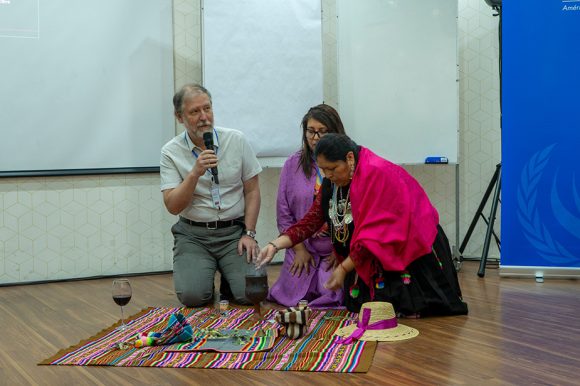
For the OHCHR, these voices reveal a central aspect of the global debate: that territories from which lithium is extracted are not empty deserts but spaces with cultural continuity, subsistence economies, and vibrant worldviews.
Clean Energy with Complex Impacts
Communities are not unaware of the climate crisis or the argument for clean energy. However, the conversation shifts when it comes to local impacts.
Samuel García, Aymara leader from Colchane, noted that while generating clean energy for the world is positive, it will have consequences for some people.
“We do not have a specific and realistic study of the harm that lithium extraction could cause,” García asserted.
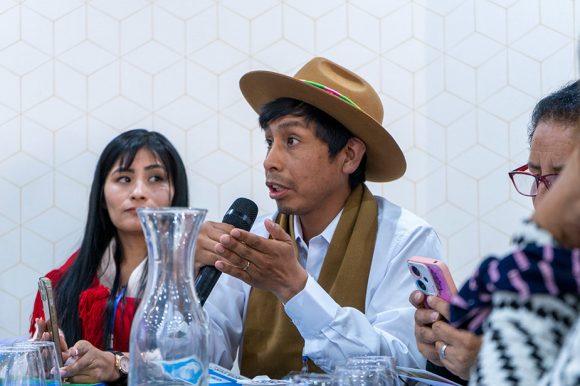
Faced with uncertainty, communities seek reliable information to help them make crucial decisions. Rafael Mamani, another Aymara leader with previous experience in copper mining, explained that Indigenous Peoples are in a pivotal position: their actions affect not only the present but also the survival of their ancestral cultures.
The question is not whether lithium is necessary for the energy transition, but under what conditions it is extracted and who bears the costs. According to Jarab, the solution lies in respecting international human rights standards.
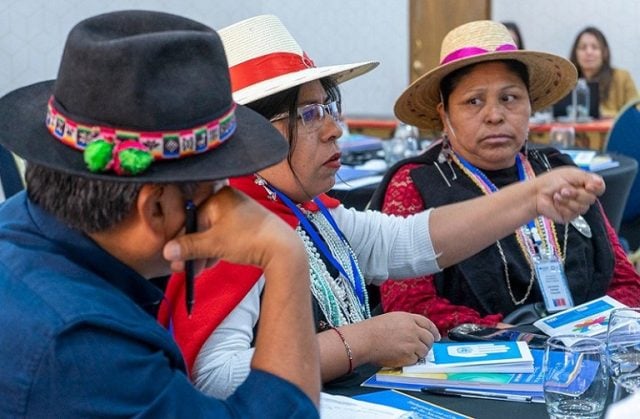
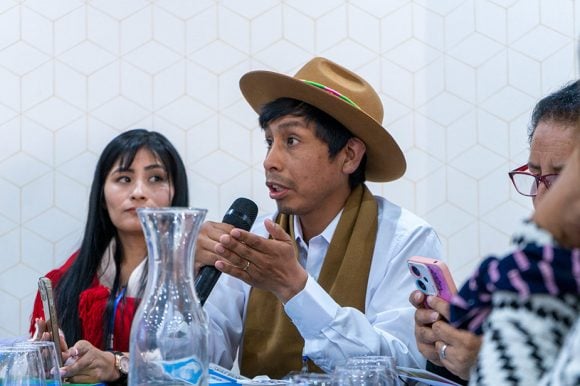
OHCHR has taken an active role in bringing together Indigenous leaders, state authorities, and international actors to address the human rights dimensions linked to lithium extraction.
Through multi-stakeholder dialogues in the so-called “lithium triangle”—a region on the borders between Chile, Argentina, and Bolivia that contains over 50% of the world’s lithium reserves—the Office has promoted the application of international human rights standards and provided technical assistance to ensure that energy transition policies align with these obligations.
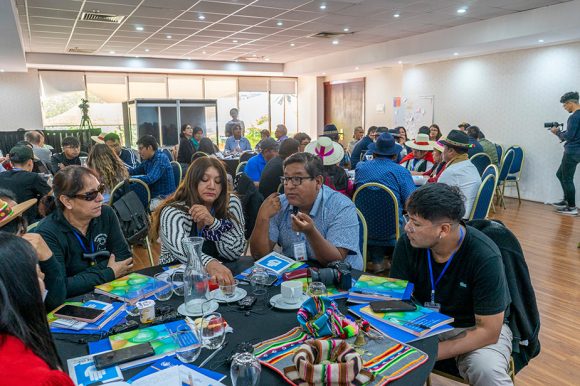
Framing the debate in terms of a “just transition,” the Office has warned that without adequate safeguards, the drive toward clean energy risks consolidating patterns of extractivism and inequality rather than overcoming them.
“We must ensure that potentially affected communities participate in decision-making, and the rights of Indigenous Peoples to be consulted before adopting and implementing legislative or administrative measures that affect them, in order to obtain their free, prior, and informed consent,” Jarab said.
“The communities themselves know their needs best and understand how to care for the environment at the local level,” he added.
According to the OHCHR, consultation processes regarding extractive projects are mechanisms that should enable Indigenous Peoples to reach agreements that favor their own priorities and development strategies, participate fairly and equitably in potential benefits, and actively contribute to assessing the possible effects of the proposed activity and to seeking less harmful alternatives or mitigation measures.
“It cannot be that a process eventually benefiting humanity as a whole is developed with environmental damage and dramatic costs for local communities,” stated Jarab.
The Role of Companies and the State
For the Office, the energy transition entails corporate responsibilities.
For the past 15 years, the OHCHR has advocated for the UN Guiding Principles on Business and Human Rights, which outline the obligations of states concerning business activities and the responsibility of companies to respect human rights.
This responsibility encompasses having appropriate policies and procedures, a commitment to uphold human rights, due diligence, and processes that allow for remedying any human rights harms they have caused or contributed to.
“While both state-owned and private companies must respect human rights, state-owned enterprises are expected to act exemplary and the government should adopt additional measures to prevent abuses,” Jarab added.
A Question That Transcends Chile
Jarab stated that the discussions currently surrounding the altiplanic salt flats are not solely Chilean. It is a broader issue: how to ensure that the energy transition—considered urgent in the face of climate change—does not replicate historical patterns of extractivism where benefits are globalized and costs are localized.
In this context, the discussion is not limited to the exploitation of a mineral but concerns the development model guiding the energy transition.
As highlighted by the OHCHR and the International Labour Organization, sustainable development should be based on a different socioeconomic model that prioritizes reducing inequalities over a sole focus on economic growth and addresses excessive consumption rather than treating it as part of growth.
“We either continue conserving or succumb to monetary economics,” Mamani remarked.
According to the Representative, in the lithium era, the energy transition tests not only the world’s technological capabilities but also its ethical coherence. Can the mineral that promises to accelerate the planet’s decarbonization be extracted without compromising the water, culture, and lives of those inhabiting the territories where it is found?
Ultimately, he asserted, the coherence of a just energy transition will be measured by its ability to advance without infringing upon human rights.
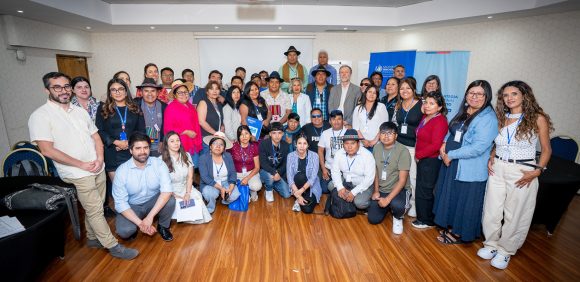
Source: OHCHR
Obtén tu Pasaporte y apoya a El Ciudadano
Elimina la publicidad, accede a contenido exclusivo y sé parte de la comunidad.
Cancela en cualquier momento · Sin permanencia