Original article: Carta de la ONU al Senado destroza proyecto de la derecha que abre la puerta a criminales de la dictadura
The UN Human Rights Office for South America sent a letter to the Chilean Senate on Tuesday, thoroughly analyzing and criticizing the controversial bill (Bulletin N° 17.370-17) on alternative sentencing, which allows older and terminally ill inmates to serve their sentences under house arrest, effectively opening the door to criminals from the civic-military dictatorship.
The letter, signed by Regional Representative Jan Jarab, responds to the mandate of the Office to promote and protect the enjoyment and full realization of all rights for everyone, as outlined in the UN Charter and international human rights law. Its content represents a significant setback for the right-wing political actors advocating for this initiative.
UN analysis states that international human rights law obligates states to investigate, prosecute, and punish the commission of crimes with appropriate penalties proportionate to the severity of the actions. According to the agency, this fundamental premise, a cornerstone of justice systems in contemporary democracies, is seriously undermined by the legislative proposal currently being discussed in Congress.
The text not only rejects the bill but also warns that it violates the principle of proportionality in sentencing – meaning that more severe crimes demand more severe penalties – as it makes no distinctions in this regard. This omission is particularly problematic in a country like Chile, where the civic-military dictatorship of Augusto Pinochet left over 44,000 victims, including 3,216 dead, of which 1,185 were forcibly disappeared but later found and identified. Additionally, around 33,000 were detained and tortured, along with 200,000 exiled.
The international organization warns that the initiative «could pave the way for impunity and strain the principle of equality before the law, as it lacks objective criteria for its proper implementation.» This lack of clear standards would create a scenario of discretionary power that could lead to unjustified differentiated treatment in cases that should receive the same legal rigor.
Furthermore, it points out that the proposal contravenes international standards related to convictions for crimes against humanity and serious human rights violations.
In statements reinforcing the organization’s critical stance, the Regional Representative of UN Human Rights clearly outlined the limits that must be respected in criminal policies.
«The State must promote penal policies that prioritize non-custodial measures where appropriate. However, such policies must always respect international human rights law,» assured Jan Jarab, establishing a fundamental distinction between the legitimate pursuit of alternatives to imprisonment and the unwavering respect for Chile’s international obligations regarding fundamental rights.
The controversial alternative sentencing bill, allowing older and terminally ill inmates to serve their sentences under house arrest, has sparked significant controversy within the Chilean political and social spectrum. The initiative, presented by right-wing senators Francisco Chahuán, Luz Ebensperger, Luciano Cruz-Coke, Alejandro Kusanovic, and Carlos Kuschel, seeks to establish mechanisms to suspend or replace the incarceration of convicts with alternative arrangements.
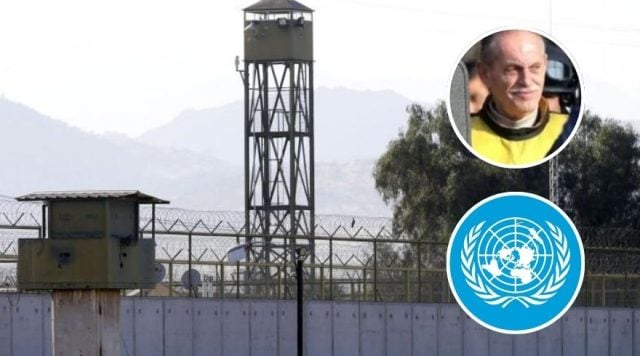
The timing of this international warning could not be more significant, as it arrives at a critical moment in the legislative process. The questioned initiative was narrowly approved in the Senate last week – 23 votes in favor and 22 against – and would directly benefit inmates at Punta Peuco convicted of crimes against humanity and human rights violations.
If the project advances in its legislative process, projections about its impacts are alarming for human rights organizations and victim families’ groups. It is estimated that over 300 convicted of crimes against humanity, as well as more than 300 criminals found guilty of homicide, femicide, child sexual abuse, and parricide, could have their prison sentences commuted to house arrest.
The UN Human Rights letter adds to the chorus of voices, from various national and international spheres, expressing deep concern over a project that, cloaked in humanitarian intentions, could ultimately benefit some of the most brutal criminals in Chile’s recent history.
Human rights organizations, groups of families of the disappeared and political executions, and specialized jurists in international law have all pointed out the serious risks posed by this initiative.
In contrast, the rejection and warning from the international organization place the debate within the framework of the international legal obligations undertaken by the Chilean State, which are incompatible with the proposal put forth by the right-wing senators.
Chile_ Office Sent Analysis to Senate on Alternative Sentencing Project – ACNUDH by leonard0.bu1tr6g0
Obtén tu Pasaporte y apoya a El Ciudadano
Elimina la publicidad, accede a contenido exclusivo y sé parte de la comunidad.
Cancela en cualquier momento · Sin permanencia