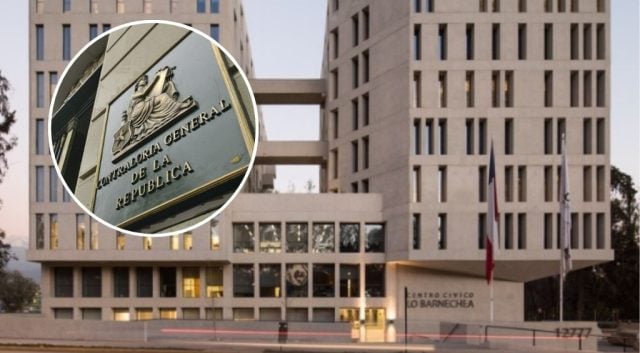
Original article: Contraloría respalda denuncia por fichaje de vecinos en Lo Barnechea con fines políticos
Chilean Audit Office Supports Complaint Over Neighbor Monitoring in Lo Barnechea for Political Purposes
The Chilean General Comptroller’s Office issued a ruling supporting a complaint made by Lo Barnechea councilor Francisco Madrid (PC) concerning the creation of investigative files containing personal information of local residents. These files were allegedly compiled between 2020 and 2021 for political purposes, according to evidence gathered during the audit.
The regulatory body determined that the Municipality of Lo Barnechea is prohibited from creating investigative files on residents for political purposes using public resources, particularly via the Association of Municipalities for Eastern Zone Security (AMSZO).
This decision followed a request for clarification from Madrid, who raised concerns about the collection of residents’ personal data without their consent and in the absence of any legal suspicions.
According to information published by Diario Constitucional, these files were created based on data collected from individuals present at various public events during those years, including protests and communal kitchens. The information used included their addresses, national ID numbers (RUT), vehicle license plates, photographs, and tools of their trade, resulting in detailed profiling of residents in the eastern sector of the capital.
Arguments from the Municipality and Response from the Comptroller’s Office
Documentation provided by the Municipality to the auditing body stated that the files were intended to record activities carried out, improve procedures, and contribute to planning preventative actions against crimes or incivilities observed in the municipality, as well as events that could affect public safety. However, the municipality indicated that «these files ceased to be compiled by the end of 2021, following exceptional periods of social unrest and the COVID-19 pandemic.»
In its resolution, the Comptroller’s Office reminded that state administration bodies must operate within their competencies and according to legal provisions. It stated that municipal corporations and associations can only engage in activities explicitly outlined in current regulations, related to the municipalities’ inherent functions.
Specifically, it referenced Article 4, letter j), of Law No. 18.695, which establishes that municipalities can participate in communal public safety only as support to agencies with specific authorities, and in coordination through mechanisms such as the Communal Public Safety Plan.
Upon analyzing the files provided by the municipality, it was confirmed they contained personal data of residents, including photographs, addresses, national ID numbers, vehicles, work tools, and participation in protests or social media posts.
Additionally, the records included minutes related to calls for gatherings in August 2020, Instagram posts about communal kitchens, and political demonstrations that took place between 2020 and 2021.
The Comptroller concluded that there was insufficient evidence that the creation of these files constituted collaboration with agencies responsible for citizen security, nor that they were conducted in coordination with the relevant institutions as required by the regulations.
Given this context, in its ruling dated February 17, 2026, the agency determined that these actions do not fall within the municipal powers regarding public safety. It requested the municipality refrain from continuing to create files using residents’ personal information for political ends.
Furthermore, «an individual under confidentiality reported the improper use of municipal resources to monitor residents exercising their constitutional rights, adding a serious dimension to the initial accusations,» reported Diario Constitucional.
Background of the Complaint: The SARI Team and the Role of AMSZO
Francisco Madrid, councilor of Lo Barnechea, stated that the case was reported to the General Comptroller’s Office between 2024 and 2025.
In May 2025, the councilor spoke with El Ciudadano and mentioned that during the tenure of former mayor Cristóbal Lira (UDI), an intelligence group operated using municipal resources to follow, spy on, and create files on neighbors, political opponents, and social leaders.
The SARI team, which stands for the «Immediate Reaction and Analysis Section» under Lo Barnechea Security, was affiliated with the AMSZO, the intermunicipal association managing resources in this domain for the municipalities of Vitacura, Las Condes, and Lo Barnechea. This setup allowed for the execution of intelligence operations that, according to the report, exceeded legal boundaries.
The facts were disclosed by Madrid in 2024 during a regular session of the Lo Barnechea Municipal Council, where he revealed the existence of files containing personal data of residents deemed «persons of interest» by the municipalities of the eastern sector. The information he received anonymously was confirmed by AMSZO’s executive secretary, Pilar Giannini, in an email.
According to Giannini, the files created shortly after the October 2019 social unrest aimed to «gather information from open sources about specific individuals capable of mobilizing people, solely to plan preventative services against potential disturbances.»
These documents prepared by Lo Barnechea’s intelligence team recorded names, national ID numbers, addresses, and even photographs of vehicle plates, taken at the workplaces of the neighbors and leaders targeted by the inquiries, suggesting that the unit also conducted ground surveillance beyond merely monitoring open sources.
Monitoring Social Media and Vehicle Surveillance
After exposing these practices to the City Council, Madrid decided to file a complaint with the Comptroller. In his statements to El Ciudadano, he elaborated on the timeline of this action.
«I received this information unofficially last year and reported it to the Comptroller in July of the same year,» he clarified in a conversation with the media.
The councilor detailed that the files also involved monitoring the activities and publications on social media made by residents and leaders, with evidence of surveillance using unmarked vehicles. He emphasized that the SARI team members dressed as civilians while conducting these intelligence activities.
«They belong to the AMSZO, and when working for the association, they are in uniform, clearly identified. However, when they conducted this surveillance, they appeared as ordinary individuals in vehicles that did not exhibit any affiliation with the association,» he explained.
Additionally, he mentioned that the Municipality of Lo Barnechea indicated these files were created between 2020 and 2021. However, he expressed doubts regarding the actual cessation of these practices.
«Supposedly it stopped then, but we have no concrete evidence of whether it continued after that. What is known is that it began post-social unrest,» he highlighted.
Profile of Those Investigated: Social Leaders and Political Opponents
The intelligence files targeted residents of Lo Barnechea, including social leaders, active participants in communal kitchens, protesters opposing the municipal government of then-mayor Cristóbal Lira, and officials. A crucial detail revealed by the investigation is that none of the individuals targeted had any criminal involvement or prior records.
«None of them had any connection to criminal activity, not at all. Beyond being political opponents, they were social leaders. For example, one person featured in one of the first cases brought to me was a taxi driver who once served as president of a neighborhood council and president of a union. That was the profile of the individuals being scrutinized,» explained the councilor, born and raised in Lo Barnechea.
This characterization of the subjects investigated strengthens the thesis that the intelligence operations had a political component rather than a public safety focus, targeting individuals exercising community leadership, some of whom had critical positions towards the municipal administration.
When asked about the number of files the political intelligence team at former mayor Lira’s service might have created, Francisco Madrid indicated that they could exceed a hundred. «They had over 100, I would even venture to say more, based on the number we have in our possession,» he noted.
Councilor Madrid Discovers He Was Also Monitored
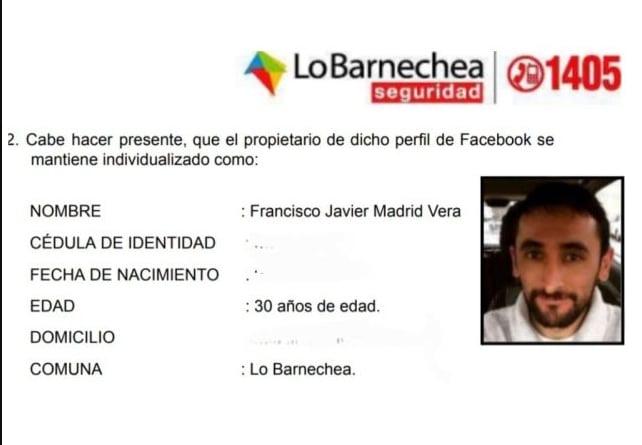
Almost a year after reporting the compilation of these files, Councilor Madrid uncovered new evidence, including a file on himself that included all his personal information. This finding was particularly revealing, as it confirmed that intelligence efforts extended not only to social leaders but also to political authorities.
«This year, I received more files that I had requested a long time ago, and among them were ones about me alongside other leaders,» the councilor recounted upon realizing he had also been tracked.
The file on Madrid, created with AMSZO resources, contained an image of him driving his car, revealing that he had been subjected to surveillance even before being elected as councilor of Lo Barnechea.
The document also included updated information about his political status: «Even while in office, I am identified in other files, and it explicitly states ‘the newly elected councilor,'» he pointed out.
The councilor’s reaction to this discovery was one of outrage, labeling the practice a violation of his fundamental rights.
«It is a complete violation of my privacy, before I became a councilor and even afterward, which I believe exacerbates the issue further. This is a completely undemocratic practice that is unacceptable in any society. The dictatorship ended more than thirty years ago, and I believe this kind of thing should not happen again. It is disgraceful,» he declared to El Ciudadano at that time.
Councilor Madrid: «We Expected Investigations or Inquiries»
The ruling from the General Comptroller’s Office affirmed Councilor Madrid’s stance regarding the illegality of the files created by the municipality, although it did not fully meet his expectations concerning sanctions. The councilor commented on an Instagram post expressing gratitude that the auditing body sided with him and ordered the municipality to refrain from such actions.
However, he criticized that no inquiries were initiated to determine individual responsibilities in these acts.
«We expected investigations or inquiries into any officials involved in these practices, which unfortunately did not occur,» he stated.
Despite this, Madrid emphasized the importance of the precedent set by the ruling.
«Nevertheless, this is an important precedent so that in our municipality, files on residents are never created in a totally irregular manner again,» he added in his comments following the ruling.
«Regardless of some reservations, we respect the ruling as it sets an important precedent, never again will there be irregular investigations into residents of Lo Barnechea. We will continue to fulfill our oversight role,» he emphasized.
This case has sparked a broader debate regarding the limits of municipal powers in security matters and the need for stricter controls on the use of public resources and intermunicipal associations for purposes that may stray from their legal objectives. The Comptroller’s resolution establishes a clear standard that municipalities cannot exceed their competencies.
Obtén tu Pasaporte y apoya a El Ciudadano
Elimina la publicidad, accede a contenido exclusivo y sé parte de la comunidad.
Cancela en cualquier momento · Sin permanencia