Original article: Investigación de la U. de Chile revela la violencia escolar que desplazó al mapuzugun
University of Chile Research Sheds Light on School Violence Displacing Mapuzugun Language
In Chile, the indigenous population represents 12%, with the Mapuche people being the largest group.
This community, rich in cultural heritage, faces significant challenges in preserving its ancestral language, with the decline in fluency in Mapuzugun among younger generations being a particularly pressing issue, leading to a gradual loss of the language.
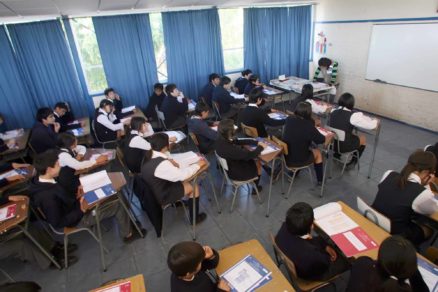
In this context, a study conducted by the University of Chile explored how school experiences have influenced the displacement of Mapuzugun.
The research, published in the journal «Institutionalized violence in schools and language displacement: the voices of Mapuche speakers and elders», was developed by a team of researchers from the Department of Education at the Faculty of Social Sciences.
The investigation took an interdisciplinary approach, integrating sociolinguistics, social sciences, and education, and involved native Mapuzugun speakers throughout various stages of the study.
The objectives included exploring—through the perspectives of speakers and elders—how the language is learned and taught to new generations, and identifying practices of discrimination and institutionalized violence within school contexts.
The task was led by Dr. Susan Sanhueza, in collaboration with researchers Fabiola Maldonado and Carolina Aroca Toloza. Other participants included Claudio Díaz (University of Concepción) and Miguel Friz with Héctor Torres Cuevas (University of Bío Bío).
Accounts of Punishment and Breakdowns in Language Transmission
To understand these experiences, the team worked with 25 Mapuche speakers and elders, including traditional educators and bearers of cultural knowledge.
Through discussion groups, researchers gathered biographical narratives related to language learning, school experiences, and family transmission processes of the language.
The testimonies revealed that the vast majority of speakers learned Mapuzugun in family and community environments—through conversations with grandparents, during ceremonies, or in daily activities—before entering the school system. However, upon reaching school, practices were implemented that restricted or discouraged the use of the language.
In this regard, a central concept of the study is institutionalized violence, understood as school practices that, while not always formalized in explicit rules, were systematically repeated across various educational contexts.
«This pattern is evident in the accounts of those who attended schools and boarding institutions until the 1980s, having been subjects of or witnesses to various forms of violence,» the researchers explain.
These forms of violence include the prohibition of speaking Mapuzugun, physical punishments (such as being forced to kneel on stones or seeds), and psychological punishments through a constant discourse denigrating the Mapuche people, their language, and culture, often summarized in the idea of a primitive people, the study adds.
«These experiences relate to a historically monocultural and monolingual educational system, where Spanish was imposed as the only valid language in the school environment, contributing to the disruption of intergenerational language transmission,» the academics emphasize.
Language, Culture, and Ongoing Challenges
The article also highlights that, for the Mapuche people, language and culture are inseparable entities.
Unlike the teaching of dominant languages such as English or French—which often focuses primarily on grammatical or phonetic aspects—the learning of Mapuzugun also involves understanding the cultural practices and social relations that are characteristic of the Mapuche people.
«In the case of Mapuzugun, learning the language also means learning how to relate to other speakers, considering aspects such as age, territory, or lineage. Therefore, language and culture cannot be separated,» the academics warn.
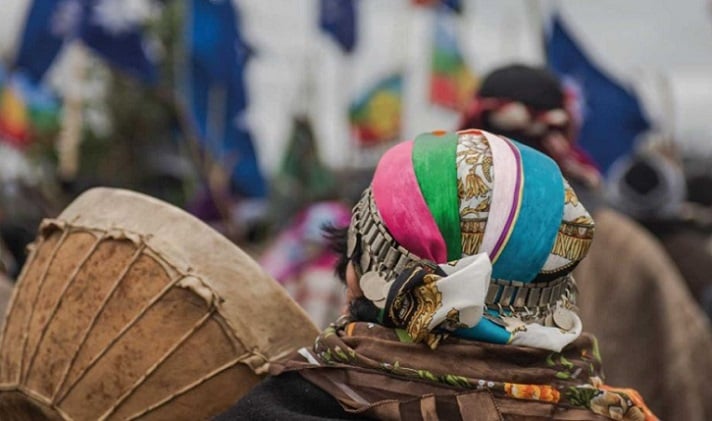
Based on these findings, the team highlights the need to strengthen the teaching of Mapuzugun from an intercultural perspective that recognizes its connection to culture, territory, and social organization forms of the Mapuche people.
Among the recommendations are: enhancing the role of traditional educators, training new teachers specialized in language instruction, and integrating intercultural approaches across various fields of university education.
Additionally, the researchers emphasize the importance of continuing participatory research alongside Mapuche communities and advancing public policies that contribute to linguistic revitalization.
«We prefer to think that the language is dormant and re-emerges when spoken within the community, with others who share the language and culture: ‘Languages do not die; they only sleep’ and require revitalization policies,» concluded the academics.
El Ciudadano
Obtén tu Pasaporte y apoya a El Ciudadano
Elimina la publicidad, accede a contenido exclusivo y sé parte de la comunidad.
Cancela en cualquier momento · Sin permanencia