Original article: Viña del Mar: Episodios de afectación a la salud marcan audiencia clave por «paño Las Salinas» en el Tribunal Ambiental
This Thursday, March 19, at 3:00 PM, the Second Environmental Court will conduct a hearing regarding case Rol R N°548-2025, related to complaints about irregularities in the remediation project for the Las Salinas area.
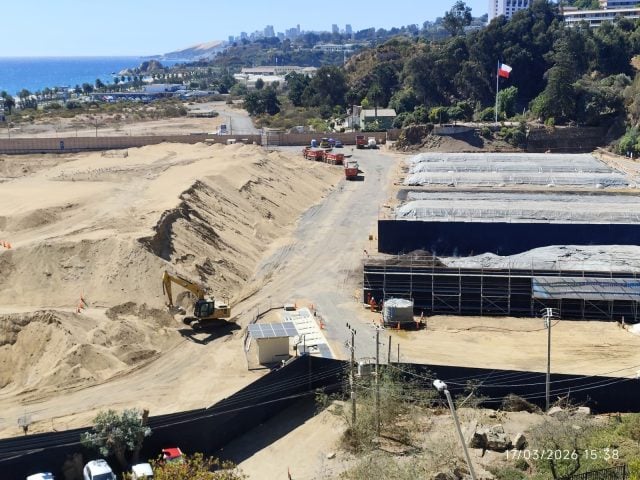
The hearing occurs amid severe concerns: residents from nearby neighborhoods have reported symptoms linked to exposure to contaminants—such as nausea, dizziness, vomiting, respiratory issues, mental health problems, and building evacuations—during episodes on February 18 and March 11, coinciding with earth movements in the Las Salinas area.
These events have raised alarm among residents of Santa Inés and the central area of Viña del Mar, including the Coraceros, Mare Nostrum, and Meseta Atlántico condominiums. In recent months, there have been multiple health-affecting incidents in areas surrounding the project, forcing emergency services to intervene.
According to the Socio-Environmental Movement «A Park for Las Salinas», these occurrences are «not isolated cases but part of a consistent pattern that coincides with ongoing construction activities and the historical exposure to petrochemical contaminants, whose effects have manifested gradually, cumulatively, and irreversibly in the population».
The Core Issue: Violation of the Participatory Monitoring Plan (PMP)
The Viña del Mar social organization explained that the complaint submitted to the Environmental Court identifies the primary conflict as the failure to comply with an essential project condition, highlighting the insufficient attention to community health and environmental safety in the project’s execution: The Participatory Monitoring Plan (PMP).
«This instrument was established as a mandatory requirement to monitor real-time risks related to specified variables; ensure transparency; and involve the community in environmental oversight,» the Movement representatives recalled.
However, according to the case presented, «the PMP has not been effectively implemented, there is no real participatory monitoring, and critical variable control during implementation is inadequate. Yet, despite this non-compliance, construction continues».
For the organized residents, this situation creates a scenario of self-management, where the company carries out a high-risk project without meeting conditions set by authorities, lacking adequate and independent environmental oversight, and failing to ensure the community’s safety and health.
«Legally, this implies a severe disruption of the environmental assessment system and a potential violation of fundamental rights,» they noted.
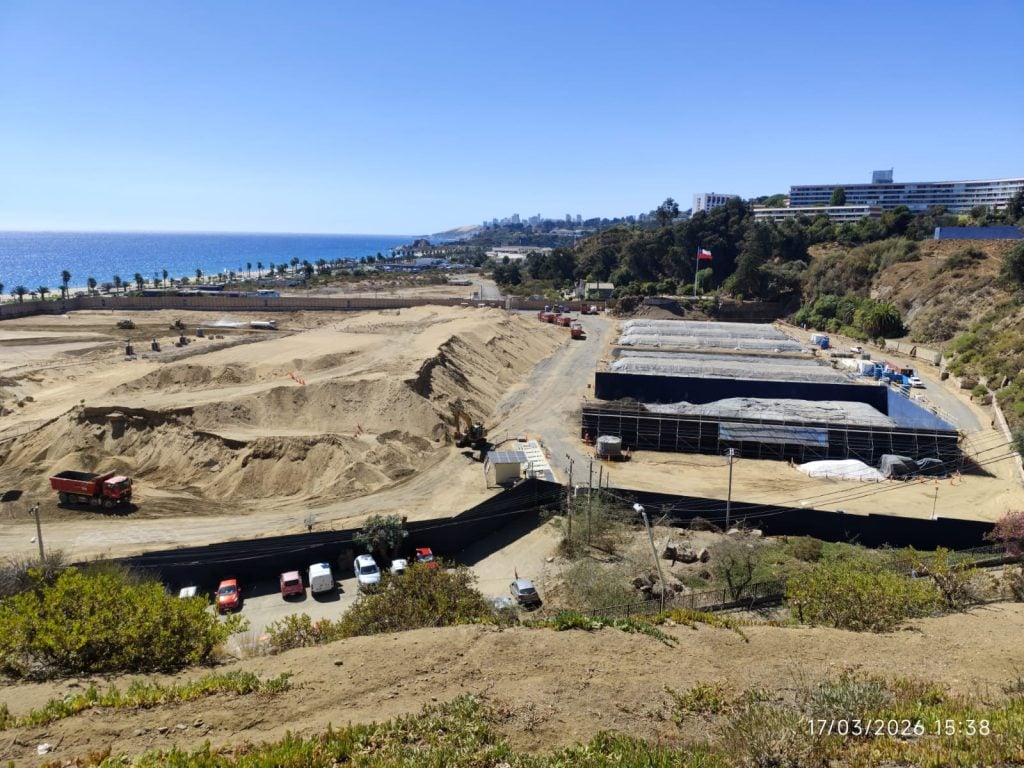
When Non-Compliance Transforms into Real Impact
For the Socio-Environmental Movement «A Park for Las Salinas», the lack of PMP implementation is not a theoretical issue, as it currently translates into direct exposure for the population, absence of early warning systems, and inability to prevent critical events.
«Recent episodes in Viña del Mar show that the warned risks were not only real, but they are already affecting the community. In this context, the remediation method called Biological Piles has demonstrated relevant impacts, necessitating a review of its application and assessment of alternatives that guarantee an effective health protection standard,» they indicated.
Furthermore, the residents insisted that «it is crucial to adopt remediation approaches that significantly minimize associated risks, including potential carcinogenic and neurotoxic effects present in the area».
Finally, considering all these circumstances, the Socio-Environmental Movement called on local and regional authorities, regulatory agencies, and the Environmental Court itself to «take immediate measures prioritizing the protection of community health and the intervened ecosystems, including reviewing the legality of ongoing operations».
«The absence of a specific human health risk analysis (HHRA) for a toxic mix generated by the excavation, removal, and transfer of contaminated soils in the Las Salinas area is particularly severe, as this exposure has not been adequately assessed,» they warned.
Under these conditions, they reiterated, «continuing operations shifts the cost of this omission directly onto the community, which is already facing the consequences of chronic environmental damage. We cannot normalize a scenario in which people’s health and the integrity of ecosystems are subordinated to the execution of a project».
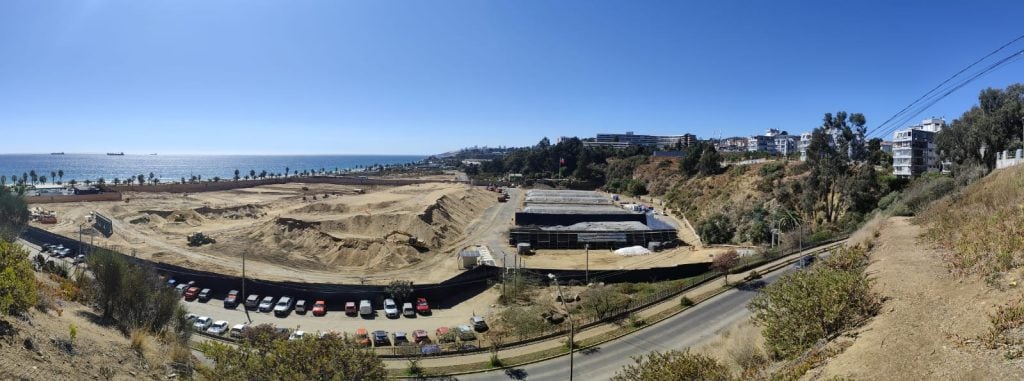
El Ciudadano
Obtén tu Pasaporte y apoya a El Ciudadano
Elimina la publicidad, accede a contenido exclusivo y sé parte de la comunidad.
Cancela en cualquier momento · Sin permanencia