Original article: Kast retira proyecto de negociación ramal: Otra derrota del Gobierno de Boric
By Leopoldo Lavín Mujica
The recent withdrawal of the sector-wide collective bargaining project by José Antonio Kast’s government comes as no surprise to those closely following Chilean politics. The new administration has fulfilled its campaign promises and acted in accordance with its oligarchic nature: governing without intermediaries for both national and foreign business elites.
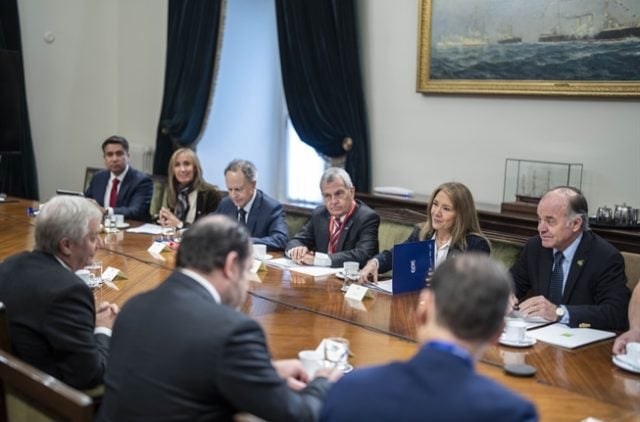
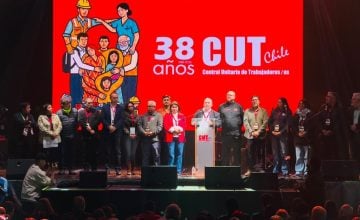
The President of the Confederation of Production and Commerce (CPC), Susana Jiménez Schuster, did not need to exert excessive pressure; she merely stated her position and the government acted accordingly. The meeting between Labor Minister Tomás Rau and business associations—while the Central Unitaria de Trabajadores (CUT) continues to wait for an invitation—illuminates this new era: capital is at the center of decision-making, and workers are relegated to the sidelines.
However, attributing this defeat solely to the new government would be an analytical error. The right acts according to its agenda and its historical trajectory. The deeper issue, which must be examined critically, occurred earlier: it was during Gabriel Boric’s government that the historic opportunity to advance a long-postponed workers’ demand was squandered.
The sectoral bargaining project—which would allow workers and employers within the same sector to agree on minimum standards regarding wages, productivity, and labor conditions—was a historical aspiration for the CUT. However, under Boric’s administration, this initiative progressed with a slowness that ultimately proved fatal. Announced in the Public Account of 2024 and designed in 2025, it was only submitted to Congress in January 2026, just two months before the end of the term.
This delay was not merely a political miscalculation or a simple administrative disorganization. Rather, it was a clear demonstration that Boric’s government, despite its transformative rhetoric, operated under a neoliberal framework that ultimately betrayed its campaign promises.
The governance style adhered to the manual of Eugenio Tironi, the sociologist and political operator who advocated for the ‘normalization’ strategy: prioritizing stability, order, and governability over structural transformations, while adapting to existing political and economic frameworks rather than challenging them.
From this perspective, systematically postponing a historical demand of workers while prioritizing market-friendly reforms—such as seeking fiscal balances or maintaining ongoing dialogues with business associations—was not an accident, but a coherent decision.
The urgency to present itself as a trustworthy partner to investors and the concern over not destabilizing macroeconomic variables outweighed the need to empower those who sustain the economy through their labor.
Lilia Jerez, former director of labor, characterized the initiative as a belated response to a programmatic commitment. Labor attorney Álvaro Domínguez went further, stating that it was difficult to understand why it was presented just 60 days before the end of the government and that its withdrawal was predictable. Even Congresswoman Lorena Pizarro of the Communist Party offered a necessary but measured self-critique: the project was presented at the last moment, and such self-reflections must be made.
As a result, the chance to move towards a fairer model dissipated in a tenure that, at its core, did not challenge the foundations of the model inherited from the dictatorship. It was not incompetence: it was coherence with a project that, cloaked in progressivism, ended up managing the same order it claimed to want to change.
If Boric’s government’s delay was significant, the passivity of the CUT and the trade union organizations is unforgivable. During nearly four years of an administration that proclaimed itself as pro-worker, with parties like the PC and PS in its ranks, the country’s main trade union confederation failed to seize the opportunity to mobilize its base to demand urgency in the project.
There were no sustained political campaigns, no informational sessions in communities, and no pressure on the streets. While business associations unleashed their full artillery—lobbying in Congress, making public statements, holding meetings in La Moneda, and remaining silent in oligarchic media—trade union leaders opted for a low profile that bordered on complacency.
For example, the Secretary General of the CUT, Eric Campos, was frequently seen on political gossip programs and light interviews—such as his appearance on «Sin Filtros» on TV+, a space dedicated to entertainment and trends—while the project he was supposed to defend languished on the desks of the Executive and Legislative branches.
This disconnection between rhetoric and action reveals that, for certain leaders, the trade union position became more about media visibility and political relationships than a stronghold for fighting for workers’ rights. Now, as the time has come to face a government of business oligarchy like Kast’s, the CUT lacks the necessary social strength to withstand it, reduced to press statements that go unheard.
What lies ahead will not be easy, but now is precisely when the real work must begin. With a state captured by oligarchic interests and a labor movement weakened by the lethargy of its own leadership, workers will face tough times. The right governs for capital, as expected, and has just signaled what its administration will be by withdrawing this project.
However, this social weakness, this inability to resist, was also built on the passivity of those who should have been in the streets demanding action from their government and preferred the television studios instead.
The historic opportunity was not squandered by Kast; it was lost during the years when a sympathetic government failed to build the necessary power to defend gains. And now, with a government that does not disguise its «class character,» the price of this omission is being paid with a regression in labor rights.
Preparing to defend the rights of workers in the face of a government serving capital and big business is not a choice but an urgent necessity. The moment has come for debate within the trade union movement: an Orientation Congress is the tool.
Leopoldo Lavín Mujica
Obtén tu Pasaporte y apoya a El Ciudadano
Elimina la publicidad, accede a contenido exclusivo y sé parte de la comunidad.
Cancela en cualquier momento · Sin permanencia