Original article: Ataque a yacimiento clave de gas en Irán: analistas alertan sobre la primera guerra energética global
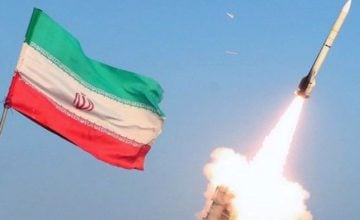
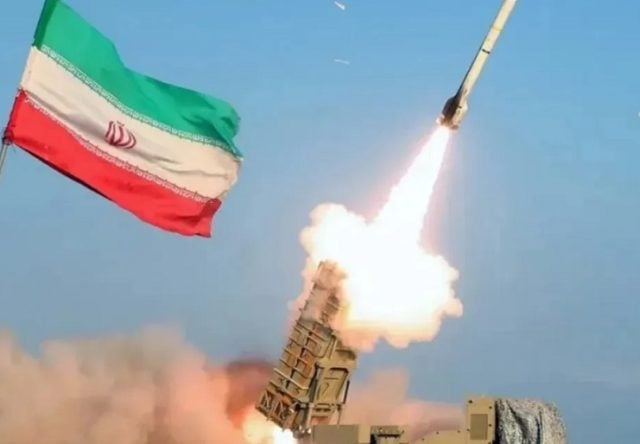
The recent Israeli strike on South Pars—the Iranian segment of the world’s largest natural gas field, shared with Qatar in the waters of the Persian Gulf—has escalated tensions in the Middle East.
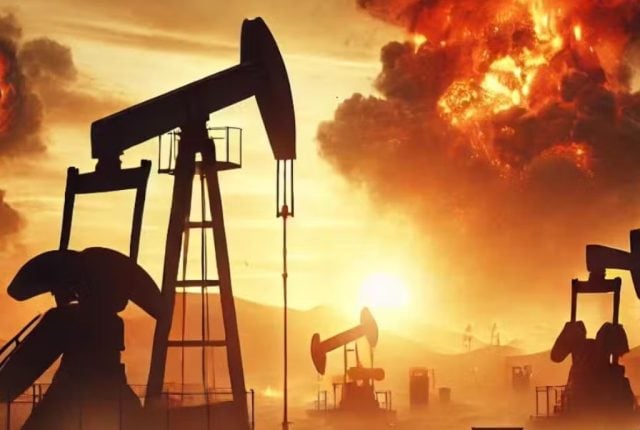
This bombardment not only deals a blow to the Islamic Republic’s energy infrastructure but has also impacted international markets, where oil prices have seen a sharp rise, increasing fears of a prolonged energy crisis. International analysts warn that this incident could mark the beginning of a new type of confrontation: the first global energy war, where pipelines, fields, and maritime routes become the main battlegrounds.
Energy expert Ron Bousso noted in statements reported by RT that the current situation presents a particularly tense landscape, with intensified fighting and petroleum supply challenges, suggesting that the prospect of stability is fading.
Bousso warned that even in the optimistic scenario where shipping through the Strait of Hormuz fully resumes, a return to normalcy in energy markets will not be an immediate process.
In other words, the ramifications of the attack on the South Pars field and the resulting volatility will extend beyond the immediate hostilities, creating a supply gap that will not close quickly.
Strait of Hormuz: Iran’s Geopolitical Weapon
In his analysis, Bousso emphasized the strategic importance of the Strait of Hormuz, a maritime passage he characterizes as the true «weapon» in Iran’s arsenal, as about one-fifth of the world’s oil and liquefied natural gas transits through it.
The strait, located between Iran and Oman, is vital for the exports of countries like Saudi Arabia, the United Arab Emirates, Kuwait, and Iraq.
The expert reminded that each day this crucial maritime route remains closed or under threat, the supply gap faced by global refineries deepens.
This situation poses a critical problem, especially for Asia. According to Bousso’s data, the continent relies on the Middle East for approximately 60% of its crude oil imports. Thus, the growing difficulty in securing timely alternative supplies—at a time when regional energy infrastructure has already been damaged—is rapidly escalating a situation that threatens to destabilize the world’s most dynamic economies.
The First Global Energy War
The current conflict is gaining historical dimension in the view of political analyst Amit Segal, who suggested that future analysts will likely define the ongoing military campaign against Iran as the starting point of the first global energy war.
He indicated that this confrontation breaks traditional warfare paradigms. «This is not a war over territory, but over the ability of the West, and especially the Far East, to continue functioning,» he stated.
In conversation with RT, Segal referred to the immediate repercussions of these events on everyday life in Western countries, noting that fluctuations in commodity markets are already having tangible and dramatic effects.
«The uptick in commodity market graphs translates quickly into drama at gas stations in the United States and Europe,» he highlighted.
In this context, he dismantled the theory that natural gas could act as a moderating element capable of halting the economic escalation stemming from the conflict. On the contrary, he suggested, «Those who thought natural gas would serve to mitigate prices have discovered otherwise: gas is not moderating prices; it is becoming a fuel that intensifies international pressure.»
For this reason, the attack on the South Pars field has had a multiplier effect on global tensions.
From Amit Segal’s perspective, the most significant pressure currently faced by the United States does not solely come from its traditional rivals, but also from its technological allies in Asia, such as «Taiwan, Japan, and South Korea.»
He explained that «these three technological powers have made it clear to the Americans: if the energy market does not stabilize, the global semiconductor industry will suffer a severe blow.»
Obtén tu Pasaporte y apoya a El Ciudadano
Elimina la publicidad, accede a contenido exclusivo y sé parte de la comunidad.
Cancela en cualquier momento · Sin permanencia