Original article: Editar la vida como negocio: organizaciones latinoamericanas denuncian avance de la edición génica sobre semillas y territorios
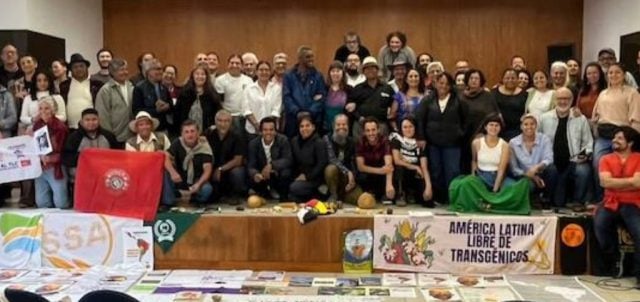
Over forty campesino, indigenous, Afro-descendant, environmental, academic, and social organizations from Latin America, which participated in the Latin American Meeting held at the Simón Bolívar Andean University in Ecuador, signed a declaration expressing a strong rejection of gene editing applied to agriculture.
The document, which consolidates the consensus of movements from a dozen countries, warns that these technologies represent a new offensive by corporations to commodify life, seize control of seeds, and disregard the rights of the peoples who have protected biodiversity for millennia.
The gathering, which took place on June 1 and 2, 2026, in Quito, brought together organizations from across the region to analyze the impacts of gene editing on food systems and territories.
The final declaration, supported by networks such as the Latin American Coordinator of Rural Organizations (CLOC-Vía Campesina), the Network for a Transgenic-Free Latin America (RALLT), and the Biodiversity Alliance, among others, arises at a critical moment: at least ten Latin American governments have advanced in deregulating these techniques, equating them with conventional breeding and exempting them from the biosecurity controls established for genetically modified organisms.
Organizations report that under the guise of «green solutions» and «precision crops,» the biotech industry attempts to replicate the model that promoted transgenics three decades ago, failing to fulfill its promises of ending hunger or reducing agrochemical use.
On the contrary, they warn that gene editing deepens the dependency of campesino communities, threatens food sovereignty, and jeopardizes human health and ecosystems, while reinforcing corporate control through patents and free trade agreements.
Below is the complete text of the «Latin American Declaration in Defense of Seeds, Biodiversity, and Food Sovereignty Against Gene Editing,» signed by participating organizations:
Campesino, indigenous, Afro-descendant, social, environmental, academic, and citizen organizations from Latin America gathered at the Latin American Meeting: Gene Editing in Latin America, Threats, and Strategies, held at the Simón Bolívar Andean University in Quito on June 1 and 2, 2026, to reflect on the impacts of gene editing in agriculture and food, express our concern and rejection of the advancement of these technologies in our territories.
1. Gene editing is part of a new technological offensive that seeks to impose controls over life, seeds, knowledge, and the territories of peoples. It is a biotechnological model that disregards biodiversity, ecosystems, and living beings, treating them as mere raw materials manipulable according to the needs of capital accumulation, altering metabolisms, ignoring ecological limits, natural scales, and ultimately the rights of communities that have cared for and recreated biodiversity for generations.
These new genetically modified organisms aim to manipulate campesino crops and eliminate the campesino population, indigenous peoples, and Afro-descendants, undermining their relationship with crops, seeds, and ways of life in their territories, which threatens biodiversity and the future of the planet.
2. Various regulations in Latin America refer to gene editing as «a precision breeding technique,» and the industry presents it as an «environmentally friendly green solution» for consumers, although it is not so precise and involves numerous risks to the health of plants, animals, and humans, to campesino food systems, food security and sovereignty, and to biodiversity and the environment.
Numerous scientific studies indicate that these technologies can generate unexpected mutations, loss of genetic material, genetic rearrangements, and other unforeseen changes.
3. While genetic modification as we once understood involved inserting genetic material from a foreign species, here the industry distorts seeds and even animals or microorganisms by «editing» their components, resulting in a disfigurement of these living organisms. It is crucial to understand that this manipulation makes them equivalent to transgenic organisms, and they can never be considered conventional.
Gene editing in a species produces changes different from those occurring in nature or conventional breeding, and its consequences are poorly understood. In genetically edited food crops, these changes could alter their biochemical composition and induce toxin production and allergic reactions with unforeseen effects on health.
4. As these are living beings whose genetic material has been artificially edited and redesigned in the lab, they must always be subject to rigorous, independent risk assessments in line with the precautionary principle and the commitments established in the Cartagena Protocol, as well as to the prohibitions or moratoriums placed on genetically modified organisms. Presenting them as conventional organisms conceals their potential risks to biodiversity, food systems, human health, and ecosystems, and limits the right of peoples to make informed decisions about technologies that affect their territories and healthy food.
5. It is a misconception that these techniques are equivalent to conventional breeding or the historical work done by campesinos, indigenous peoples, and local communities. Campesino systems of seed selection and conservation are based on observation, biological diversity, knowledge exchange, and continuous adaptation to their territories. They are collective processes built over thousands of years, linked to the deep ancestral relationship of communities with their seeds and crops, which embodies a spirituality that encompasses all aspects of life.
6. The promises of gene editing are the same as those that accompanied transgenic crops: to eliminate hunger, increase productivity, reduce pesticide use, and combat climate change. After three decades of transgenic expansion, none of these promises have been fulfilled; hunger persists, environmental degradation worsens, biodiversity continues to decline, and agriculture is increasingly dependent on external inputs, agrochemicals, and seeds controlled by corporations.
7. The expansion of gene editing directly threatens campesino practices of seed conservation, exchange, and reproduction, as it relies on patented technologies, genetic manipulation mechanisms in laboratories that alter the natural way biological processes occur. They can contaminate and change the composition of native crops and seeds, lead to the loss of genetic diversity, and drive communities away from native varieties, deepening their dependence on commercial varieties and the agrochemicals present in commercial technological packages, thus contributing to the loss of their food sovereignty and autonomy.
8. Its false promise is that it will enable the development of crops that require fewer pesticides and adapt to climate change. In reality, it strengthens new forms of intellectual property and seed privatization, favoring a small number of corporations that increase their control over food systems. Free Trade Agreements promote this situation as they expand and/or renegotiate in the region, including investment and intellectual property rules that reinforce corporate control of food.
9. At least ten Latin American governments have promoted deregulation regarding gene editing and opened a new, more dangerous phase for genetically modified organisms. Corporations have succeeded in having them considered conventional crops and exempted from biosecurity evaluations and controls, as well as prohibitions existing in some countries, arguing that they do not contain foreign genetic material from the species. This has occurred even in countries like Ecuador or Peru, which prohibit transgenic or genetically modified crops, or in Chile, where such crops are not authorized for the domestic market.
10. We are also concerned that these technologies are being applied to microorganisms authorized for release into the environment, to be used as bio-inputs and for other purposes, without respecting the prohibitions or regulations required for genetically modified organisms.
11. No technology capable of moving genes around can replace the complexity of the ecological and cultural processes that sustain agriculture and food.
In the face of this new offensive, we reaffirm that real solutions lie within communities and their intergenerational experience, in agroecology, food sovereignty, and the strengthening of campesino, indigenous, and Afro-descendant production and reproduction systems for seeds.
We call on governments, public institutions, intergovernmental organizations, social organizations, producer associations, universities, and citizens to:
- Reject and prohibit gene editing, establishing the equivalence of its products with transgenics, all of which are genetically modified organisms.
- Stop the deregulation of gene editing, ensuring the application of the precautionary principle and the right to information for producers and consumers.
- Ensure the full realization of campesino rights recognized in the United Nations Declaration on the Rights of Peasants and Other People Working in Rural Areas (UNDROP), particularly rights related to the conservation, use, exchange, and protection of campesino seeds.
We, the communities and peoples, will continue to work in an organized manner, defending seeds, knowledge, and campesino territories, with our collective ability to feed people and take care of life. We will do so using campesino-rooted agroecology as a fundamental tool for defending campesino crops and seeds, food, cooking, and food sovereignty, and for the defense of territories and the autonomy of peoples.
Signing Organizations
- Acción Ecológica
- Alianza Biodiversidad
- Red por una América Latina Libre de Transgénicos (RALLT)
- Coordinadora Latinoamericana de Organizaciones del Campo (CLOC-LVC)
- AGAPAN-Associação Gaúcho de Proteção ao Ambiente Natural
- Alianza por la Agrobiodiversidad-Colombia
- Asociación Nacional para el Fomento de la Agricultura Ecológica (ANAFAE)-Honduras
- Asejus-Guatemala
- Base-Investigaciones Sociales-Paraguay
- Campaña de la Semilla de Vía Campesina-Anamuri
- Campaña Nacional Colombia Libre de Transgénicos
- Centro Ecológico-Brasil
- Centro de Estudios para el Cambio en el Campo mexicano (Ceccam)
- Chile Mejor sin TLC
- Clínica Ambiental-Amazonía Ecuador
- Colectivo Agroecológico del Ecuador
- Colectivo por la Autonomía-México
- Comunidad en Acción-Bolivia
- Coordinadora Nacional Campesina Eloy Alfaro-Ecuador
- Consorcio Agroecológico Peruano
- Cooperacción-Perú
- Espacio Estatal en Defensa del Maíz Nativo de Oaxaca-México
- GRAIN
- Grupo ETC
- Grupo Semillas-Colombia
- Instituto de Salud Socioambiental UNR Rosario Argentina
- Movimiento Agroecológico Colombiano (MACO)
- MAELA-Colombia
- Movimento Ciência Cidadã-Brasil
- Multisectorial Paren de Fumigarnos-Santa Fé-Argentina
- Museo del Hambre-Argentina
- Organización Campesina Nuevo Lechugal-Ecuador
- GT Biodiversidade da Aliança Nacional de Agroecologia-Brasil
- Red Agroecológica del Austro-Ecuador
- Red de Coordinación en Biodiversidad de Costa Rica
- REDES-Amigos de la Tierra-Uruguay
- Red en Defensa del Maíz-México
- Red de Guardianes de Semillas del Ecuador
- Red Nacional de Agricultura Familiar (RENAF-Colombia)
- Red Nacional en Defensa de la Soberanía Alimentaria en Guatemala (REDSAG)
- Red de Semillas Libres de Colombia
- Unión de Científicos Comprometidos con la Sociedad y la Naturaleza en América Latina (UCCSNAL)
Join your organization to the Declaration by filling out this form
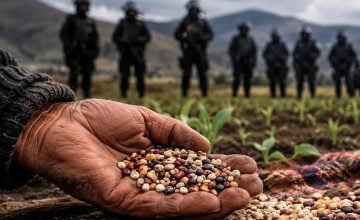
*Featured image: Biodiversity LA.
Obtén tu Pasaporte y apoya a El Ciudadano
Elimina la publicidad, accede a contenido exclusivo y sé parte de la comunidad.
Cancela en cualquier momento · Sin permanencia