Original article: Tras 33 días de movilización indígena, Brasil revoca decreto que abría paso a privatizar y dragar ríos amazónicos
The Struggle of Indigenous Peoples in Brazil Led to the Repeal of a Measure That Lacked Prior Consultation and Threatened Their Territories and Ways of Life around the Amazon Rivers Tapajós, Madeira, and Tocantins.
Following more than a month of intense mobilizations that included protests and occupations, the Brazilian government announced the repeal of Decree 12.600, a regulation that had paved the way for the privatization and authorized dredging projects in the Amazon rivers of Tapajós, Madeira, and Tocantins.
This decision, communicated after a meeting between federal authorities and indigenous representatives, marks a significant victory for social movements that criticized the lack of prior consultation and the serious socio-environmental impacts these projects would have on the Amazon region.
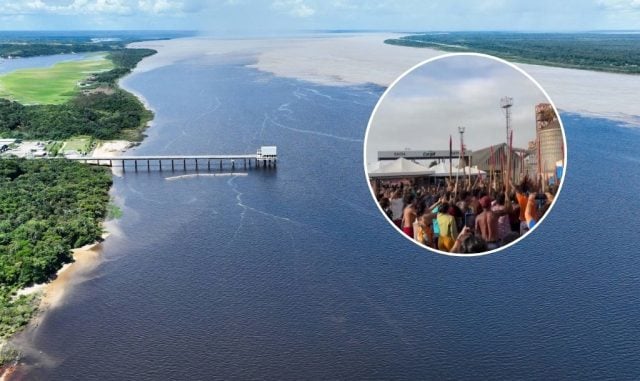
The repealed regulation aimed to grant private companies the rights to exploit stretches of waterways in the Tapajós, Madeira, and Tocantins rivers, which are vital Amazonian routes primarily used for the transport of grains. It authorized the dredging of these rivers to facilitate the flow of barges.
The mobilization leading to this outcome lasted for 33 consecutive days, during which indigenous people from the Lower Tapajós region, along with popular movements and local communities, held public demonstrations and occupations in the municipality of Santarém, located in the state of Pará.
Protesters highlighted not only the environmental impacts of the dredging projects—which involve removing sediments from the riverbeds to ease boat navigation—but also the threats posed by the potential privatization of sections of these waterways to their ways of life, cultural practices, and overall physical and cultural survival.
According to indigenous organizations, the project also included the use of explosives to remove rocks from the bed of the Tapajós River and other Amazonian waterways, which could harm local wildlife.
Decree 12.600, whose repeal was confirmed by the Minister of the General Secretariat of the Presidency, Guilherme Boulos, had triggered an immediate backlash from affected communities. The regulation laid the groundwork for concessions and authorizations that would effectively transfer control and management of significant portions of these Amazonian rivers to private entities, allowing dredging interventions without prior consultation mechanisms.
«There was a legitimate and fair mobilization from indigenous peoples regarding this decree. The government under President Lula has the capacity to listen, even to reconsider decisions when necessary. The decision will be published in the next edition of the Official Gazette,» stated Boulos at the end of the meeting with representatives from the indigenous communities of the Tapajós, Tocantins, and Madeira river basins.
Achievement of the Collective Strength of Indigenous Peoples
The announcement was well-received by the indigenous organizations that led the protests. The Indigenous Council of Tapajós and Arapiuns, which brings together 14 native peoples from the Lower Tapajós region in Pará, issued a statement celebrating the government’s decision while emphasizing the decisive role of the mobilization.
«This achievement stems from the collective strength of indigenous peoples, riverside communities, and traditional communities that stood firm against the threats to our territories and waters. Our rivers are not commodities; they are life, culture, and future,» expressed representatives of this organization, as reported by TeleSUR.
The Minister of Indigenous Peoples, Sônia Guajajara, who also took part in the negotiations and followed up on the conflict, emphasized the conditions under which the protest unfolded and the urgency of addressing not only the political demands but also the humanitarian situation of the protesters.
«Indigenous people have occupied the area for 33 days, with women and children camping there in precarious conditions. Therefore, it was essential for us to consider the humanitarian situation faced by the movement at this moment,» the official noted.
The conflict over Decree 12.600 falls within a long history of territorial disputes in the Brazilian Amazon, where infrastructure and development projects have repeatedly clashed with the territorial and cultural rights of indigenous peoples.
According to information provided by the Pan-Amazonian Ecclesial Network (Repam-Brasil), an organization closely monitoring the conflict and negotiations, President Luiz Inácio Lula da Silva’s government not only announced the repeal of the contested decree but also communicated the creation of an Interministerial Working Group tasked with guiding dialogue processes with communities and analyzing land demarcation demands in the Tapajós basin, as reported by the cited outlet.
Despite the government’s announcement regarding the revocation of the controversial Decree 12.600 being confirmed to popular movements, the measure is still pending publication in the Official Gazette of the Union, which legally formalizes it and grants full legal effects. Therefore, representatives from local communities have stated that mobilization activities will continue until formal and unequivocal guarantees about the definitive cancellation of the announced dredging tender are provided.
Relacionados
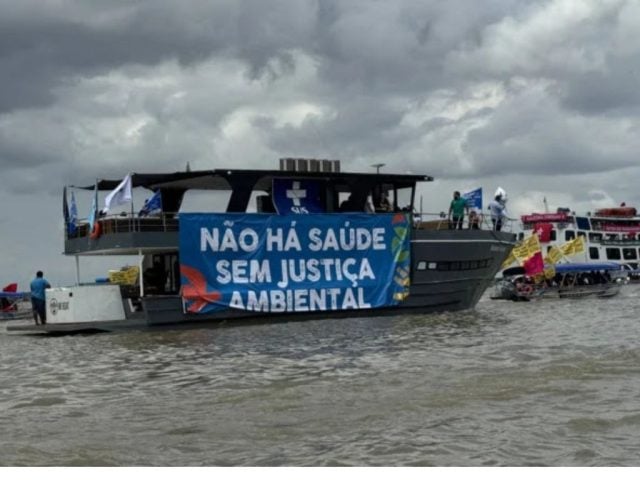
People's Summit Kicks Off in Brazil: 30,000 Attendees and 1,100 Organizations Challenge COP30's Official Agenda
Hace 3 meses
Central Obrera Celebrates Repeal of Controversial Decree 5503: "Bolivia Emerges Victorious"
Hace 1 mes
Historic Meeting Between Jeannette Jara and Mapuche Communities: 35 Years Since the Nueva Imperial Agreement
Hace 3 meses
Bolivia's Fuel Subsidy Removal Sparks Protests: President Rodrigo Paz Faces Calls to Resign
Hace 2 meses