Original article: Adiós al celular en clases: Congreso despacha ley que regula uso de dispositivos móviles en colegios
Ban on Mobile Phones in Schools: Congress Approves New Law Regulating Device Use
With an overwhelming majority and no opposing votes, the Chamber of Deputies approved on Tuesday the Senate’s amendments, paving the way for the Executive to enact this measure as law. This legislation regulates and prohibits the use of personal communication electronic devices in educational institutions, consolidating multiple bills (11728, 12885, 16062, 16520, 16527, 16574, and 16575) presented over the past few years.
The law aims to combat distractions, enhance academic performance, promote school coexistence, and improve the emotional health of students.
During discussions in the Senate, several changes were made and backed by a broad majority. Notably, the definition of «mobile phone technology» was replaced with «personal communication electronic devices.» This new classification includes devices used for telecommunications and internet access for continuous interaction and digital content access.
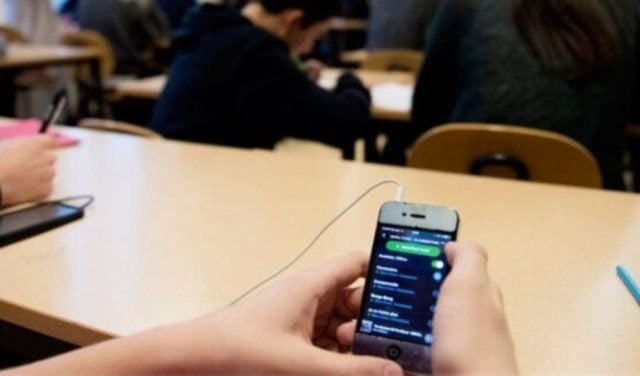
The regulation establishes a general ban on the use of cellphones during curricular activities in classrooms from preschool to secondary education, applicable to all members of the educational community.
Exceptions for Mobile Device Use in Classrooms
However, the law allows several situations in which device use is permitted, including health criteria, emergencies, and educational or family needs:
- If a student has special educational needs for which technological use is deemed essential for learning, this must be certified by a qualified professional.
- In the event of emergencies, disasters, or catastrophes.
- For students with health conditions diagnosed by a physician requiring regular monitoring through mobile devices, also necessitating medical certification.
- When the use of devices is deemed beneficial for teaching, based on the nature of the curricular or extracurricular activity in primary or secondary education.
- If the guardian or tutor requests temporary permission on justified grounds related to the student’s personal or family safety.
The last two exceptions will require explicit authorization from the school director.
Implementation and Deadlines
The enforcement of the prohibition will fall under the Superintendence of Education, which will issue guidelines on mechanisms, conditions, and consequences.
For secondary education, internal regulations may allow designated spaces, timings, and specific activities where use is permitted, considering the progressive autonomy of students. Additionally, procedures, actions, and measures will be established to regulate appropriate use and the consequences of non-compliance.
Schools are tasked with informing the entire educational community about the responsible use of mobile devices and their risks, while also promoting training initiatives to prevent misuse or criminal activities involving these tools.
The law will take effect from the beginning of the 2026 school year, with institutions having until June 30, 2026, to update their internal regulations to comply with the new rules.
Furthermore, the Ministry of Education is required to provide an evaluation of the measure in 2030.
«An Uncontrolled Plague»
Education Minister Nicolás Cataldo praised the Congress’s approval of the bill, describing this vote as «a very significant step in something we consider extremely relevant due to the harmful effects it is currently generating among our children and youth.»
The official stated that the widespread use of cellphones in classrooms «has become an uncontrolled plague, one of the main pandemics affecting children and youth» in Chile and worldwide.
According to the minister, urgent regulation was needed in Chile due to high connectivity levels, a large number of cellphones per capita, and an educational system with some of the widest coverage in Latin America and the Caribbean.
“It was necessary to initiate a debate that fosters a cultural change at the national level» regarding the use of these technological devices without proper regulations.
“This is about how appropriate it is for children to extensively use technological tools,» he emphasized.
However, Cataldo stressed that the effectiveness of this law will largely depend on the commitment of families, parents, and guardians, as otherwise, its impact could be limited and difficult to sustain over time.
“We need everyone to commit to eradicating (…) the extensive use of cellphones when there are no regulations ensuring appropriate use,» he stated in remarks reported by Diario U. de Chile.
Relacionados

Congress Advances New Fishing Law: Voting Begins on General Access Regime for Artisanal Fishermen
Hace 2 meses
New Law to Protect Rights of Student Caregivers: "I Care and Study" Initiative Approved
Hace 3 meses
Municipal Security Law Approved: Cities Can Enhance Patrols, Surveillance, and Victim Support
Hace 3 meses