Original article: “Va todo en silencio”: vecinos de Cobquecura alertan por proyecto de tierras raras sin información pública
Concerns Grow in Cobquecura Over Silent Rare Earth Project with No Public Information
A shadow of uncertainty looms over the commune of Cobquecura, located in the Itata province of the Ñuble Region. As the Concepción-based company NeoRe SpA forges a web of financial and strategic alliances in Australia, the United States, and Canada to advance its ambitious rare earth elements project, local residents are increasingly alarmed by the complete lack of public information and dialogue.
They claim that the initiative, dubbed «La Marigen,» which could significantly impact the local environment, is progressing in utter silence.
The Silent Expansion of NeoRe SpA
The scenario unfolds piece by piece, hidden from the community’s view. NeoRe SpA, a company founded in Concepción in March 2020 by metallurgical civil engineer Arturo Albornoz Wegertseder—who has experience with the controversial Canadian project Aclara (formerly BioLantánidos) in Penco—has been consolidating a dominant position along the coastal strip of Ñuble and Maule.
A key milestone was reached in October 2025 when the Quirihue Court auctioned off 68 mining concessions that belonged to Aclara (Ree Uno SpA) in Ñuble due to unpaid fees. NeoRe SpA was the sole bidder, acquiring five concessions (Elena 14, 15, 17, 18, and 19) to the east of Buchupureo, totaling 4,250 hectares, according to La Discusión.cl.
These acquisitions supplement the concessions that the company had already established in Cobquecura (referred to as «Lourdes») between 2020 and 2024, along with multiple pending applications in Curepto, Constitución, Empedrado, and Chanco in the Maule Region. In total, the «La Marigen» project encompasses approximately 22,800 hectares under the exploration modality of Rare Earth Elements (REE) in Ionic Adsorption Clays (IAC).
It also involves communes such as Cobquecura, Chanco, Constitución, Curepto, and Empedrado, with mining concessions and applications named Lourdes, Rosita, Nicole, Oba, and Eliana.
Seeking Global Capital
NeoRe’s strategy for realizing «La Marigen» hinges on attracting foreign capital. The Concepción-based construction company Madesal acquired a 50% share in July 2021. Since then, the company has announced a string of international agreements.
In July 2024, the Australian company Pearl Gull Iron Ltd. reported agreements with NeoRe. By March 2025, the American Royalty Management Holding Corp. announced a strategic partnership. The latest movement occurred on November 12, when the Canadian company Chilean Cobalt Corp. signed a non-binding letter of intent to conduct due diligence and negotiate an option to acquire up to 100% of the 4,250-hectare deposit, as reported.
To finance its operations in Chile, Chilean Cobalt announced on December 3 the closing of a private placement that included Glencore Plc and Madesal SpA.
Citizen Concerns in Cobquecura: «So Far, Everything is Silent»
Amid this corporate strategy in global markets, misinformation prevails in Cobquecura. Emilio Placencia, a surveyor and local resident of the San José area, has been researching the company’s movements and alerting the community.
«I’ve been investigating, but so far we have not received any public statement from the company regarding this project, nor has there been any outreach to the municipality or the affected communities,» Placencia criticized, accusing NeoRe of a «lack of information and transparency.»
«There is significant misinformation regarding rare earth elements, and there are exploration concessions from rare earth companies in Cobquecura, with evidence that they are making moves to raise capital abroad, both in Australia and the United States, and now in Canada,» he detailed.
According to Placencia, to proceed, the project must undergo an environmental evaluation by the Environmental Assessment Service (SEA), which should ensure citizen participation.
«This is a super-silent form of mining; it is modular, and from the outside, it can neither be seen nor felt. So, the issue is complex because conflicts arise late. Thus, ideally, it would be best to start citizen participation early to ensure a smooth development of these projects, as so far, everything is silent, and no one knows anything,» he warned.
The environmental concerns are tangible: soil and water contamination, intensive extraction of a water resource already scarce in the area, and the impact on tourism, the locality’s main economic activity, given its proximity to Buchupureo.
«There could be environmental impacts that we are unaware of, but we see that they do exist in other communities, such as Penco, where they are resisting the project; they are facing a socio-environmental conflict regarding it, and we fear that the same type of conflict will occur here in Cobquecura,» Placencia concluded.
The Municipal Position: A Definite Rejection
The Cobquecura mayor’s office shares concerns over the lack of transparency and is openly opposed to any mining projects in the territory.
«There is no official information regarding mining exploration activities in the commune (…) we have learned that in areas where wind farms are intended to be installed, there are mining concessions granted by the state in significant parts of our commune,» stated Mayor Jorge Romero Villalobos. He added: «There is no formal knowledge of these concessions or companies wanting to develop these projects in our commune. Nor have they requested meetings through the Lobby Law for further details, a situation that worries us as an administration because these companies are operating very clandestinely,» he criticized.
When asked about the impacts, the mayor pointed out that the initiative «does not generate any benefits for our commune.»
«Cobquecura’s development is anchored in a projection linked to tourism with a strong social and cultural attachment. Protecting our territory is crucial (…) There are no associated benefits with the mining industry; on the contrary, these projects create pollution in our environment, intensive extraction of our natural resources, such as water, erosion and land use, and deforestation,» he stated in comments to La Discusión.cl.
«The subject of mining projects in Cobquecura is starting to make noise, and we are concerned. Unfortunately, there is no official information from the government, nor from the companies (…) our neighbors and we, as authorities, do not want this type of project in our commune,» concluded the mayor.
View of the Mining Authority
The Biobío region’s mining authority, which includes Ñuble, provided a different perspective focused on strategic potential. Minister Dusan Marinovic Millán indicated that projects like this, «even though this initiative is in a very preliminary development stage,» demonstrate that «Chile is a reliable partner for the mining of the future.»
The authority emphasized technical differences: «Rare earth projects, concerning their extraction and soil remediation, are quite distinct from traditional mining projects, complementing the ability to engage communities and provide projects aligned with existing environmental regulations.»
Marinovic referred to the National Strategy for Critical Minerals, where rare earths «emerge as an important element within Chile’s potential.»
Regarding the areas of Maule, Ñuble, and Biobío, he remarked that they expect the emergence of «initiatives under sustainability conditions. In this way, we aspire to consolidate nimble mining, with reasonable permit processing times that safeguard protected legal rights while making investment attractive,» as indicated by the cited digital publication.
A Rare Earths Project in Dispute
While NeoRe SpA and its international partners bet on the strategic value of rare earths—crucial for electric vehicle magnets and wind turbines—in Cobquecura, alarm is growing over a development model they view as alien and threatening. The specter of the Penco conflict, where the Aclara project has faced fierce public opposition and a complex environmental assessment, looms over the coast of Ñuble.
The dilemma is clear: on one side, the promise of a «mining of the future» and sustainable for a critical global resource; on the other, the defense of a territory reliant on tourism that fears for its water, soil, and identity. In the center lies a community that, for now, only hears silence, fearing that «La Marigen» could become a repeat of a conflict that the area wish to avoid.
Relacionados
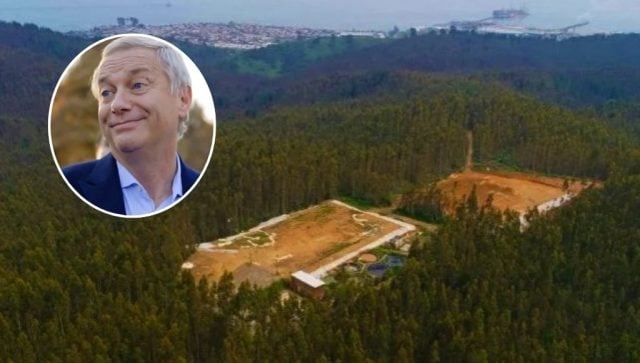
Kast Defends Aclara's Rare Earth Project Amidst Environmental Concerns and Wildfire Links
Hace 3 semanas

U.S. Ambassador Declares Chile's Rare Minerals Crucial for National Security: Strategic Push for Control Intensifies
Hace 3 semanas
Massive Mobilization in Concepción Demands Reconstruction of Territories: "No More Forest Operations, No to Rare Earth Mining"
Hace 2 semanas
Massive Mobilization in Concepción Calls for Reconstruction: "No More Forestry, No to Rare Earth Mining"
Hace 2 semanas