Original article: Tribunal condenó a carabineros de Estación Central por torturas y apremios ilegítimos ocurridos entre 2016 y 2018
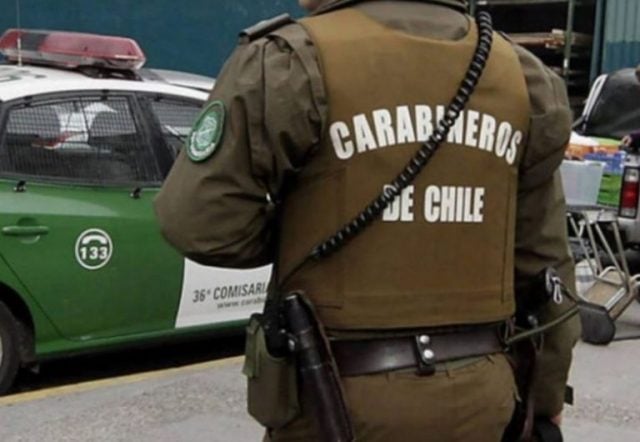
Four carabiners from the 21st Police Station in Central Station have been convicted for various acts of torture and illegal coercion against individuals in police custody.
The heaviest sentence was imposed on Carlos Leal Aqueveque, who received a 15-year jail term for the crimes of torture, illegal coercion, wrongful detentions, and forgery of public documents.
The National Institute of Human Rights (INDH) reported that most incidents involved the arbitrary detention of individuals in public spaces, accused of committing crimes without prior judicial orders or in flagrante delicto.
After these arrests, the officers took the detainees to the police station, where the majority of the abuses confirmed by the court occurred.
Upon hearing this news, the head of the Metropolitan Region of the INDH, Beatriz Contreras, praised the ruling and emphasized that «the most significant aspect of this sentence is the detailed analysis the judges made of the criminal offenses in light of international human rights standards.»
Contreras explained that among the confirmed coercive acts, it was established that, at the order of an officer, a police dog bit an individual during an operation. In this regard, the lawyer noted that «this is the first case in democracy where torture is established through the use of animals.»
Other Convicted Officers
In addition to Leal Aqueveque, Carlos Soto Soto and Camilo Vásquez Masman were sentenced to 5 years in prison for the crime of torture. The latter also received a 541-day sentence for forgery of public documents. Meanwhile, Carlos Calderón Ortega was sentenced to 4 years in prison for illegal coercion.
In this context, Sebastián Cabezas, head of the Rights Protection, Legislation, and Justice Unit at the INDH, reiterated that «the guilty verdict is extremely important, as it sends a clear message: officers responsible for upholding the law must do so in full compliance with laws and regulations while safeguarding the integrity of all individuals in police custody.»
Furthermore, the lawyer emphasized that «adhering procedures to legal standards does not hinder police function; rather, it makes it more efficient, creating security ecosystems for both detainees and the police officers themselves.»
Torture and Illegal Coercion
In Chile, torture is defined under Law 20.968, enacted in 2016. It is described as «any act by which severe pain or suffering, whether physical, sexual, or psychological, is intentionally inflicted on a person to obtain information, statements, or confessions from them or a third party, to punish them for an act they have committed or are alleged to have committed, or to intimidate or coerce that person.»
The definition of torture also includes acts motivated by discrimination based on political, religious, ethnic, social grounds, sexual orientation, disability status, among others.
The law establishes a scale of severity, with the highest level being torture. The second level of such crimes is categorized as «illegal coercion or other cruel, inhuman, or degrading treatments that do not amount to torture.»
Additionally, the Constitution enshrines the right to life and the physical and psychological integrity of individuals, explicitly stating that «the application of any illegal coercion is prohibited.»
The Citizen