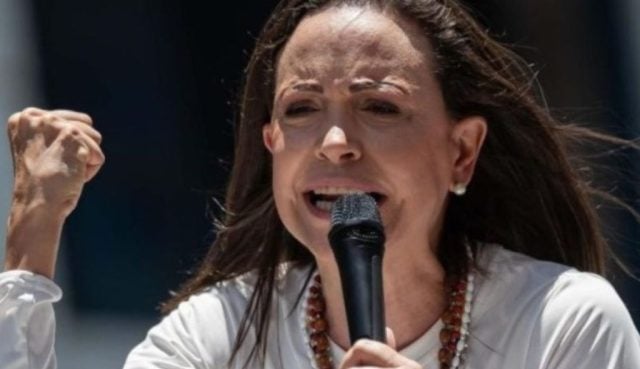
Original article: Predominó el tono crítico: Cambio de mando en Chile generó más de 46 mil menciones en redes sociales
The digital conversation surrounding the presidential transition in Chile revealed a public sentiment «marked by skepticism,» according to real-time monitoring by the SOUL agency.
The survey registered a total of 46,828 mentions related to the event, reaching an estimated audience of over 3.7 million people across platforms such as X, Facebook, news portals, and blogs.
SOUL indicated that these results are consistent with monitoring of the cabinet announcement last January, which recorded 16,377 mentions with a 41% negative sentiment.
«Two months later, the transition tripled the volume to 46,828 mentions, yet the emotional thermometer remained unchanged. This was not a one-off reaction: it reflects a mood that citizens reaffirmed on the day of the handover, generating three times more conversation with the same proportion of criticism,» SOUL detailed.
In detail, the analysis found that 41.0% of mentions regarding the transition had a negative tone, while 20.1% were positive. The remaining 38.9% were neutral, mostly related to informational content or journalistic coverage of the event.
«One of the most relevant aspects of the monitoring is that criticism was not confined to a single political sector. Both the incoming president, José Antonio Kast, and the outgoing president, Gabriel Boric, received similar levels of scrutiny, suggesting that the dissatisfaction expressed on social media transcends traditional ideological divisions,» noted SOUL.
Key Topics Driving the Conversation
According to the survey results, the digital debate was mainly organized around two major axes. The first was Transition and Governance (26.0%), focusing on expectations for the new government. The second was Evaluation of the Outgoing Government’s Legacy (24.0%), discussing the political and social balance of the outgoing term.
A third significant focus was Polarization (13.9%), which saw the highest level of negativity in the analysis: 87.1% of mentions in this axis were critical.
Additionally, an unexpected factor emerged in the digital conversation: international relations (13.4%), driven by controversy surrounding the invitation to Flavio Bolsonaro and the absence of Brazilian President Luiz Inácio Lula da Silva.
In terms of digital prominence, José Antonio Kast accounted for 43.1% of the mentions, with a conversation profile consisting of 43.6% negative comments and 26.8% positive. Meanwhile, Gabriel Boric garnered 28.5% of the mentions, with 40.9% negative and 25.4% positive.
Both leaders combined made up 71.6% of all documented conversations, confirming that the social media debate was primarily structured around presidential figures.
Secondary figures included international leaders and historical references, such as Lula da Silva, Flavio Bolsonaro, Javier Milei, Salvador Allende, and Michelle Bachelet. Additionally, Camila Vallejo was noted for her positive digital perception, achieving 75% of mentions that were favorable.
«Democracy Valued, Leadership Questioned»
Another significant finding from the monitoring was that mentions addressing the transition from an institutional perspective (the ceremony, republican tradition, or the value of democracy) recorded an 83.7% neutrality.
«This suggests that, in the digital debate, the appreciation for democratic institutions remains relatively stable, while criticism is predominantly directed at the political figures representing them,» pointed out Óscar Marcos, managing director of SOUL. He explained that the volume and tone of the digital conversation reflect a deeper signal regarding the current political climate.
«What these nearly 47,000 mentions show is not just a snapshot of opinion but a reflection of the country’s mood towards its political cycle. When criticism is distributed equally towards the outgoing and incoming governments, it reveals not merely an ideological dispute, but a gap between citizen expectations and political leadership,» concluded Óscar Marcos.
El Ciudadano
Relacionados

Bad Bunny Shines at the Super Bowl: Over 239 Million Social Media Interactions and an Impressive 71.7% Positive Feedback
Hace 4 semanas

Global Report Highlights Urgent Need to Accelerate Decarbonization Efforts Amid Rising Emissions
Hace 1 mes