Original article: “Golpe electoral consumado” y “usurpación de la soberanía popular” en Honduras: CNE en la mira por declaratoria sin recuento total y con denuncias de fraude
«Electoral Coup Accomplished» and «Usurpation of Popular Sovereignty» in Honduras: CNE Faces Scrutiny Over Declaration Without Full Vote Count Amid Fraud Allegations
In an event described by political sectors, analysts, and even one of its own councilors as an «electoral coup accomplished» and a «usurpation of popular sovereignty,» the National Electoral Council (CNE) of Honduras officially announced the results of the general elections held on November 30 last night, without completing the total vote count for parliamentary and municipal positions, amid a flood of allegations of fraud, inconsistencies, alleged manipulation, and international interference.
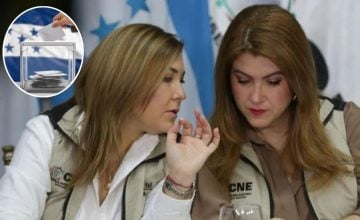
The declaration, made just hours before the constitutional deadline set for midnight on December 30, was issued during a Zoom session—without national broadcasting—and supported by councilors Ana Paola Hall (president, Liberal Party) and Cossette López (fiscal, National Party), along with alternate councilor Carlos Cardona. However, principal councilor Marlon Ochoa was absent, claiming he had not been summoned.
The electoral officials justified their decision by emphasizing the urgent need to comply with constitutional mandates and to avoid what they termed «serious and irreparable damages» to the country, arguing that the disruption of the Special Counting Boards (JERV) had left the special counting process unfinished for material reasons.
They asserted that they acted freely and without any coercion, insisting that the numerous flaws in the process were not due to malice or institutional negligence.
The officials rationalized that the results would not be published in the Official Journal La Gaceta, claiming that the context does not provide «adequate conditions,» as reported by the digital outlet Criterio.hn.
According to López, the omission in La Gaceta «does not affect the legality of the act,» asserting that the results «are public and verifiable.»
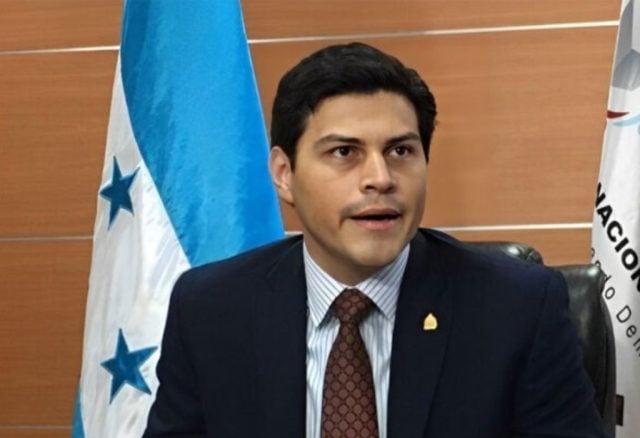
However, this narrative clashes with the stance of excluded councilor Marlon Ochoa. In a request sent the very morning of Tuesday to Hall and López, Ochoa warned of the impossibility of a legitimate declaration and requested an exceptional extension of the deadline to announce the electoral results concerning parliamentary and municipal corporations.
He pointed out that a declaration cannot be made without counting all the ballots and emphasized that there remained a significant volume still pending scrutiny. He asserted that a hasty decision would further damage the legitimacy of the process and that he would not support a declaration that, in his words, would endorse a fraud by omission of the total vote count.
Specifically, the councilor denounced a renewed attempt at «usurping popular will» by the traditional bipartisan system.
Ochoa, representing the ruling Libre Party in the CNE, told reporters that «there cannot be a declaration today (…), I will not lend, rent, or sell my signature that belongs to the people to validate and justify a new usurpation of popular will.»
He emphasized that the results issued by the electoral body without processing all the ballots and addressing the challenges «are null and lack any legal validity.»
Ochoa went further with his accusations, alleging that the councilors and Cardona acted with «criminal complicity,» replicating the same pattern in legislative and municipal levels used in the presidential declaration of December 23, where—according to him—306 ballots were left unprocessed.
«There is not a single elective level that can be declared today,» he concluded, likening the event to the electoral fraud of 2017 and asserting that this level of «usurping popular will» was not even seen during David Matamoros Batson’s time, the former magistrate of the now-defunct Supreme Electoral Tribunal (TSE, now CNE), when Juan Orlando Hernández was imposed in power under serious fraud allegations.
Official Results Announced Amid Allegations of Irregularities
Despite the warnings, the CNE proceeded to declare the results. In the National Congress, the National Party would gain 49 deputies; the Liberal Party, 41; Libre, 35; the PINU, 2; and the Christian Democracy, 1. In municipal corporations, the National Party would win 151 mayorships; the Liberal Party 76; Libre 69; the PINU 1; and an independent candidate with 1 municipality, reinforcing the traditional bipartisan dominance at the local level.
In an unprecedented act that increases opacity, the councilors announced that these results would not be published in the Official Journal La Gaceta, arguing that the context does not provide «adequate conditions.» Instead, they will be disseminated on the CNE’s website and in print newspapers. Cossette López defended this omission, asserting that «it does not affect the legality of the act,» since the results «are public and verifiable.»
This method is similar to that applied in the controversial presidential declaration issued on December 23.
The body acknowledged the existence of 430 ballots with inconsistencies and 66 challenges in mayorships, as well as three in parliamentary seats, which are now in the hands of the Electoral Justice Tribunal (TJE), an entity that arrives at this stage with a severe internal crisis and legal proceedings against it.
Call to Action Against the «Accomplished Coup»
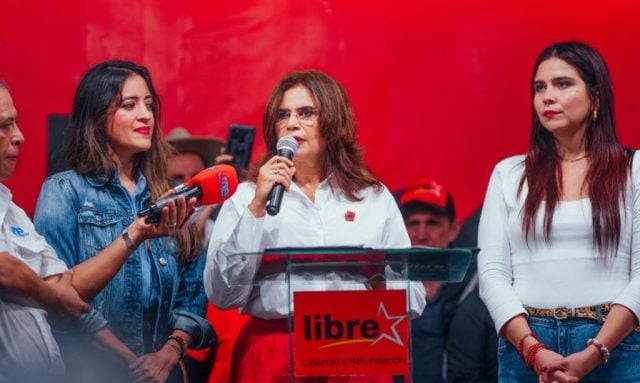
The reaction from the opposition and civil society was swift. The presidential candidate from Liberty and Refoundation (Libre), Rixi Moncada, was decisive on her social media: «Electoral coup accomplished at @CneHonduras. The usurpation of popular sovereignty is a historical offense against the Honduran people.»
In a message posted on her account on X, Moncada denounced that the results were made official without completing the total count of ballots and votes, which constitutes a violation of the Honduran Constitution. She reaffirmed her accusation of interference by U.S. President Donald Trump to favor the right-wing Nasry «Tito» Asfura.
«Without counting all the ballots and the voters’ votes, violating the Constitution of the Republic and the Electoral Law, in a historically unprecedented coup-like act, from Washington, @realDonaldTrump has sullied the democratic order of our country in collusion with the National Party, the gangs, and organized crime,» she stated.
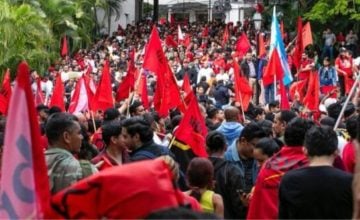
In light of this scenario, Moncada extended a call for mobilization, announcing a new phase of «people’s struggle in defense of truth and democratic values.»
«I call on everyone not to be overwhelmed by the power thieves who carry a record of fraud that will mark them forever,» she emphasized, while stating that «betrayal is repugnant but betrayal to the Homeland is also detestable.»
Meanwhile, the presidential candidate from the Liberal Party, Salvador Nasralla, labeled the declaration as a «failed act» and declared that he would not recognize Asfura as president.
Prosecutor to Investigate as Analysts Label Electoral Process the «Dirtiest»
In a significant turn of events, Attorney General Johel Zelaya announced, following the declaration, that the Public Ministry will initiate legal actions to investigate the anomalies in the process after having remained aloof during its development. He warned that no act against popular sovereignty would go unpunished.
Political analysts have described this election cycle as «the dirtiest,» highlighting the accusations of manipulation, the thousands of ballots with inconsistencies, and the unusual interference of former U.S. President Donald Trump, who days before the elections urged voters to support Nasry Asfura, promising assistance and the release of Juan Orlando Hernández—an act that was finalized one day after the voting—elements that shadowed the elections, as noted by Criterio.hn.
With this declaration, the CNE casts doubt on the legitimacy of the electoral process as a combination of incomplete recounting, refusal to publish in the official medium, serious internal accusations, and the furious reaction of the opposition configure a scenario of profound post-electoral crisis, where citizens’ distrust and the debate concerning respect for popular sovereignty will mark the beginning of the upcoming government cycle in Honduras. The battle now moves to the streets and the courts.