Original article: Pinochetismo sin privilegios: se terminó la TV y el refrigerador en ex Punta Peuco tras fallo de la Suprema
In a landmark ruling regarding the prison regime for those convicted of crimes against humanity during the dictatorship of Augusto Pinochet, the Supreme Court has upheld the decision by Gendarmería to remove household appliances such as refrigerators and televisions from inmates at the Til-Til Penitentiary Center (formerly known as Punta Peuco).
Following a protracted legal battle lasting several months, the country’s highest court confirmed the Santiago Court of Appeals’ ruling, which rejected a protection request from 134 inmates seeking to overturn Gendarmería’s restrictions on these appliances in the penal facility.
The decision from the Third Chamber of the Supreme Court, consisting of judges Omar Astudillo, Gonzalo Ruz, interim minister Eliana Quezada, and attorneys Fabiola Lathrop and Andrea Ruiz, supports the actions taken by prison administration, citing electrical infrastructure safety concerns and the ongoing transformation of this facility into a standard prison for those convicted of crimes against humanity.
Furthermore, the request for a judicial inspection of the prison was dismissed as «unnecessary.» The Supreme Court’s ruling put an end to the privileges previously enjoyed by inmates, who had access to a wide array of electrical appliances.
According to records, the penitentiary housed a total of 105 refrigerators, 73 televisions, 74 heaters, 29 electric ovens, microwaves, and kettles, 10 washer-dryers, and 75 personal mattresses, indicating an exceptional situation for a facility that accommodates individuals convicted of human rights violations during the civil-military dictatorship.
The conflict began on June 19, 2025, when the prison warden, Major Cristóbal Vargas, informed inmates that, per instructions from the National Gendarmería Command, most personal refrigerators would be removed, allowing only one appliance for every four inmates. A deadline of seven days was set, until June 26, for inmates to inform their families and remove the devices.
The inmates, all older adults averaging 80 years and convicted of crimes against humanity during the military dictatorship in Chile, argued through their attorney, Carla Fernández Montero, that these refrigerators were essential for storing medical supplies—like insulin—and special nutritional products needed for their chronic health issues, including diabetes and hypertension.
“The refrigerators enable the preservation of perishable foods, especially dairy, meats, and eggs, which are crucial for the diet of older adults, and that the daily meal provided does not suffice, especially for individuals requiring high-protein rather than high-fat diets, such as the 78 hypertensive inmates,” she noted in the amparo resource against Gendarmería.
The attorney claimed that the decision violated «fundamental rights» and could amount to «cruel treatment and torture against these individuals, tarnishing their dignity.”
“My clients are being treated in a manner contrary to law, amounting to cruel and inhumane treatment. Indeed, the conditions described represent a blatant attack on their dignity,” Fernández stated in the legal document.
She also referenced international standards such as the International Covenant on Civil and Political Rights and the United Nations Mandela Rules concerning the treatment of incarcerated individuals.
At that time, Gendarmería justified their action on the grounds of “energy efficiency,” but the inmates and their defense claimed it was linked to the presidential announcement to convert Punta Peuco into a standard prison, made by President Gabriel Boric during his recent State of the Nation Address, which would involve the incorporation of new inmates with different criminal profiles.
In the legal action, attorney Fernández requested that the court accept the resource and order Gendarmería to refrain from removing the refrigerators and appliances.
The Request for Judicial Inspection that Was Dismissed
In her presentation to the Supreme Court, attorney Carla Fernández not only questioned the removal of electrical appliances but also reported a series of circumstances that, in her opinion, indicated an unacceptable deterioration of living conditions in the prison.
She even requested the presence of judicial prosecutor Jorge Pizarro “to demonstrate that there would be a lack of medical attention, food scarcity, the destruction of the garden that provided medicinal herbs, the removal of the booths where inmates received visits, the elimination of the grotto of the Virgin Mary that prisoners built, the removal of the vending machine for drinks, and the destruction of the library they had established,” as noted by La Tercera.
This enumeration of alleged grievances aimed at constructing a comprehensive picture of deteriorating prison conditions that would justify judicial intervention.
In the amparo resource filed with the Supreme Court, she presented arguments that appealed to both climatic conditions and safety risks that, according to her, would affect inmates, and further posited the necessity for verification that “inmates have restricted access to a common area where they previously performed daily outdoor walks without risk of falling for those who require walkers, canes, or who suffer from bone issues, as there are ongoing works to accommodate individuals convicted of common crimes,” the cited media reported.
“Taking into account the undignified overcrowding conditions currently experienced by my clients who are deprived of their liberty and the certain risk of a prison fire due to an electrical failure and the high temperatures experienced in the prison, which exacerbates the electrical situation, I request that as a measure for better resolution of this case, the visit of the judicial prosecutor be ordered,” Fernández stated in her writing.
However, the judges of the Third Chamber did not accept this request. The Supreme Court ruling, in addition to confirming the appellate court’s judgment, also rejected the idea of having the Supreme Court’s judicial prosecutor, Jorge Pizarro, visit the prison, deeming it “unnecessary.”
Legal Grounds for the Supreme Court’s Decision
The legal reasoning underpinning the Supreme Court’s decision is based on the legal powers held by Gendarmería to administer penitentiary facilities and the security considerations that justify regulating the items allowed into prisons. By confirming the Santiago Court of Appeals’ ruling, the Supreme Court adopted the arguments presented last November by the capital appellate court, which maintained that Gendarmería’s determination “is neither illegal nor arbitrary.”
Furthermore, it affirmed that the measures taken by the penitentiary institution to remove the excess of appliances and carry out renovations of the facility were in line with regulations and did not violate the rights of the inmates.
According to the ruling confirmed by the Supreme Court, in accordance with Article 11 of the Penitentiary Establishments Regulation, “Gendarmería may adopt all measures necessary for the proper administration of penitentiary facilities, with the sole exception of respecting the basic living conditions specified in the same regulation.”
Regarding the number of refrigerators per inmate, one for every four (a total of 105 in the penitentiary), the ruling determined that it “is not illegal or arbitrary” and that the measure “is based on safety reasons concerning the prison’s infrastructure.”
This is due to a technical report indicating “a progressive increase in loads and consumption due to overcrowding” in the prison’s electrical system, combined with “deteriorating conditions of the facilities” that presented “poor conditions and evident overload from high-consumption electrical devices.”
The report indicated that a renovation project costing over 370 million pesos was necessary to normalize the facilities, financial resources which were unavailable.
The members of the Third Chamber did not find that the measure taken by Gendarmería “imposes an undignified treatment of the complainants or affects their fundamental rights.”
The Supreme Court also accepted the information provided by Gendarmería regarding that medications “are administered exclusively by healthcare personnel and are not stored by inmates in personal appliances” and that institutional diet menus “adequately cover the dietary needs of the inmates.”
Despite the rejection of this specific motion, two amparo resources filed by attorney Solange Robert de la Mahotiere, which also aim to retain the appliances and tents where inmates receive visits, are still in process.

Punta Peuco Transformed into a Standard Prison: End of Privileges
The Supreme Court ruling occurs within the context of the ongoing transformation of the former Punta Peuco Penitentiary, which for three decades housed only those convicted of human rights violations during the military dictatorship, into a standard prison.
President Gabriel Boric announced this transformation in his public address on June 1, 2025, stating that “from today, there are no prisoners of first and second category in Chile” and that “prison placements will be assigned according to security criteria, not privileges.”
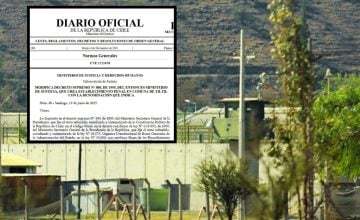
On November 4, the official decree renaming the facility to “Til-Til Penitentiary Compliance Center” was published in the Official Gazette.
Inaugurated in 1995 during the presidency of Eduardo Frei Ruiz-Tagle, Punta Peuco was designed specifically to house military personnel and former state agents convicted of crimes against humanity.
Unlike the traditional penitentiary system, the facility was characterized by offering exceptional and privileged conditions of detention, including individual rooms in four modules, each with living areas, kitchens, and showers, access to personal appliances, televisions with satellite television access, personal computers (without internet), communal yards, a multi-sport court, and even a tennis court.
For decades, these conditions had been criticized in reports from the Judiciary and the National Human Rights Institute, as well as by relatives of victims who pointed to the privileged situation in which inmates lived compared to other prison complexes in the country.
The rejection of the amparo resource concerning the refrigerators solidifies the normalization process for the former Punta Peuco, marking the end of an era in Chile’s penitentiary system and aligning the living conditions of those convicted of crimes from the dictatorship with those of the broader prison population in the country.
Relacionados

Former Punta Peuco Inmates Lose Fight Over Personal Refrigerators: Court Upholds Gendarmería's Decision
Hace 3 meses
Santiago Appeals Court Denies Habeas Corpus for Former Punta Peuco Inmates Amid Prison Changes
Hace 3 meses
Santiago Appeals Court Dismisses Punta Peuco Inmates' Appeal Against Common Prisoner Admissions
Hace 4 meses