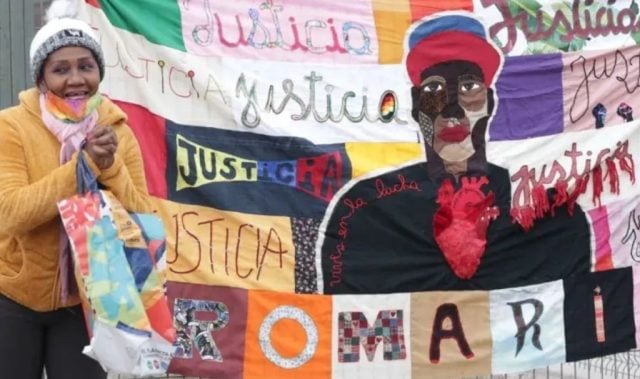
Original article: Abogada de familia de Romario Veloz advierte a Kast: indultos a uniformados serían “impunidad absoluta”
Family Lawyer of Romario Veloz Warns Kast: Pardons for Military Members Would Signal «Absolute Impunity»
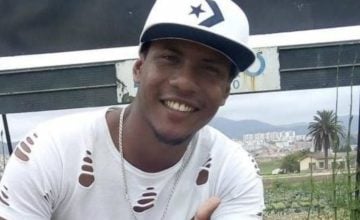
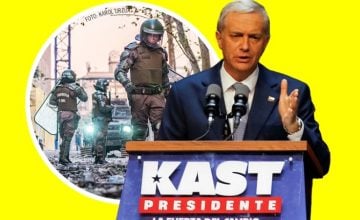
In light of the news that Army Captain José Santiago Faúndez Sepúlveda, sentenced in May 2025 by the Supreme Court to 15 years in prison for the homicide of Romario Wladimir Veloz Cortés, is poised to be the first military member to receive a pardon from the government of José Antonio Kast, the attorney representing the victim’s family, Adriana Rojas, cautioned that the measure would not only convey a message of «absolute impunity» but also endorse state violence.
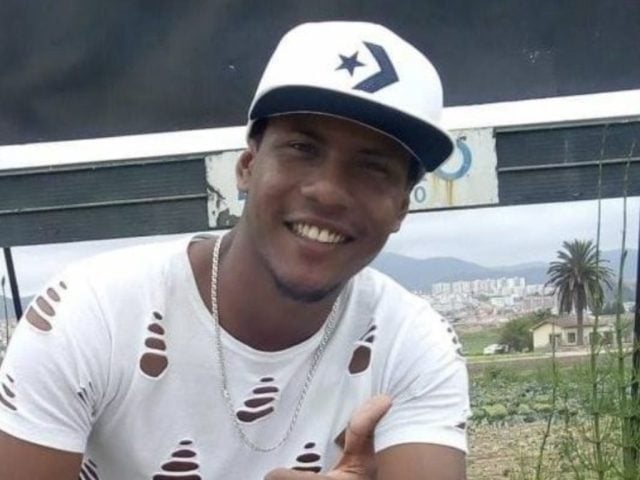
It is important to remember that the 26-year-old Ecuadorian civil engineering student was the first fatality of the social uprising, dying on October 20, 2019, in La Serena.
Five years after the events, specifically on May 7, 2025, the Supreme Court issued its ruling and upheld the 15-year effective prison sentence against Captain José Faúndez for the completed crime of unnecessary violence resulting in death, in addition to two counts of unnecessary violence that caused serious injuries to Rolando Alberto Robledo Vergara and César Antonio Véliz Cortés.
Days ago, journalist Mónica Pérez revealed during the program Hablemos en Off on Radio Duna that the pardon could be justified by claims that the former captain had attempted to resign from the Army due to health issues prior to the incidents, a request that was never completed at the time.
In an interview with Radio y Diario Universidad de Chile, lawyer Adriana Rojas described the emotional state of Mery Cortez, the mother of the deceased young man, stating that the possibility of granting a pardon to the officer convicted of her son’s death fills her with «anger, sadness, and also fear.»
“Romario has a young daughter who has also had to endure these six years of seeking justice, and this fear arises from the possibility of being targeted for acts of revenge or any situation that could put them at risk,” the lawyer explained.
According to Rojas, this fear is not merely imagined by the family, but stems from the reality that criminals could be released and that they possess firearms proficiency, having been trained by a state institution like the Army.
The attorney made a direct appeal to Kast, pointing out that while the power of pardon is discretionary, it cannot be exercised arbitrarily without considering the victims, and insisted that the president has an obligation to be aware of the families’ pain before making a decision that undermines the sense of justice.
“This discretionary power, while it exists, cannot be arbitrary. He must understand all the information coming from the victims and their families. It cannot be based solely on the need for these military personnel to quickly leave prison while bypassing judicial procedures,” she estimated.
In her analysis, Rojas also joined the criticisms arising from various sectors within the judicial and political landscape, including from Supreme Court President Gloria Ana Chevesich, questioning the very nature of presidential pardons. The representative of the Veloz family described it as a remnant of monarchical times still present in Chile’s democracy, suggesting that its use in this particular context represents a regression in terms of fundamental guarantees.
“The red line must be the defense of human rights,” Rojas asserted, broadening the perspective beyond the case of José Faúndez. The lawyer warned that the discussion should not only focus on one name since there are another 13 officials convicted who could benefit from a potential pardon policy. She reminded that along with Faúndez, others like “José Arenas Mancilla, responsible for the shooting of César Véliz, and Carlos Robledo, who shot and killed Romario Veloz,” were also sentenced for the same military operation in La Serena.
“On the other hand, we don’t have many convictions for cases related to the social upheaval, and that is also important to mention,” she added.
Role of the Army and Non-compliance with Sentencing
Diving deeper into the difficulties that marked the judicial process, Adriana Rojas revealed the institutional obstacles they faced during their six-year pursuit of justice. According to the lawyer, one of the most complex aspects was the lack of cooperation from the Army, which allegedly hindered internal investigations with political backing from that time. Rojas pointed directly at the current mayor of Santiago, Mario Desbordes, who served as Defense Minister during the events that unfolded under the government of the late former president Sebastián Piñera, accusing him of endorsing institutional resistance to investigations.
“An institutional defense was made, and to this day, that institutional defense continues, because while José Faúndez is convicted and serving his sentence in Colina 1, he has not been discharged from the institution, and that decision lies with the Command,” Rojas accused.
The attorney claimed that, despite being convicted of homicide and unnecessary violence, Faúndez remains part of the Army and continues to receive his salary, which she considers a privileged situation that contradicts the judicial ruling.
Universidad de Chile.
Pardon and «Absolute Impunity»
In this context, the potential granting of a pardon to free Faúndez under these circumstances would send a devastating message to society: that of «absolute impunity.»
She warned that such a measure not only violates victims’ right to justice but also breaks the fundamental duty of the State to ensure the non-repetition of human rights violations.
“We would be endorsing state violence against citizens. That seems serious to me and furthermore, it opens the door for situations like this to occur again and to keep being disguised as heroic acts, because we have already experienced this narrative,” she recalled.
The lawyer drew a parallel with denialist discourses from other dark periods in Chile’s history. “This notion of heroic acts has also been echoed by political sectors claiming that the atrocious crimes committed during the dictatorship were heroic acts for the nation, and today we again hear those discourses. We must not allow this to advance, and this is also a call from Mery, urging the opposition to speak out strongly, but also for citizens to empathize again with these narratives, to continue building them as part of our recent history, and above all, to defend our rights collectively,” she emphasized.
Finally, Adriana Rojas indicated that the family’s legal actions will not cease if the pardon is granted by Kast’s administration. She confirmed they will resort to international instances to denounce the measure and will remain vigilant to the reaction from civil society.
“I think it’s a rather complex situation that puts the country on edge,” the lawyer stressed.
Murder of Romario Veloz During the Uprising
The case alarming regarding the criteria that the far-right president may be employing to exercise the constitutional power of granting a pardon has its origins in an October afternoon in 2019 in La Serena, Coquimbo Region, amidst the most severe social crisis that Chile has faced in decades.
The details of the judicial ruling describe the sequence of events that occurred on Route 5 North, near the Plaza La Serena mall.
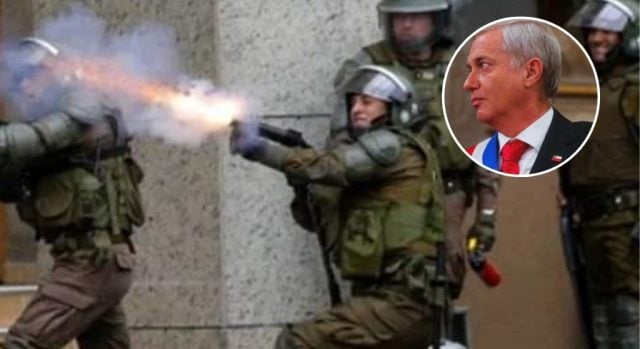
At that time, Captain José Santiago Faúndez Sepúlveda was serving as the commander of the Fundamental Emergency Unit (UFE No. 1), deployed under the constitutional state of emergency. At 6:08 PM, during a protest, looting was reported at certain commercial establishments. The courts later established that Faúndez instructed the formation of a chain of shooters, a maneuver that initially succeeded in deterring those stealing items. However, despite achieving the objective without needing to use lethal force, the officer ordered successive advances of military lines, escalating the tension at the location.
At 6:13 PM, Faúndez Sepúlveda ordered his soldiers to open fire with the rifles they were carrying. The court confirmed that the weapons—7.62 caliber SIG and 5.56 caliber Galil—were primarily loaded with live ammunition. Two minutes later, at 6:15 PM, conscript Rojas Barrera fired a live round that struck Rolando Alberto Robledo Vergara, causing serious injuries that left him with permanent physical deformity and functional disability.
The tragedy culminated at 6:22 PM. Aware that his subordinates had already fired live ammunition and were aiming at civilians, Faúndez gave a second command to fire. It was then that soldier conscript Robledo Olguín fired his Galil rifle, hitting Romario Wladimir Veloz Cortés, a 26-year-old Ecuadorian civil engineering student who was standing nearby, resulting in his death. In the same burst, Corporal Arenas Mancilla fired his rifle, injuring César Antonio Véliz Cortés in the left leg, with injuries that, without timely medical attention, would have resulted in death.
The Second Chamber of the Supreme Court, composed of justices Manuel Antonio Valderrama, Leopoldo Llanos, María Teresa Letelier, María Soledad Melo, and lawyer member Eduardo Gandulfo, upheld the sentences in May 2025, dismissing the defense’s appeals. In addition to the 15 years for Captain Faúndez, the 10-year sentence for conscript Robledo Olguín, and the 5-year sentence for Corporal Arenas Mancilla were confirmed.
Artículos Relacionados
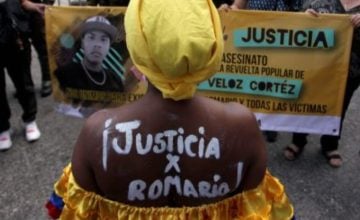
Captain Found Guilty of Killing Romario Veloz During Social Unrest May Be First to Receive Pardon from Kast
Hace 1 semana
Abogada de familia de Romario Veloz advierte a Kast: indultos a uniformados serían “impunidad absoluta”
Hace 2 minutos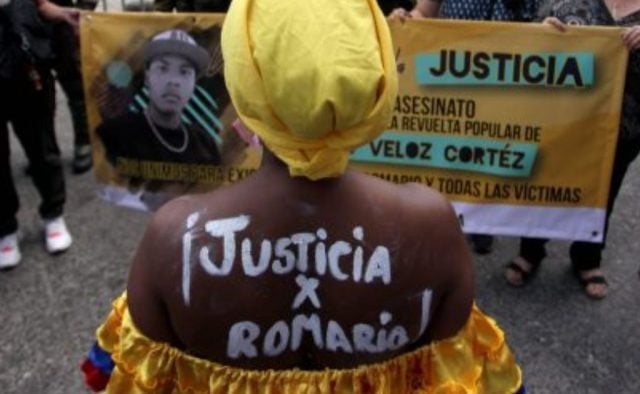
Capitán condenado por matar a Romario Veloz en la revuelta social podría ser el primer indultado de Kast
Hace 1 semana