Original article: Avances frágiles y retrocesos silenciosos: El duro balance ambiental que dejó 2025 en Chile
The year 2025 ended with an ambiguous signal for Chile’s environmental policy. This is the conclusion drawn from the 2025 Socio-Environmental Balance report, produced by Chile Sustentable, which critically examines the major advancements, setbacks, and challenges in energy transition, biodiversity, water security, environmental governance, and climate action amidst an escalating climate and socio-ecological crisis.
Among the notable advancements highlighted, the report emphasizes the update of the Decarbonization Plan, which officially ruled out co-combustion of coal with ammonia as a pathway for energy transition, and the approval—after nearly a decade of delays—of a new Emissions Standard for Thermoelectric Plants, tightening limits on atmospheric pollutants to align more closely with World Health Organization recommendations.
However, the balance warns that these achievements are insufficient given the continued reliance on coal as a power generation source until 2040, the lack of closure commitments by 2030, and the failure to retire plants like Nueva Ventanas and Campiche.
These decisions, the document notes, extend the health and environmental impacts on communities already facing environmental sacrifice conditions, including Huasco, Mejillones, Coronel, and Quintero-Puchuncaví, for at least an additional 15 years.
In terms of biodiversity, the report acknowledges significant institutional progress, such as the development of regulations to implement the Biodiversity and Protected Areas Service (SBAP) and the establishment of a Protected Salt Flats Network.
Nevertheless, Chile Sustentable warns about the fragility of these advancements, evidenced by delays in regulations, the opening of protected salt flats to lithium exploitation, and the persistence of authorizations inherited from the military regime that allow environmental harm in high-value ecosystems, such as the Salar de Surire, despite its status as a Ramsar Site and Natural Monument.
The assessment is even more critical regarding water security and glacier protection. Three years after the reform of the Water Code, the report finds weak and fragmented implementation, with no integrated watershed management plans or effective new water governance.
Meanwhile, proposed glacier protection laws remain stalled in Congress, amidst increasing water stress and the retreat of strategic glacier masses vital for human and ecosystem supply.
One of the main areas of concern in the report is the consolidation of an environmental deregulation agenda during 2025. The promulgation of the Sectoral Authorizations Law and the Regulatory Simplification Law introduced mechanisms that replace permits with sworn declarations and reduce prior state oversight, weakening enforcement and increasing risks for communities and ecosystems under the pretext of accelerating investment and economic growth.
In contrast, on the international stage, Chile maintained an active role, updating its Nationally Determined Contribution (NDC), joining the Belém Declaration for the end of fossil fuels, and supporting initiatives against climate misinformation.
However, the report emphasizes the widening gap between this external leadership and the internal coherence of public policies, strained by an economic orientation prioritizing environmental flexibility.
The 2025 Socio-Environmental Balance, created by Chile Sustentable, concludes that the country stands at a decisive crossroads: to advance toward a just socio-ecological transition with robust standards and citizen participation, or to deepen a development model that continues to shift environmental and health costs onto the most vulnerable territories and communities.
You can review the complete document HERE
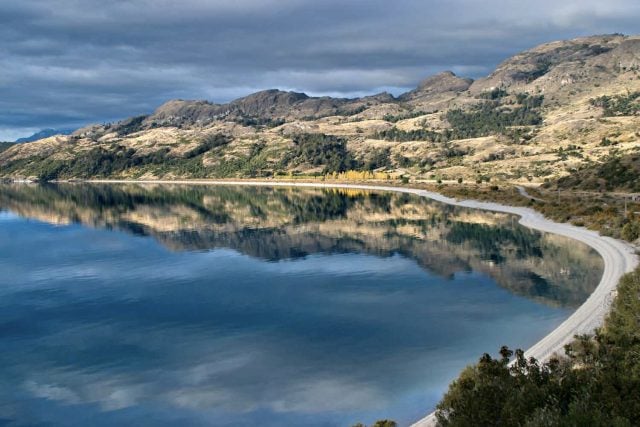
El Ciudadano / Cover Photo: Linde Waidhofer, Chelenko Basin.-
Relacionados
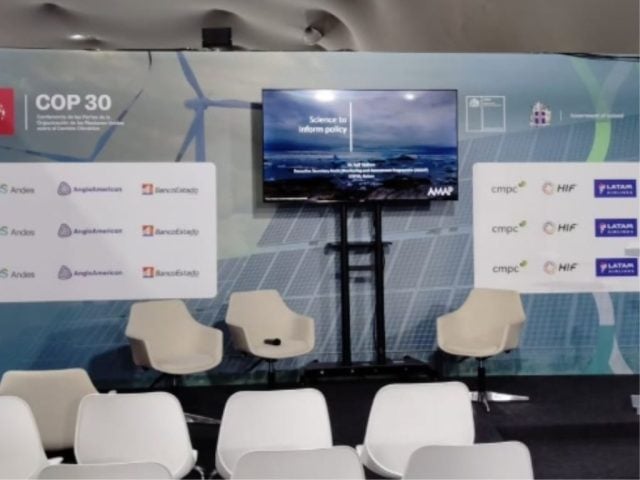
Chile's Pavilion at COP30 Faces Backlash Over Corporate Funding and Climate Policy 'Capture' by Companies
Hace 3 meses
COP30: Chilean Representatives Warn Decarbonization Progress Lacks Social and Environmental Repair
Hace 3 meses
Pope's Meeting with Mining Leaders Sparks Criticism Over Unpunished Environmental Crimes
Hace 2 semanas