Original article: INDH presenta recurso de protección por malos olores que están afectando a comunidades de Chillán Viejo
The Ñuble regional office of the National Human Rights Institute (INDH) has submitted a protection order to the Chillán Court of Appeals due to repeated episodes of unpleasant odors affecting residents of the Chillán – Chillán Viejo conurbation.
According to reports, there have been at least five significant episodes since 2016, raising concerns about the impact on the quality of life for local inhabitants and the potential health effects.
After the filing, the regional director of the INDH, Jorge Bustos, emphasized that «as an autonomous institution, we have the duty to act when fundamental rights are threatened. The right to live in an environment free from pollution and the protection of health require concrete measures; thus, this legal action aims to ensure urgent measures are taken for the community’s benefit.»
In the petition, the INDH requests that the Court of Appeals instruct the Environmental Superintendence (SMA) to «take action to prevent imminent harm to the health of individuals and the environment,» and to conduct a report on the current operations of the odor-emitting plants, detailing their compliance with regulations.
Additionally, the INDH has urged the Ñuble Health Authority to take environmental samples for a study to determine any potential health risks to the population.
Finally, Jorge Bustos highlighted that the purpose of the petition is to develop a periodic monitoring and inspection plan, with an obligation to inform the Court of Appeals and the local community about the proper functioning of the plant.
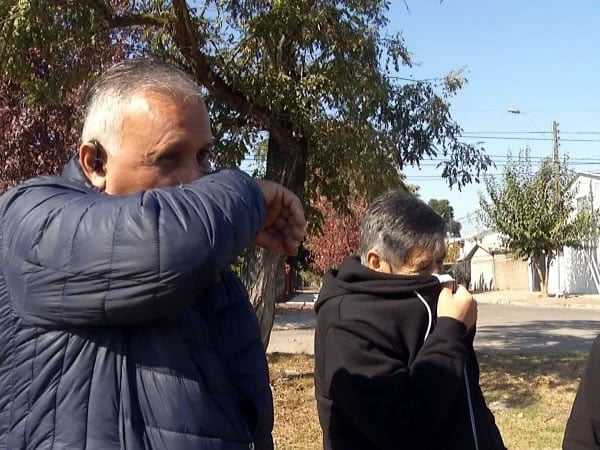
Meanwhile, Carlos Venegas, a resident affected and member of the Chillán Viejo Environmental Committee, stated that «it is urgent and essential to legislate to build a regulatory framework that guarantees health and quality of life for people; otherwise, inspections will continue to be insufficient.»
Regarding this issue, the INDH regional office had already contacted both the Health Authority and the Environmental Superintendence, and according to information provided by the Health Authority, there were 14 reports of foul odors registered in January 2026, leading to inspections at a pig farm and at Essbio’s wastewater treatment plant.
Residents report that the episodes primarily occur during the nights and early mornings.
Health and Pollution-Free Environment: Fundamental Rights
The right to health and the right to live in an environment free of pollution are fundamental rights recognized in the Constitution and in international human rights treaties ratified by Chile. Both are closely linked, as the environmental conditions in which people live directly influence their physical, mental well-being, and quality of life.
The right to health is not limited to access to medical care but encompasses the ability to thrive in an environment that does not expose individuals to avoidable risks, such as the persistent presence of pollutants, foul odors, or other environmental factors that can cause illnesses, physical discomfort, or mental health issues.
«Living in adequate environmental conditions is a basic requirement for exercising this right,» the INDH reiterated.
Moreover, the right to live in an environment free of pollution means that the State must prevent situations that could cause harm or risk to people’s health and to nature, as well as take timely measures when these threats arise.
«This is not about demanding an entirely impact-free environment, but rather ensuring that productive and economic activities do not infringe upon rights or deteriorate the living conditions of communities,» stated the Institute.
In this context, in its 2018 Annual Report, the INDH discussed the impact of productive activities on the environment, indicating that while environmental regulations have made progress, the quality and emissions standards are less protective of the population’s well-being. You can read the full report here.
We will continue to provide updates.
Relacionados

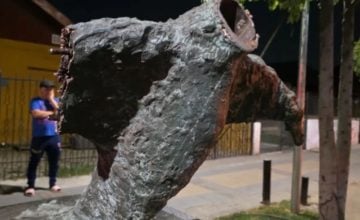
"Premeditated and Hate-Fueled Attack": Government and INDH Report Memorial Destruction in San Joaquín to Authorities
Hace 2 meses
Five Former Army Officials Charged in Connection to Conscripto Franco Vargas' Death: INDH Involved in Hearing
Hace 2 meses