Original article: Misión de observadores internacionales denuncia que la injerencia de Trump puso “en crisis la legitimidad democrática” de las elecciones en Honduras
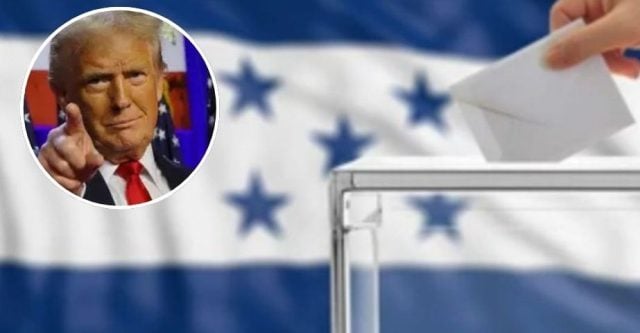
The International Observation Mission from the American Association of Jurists (AAJ) presented a powerful preliminary report on Wednesday regarding the general elections in Honduras, focusing its criticism on the «extreme severity» of external interference, notably from U.S. President Donald Trump. The document states that this interference has thrown «the democratic legitimacy of the process into crisis,» flagrantly undermining the Honduran people’s right to self-determination.
Presented to the National Electoral Council (CNE), the report outlines factors it believes threaten the transparency and credibility of the electoral process that took place last Sunday.
Unprecedented Foreign Interference
The mission explicitly condemned the public endorsements from both Trump and Argentine President Javier Milei via social media to support right-wing candidates in Honduras—Nasry Asfura (Liberal Party) and Salvador Nasralla (National Party).
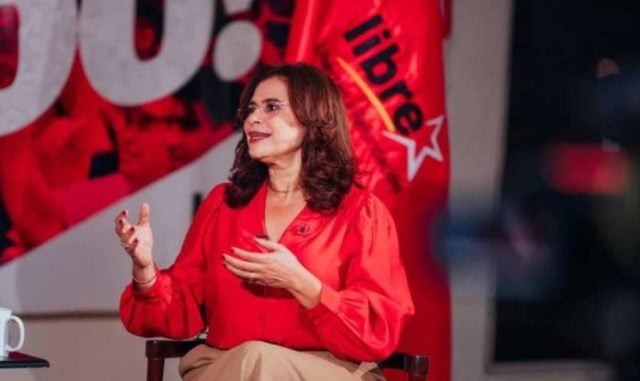
It’s important to recall that on the eve of the general elections in Honduras, the Republican mogul threatened not to cooperate with the Central American nation if the candidate from the ruling party, Liberty and Refoundation (LIBRE), Rixi Moncada, was elected, thus tying his economic support to an oligarchic victory.
Simultaneously, he offered a pardon to former Honduran President Juan Orlando Hernández, who was sentenced to 45 years in prison by U.S. courts for drug trafficking—a promise he later fulfilled.
«This Mission highlights the extreme severity of external intervention in the electoral process of the Republic of Honduras, particularly the statements from the U.S. President and the President of Argentina, which have placed the legitimacy of the process in crisis and represent a blatant violation of the right to self-determination of the Honduran people,» stated the AAJ in its report.
«The AAJ reiterates its rejection of foreign interference in the electoral process of the Republic of Honduras, urging states and international actors to fully respect Honduran sovereignty, reaffirming the inalienable right of the Honduran people to decide their own destiny free from external pressures,» it added, in a clear call to the international community:
Technical Irregularities and Audio Leaks
Beyond the interference, the mission’s report highlighted serious issues during last Sunday’s electoral process, questioning the reliability of the Preliminary Electoral Results Transmission (TREP) system, warning that its data «reflect partial projections that may distort perceptions of the final election results, necessitating waiting for the publication of the tally representing one hundred percent of the records.»
It also documented incidents «related to the implementation of the biometric system, connectivity issues (irregular in some polling places) for its proper execution, and the challenges encountered regarding fingerprint and facial identification of senior citizens,» reported TeleSUR.
However, the biggest internal alarm was the leak of audios attributed to electoral advisor Cossette López, associated with the National Party. The AAJ expressed its «great concern» regarding these leaks, which «revealed a scheme of bribes aimed at undermining the TREP’s functionality, obstructing the distribution of electoral kits, affecting the operation of the TREP, and influencing military sectors to produce institutional breaks.»
Allegations of Electoral Coup and Uncertain Outlook
The Honduran electoral process has been mired in uncertainty, delays, allegations of a series of technical irregularities, media manipulation, and unprecedented external interference in recent Latin American history. In this context, presidential candidate for the Libre party, Rixi Moncada, has denounced the occurrence of an «electoral coup.»
Her claims are backed by concrete evidence: a series of leaked audios in which, according to an investigation by the Public Ministry, the National Party Electoral Councilor Cossette López and other actors planned to alter the process. The scheme, as Moncada revealed, included interrupting data transmission, pressuring the U.S. embassy not to recognize a victory for Libre, and announcing favorable partial results to create a «pretext for challenging and suspending the process.» This is not simply an irregularity; it is the modern technique of a coup d’état, transferred to the electoral realm, where efforts are made to control dissemination and consensus organs to create a false legality.
Marlos Ochoa, advisor to the National Electoral Council (CNE) of Honduras, confirmed these irregularities, stating that the results from the TREP system «lack certainty and consistency,» while denouncing the lack of public access to preliminary results.
The unofficial TREP results, which Libre does not recognize, show an almost statistical tie between Asfura and Nasralla, with over 84% of the polling stations counted; the former accumulates 1,083,621 votes (40.04%), while the latter has the support of 1,075,313 voters (39.74%), a difference of around 8,000 votes.
Moncada would hold third place with 518,732 votes (19.16%).
Amid uncertainties and irregularities, the AAJ advocated for «absolute transparency from the CNE at all stages of the process, and in the final count currently underway. This is to preserve social peace, institutional transparency, the political rights of the people of Honduras, and democratic stability.»
The CNE legally has until December 30 to declare an official winner, amidst a climate of tension and distrust fueled by grave warnings from international observers regarding the legitimacy of the entire process.
Relacionados

Colombian Ex-President Warns Against Foreign Interference in Honduran Elections, Urges Respect for Official Results
Hace 3 meses
OAS Meeting: 15 Countries Emphasize Success and Commend Honduras for Its Electoral Process
Hace 3 meses
Honduran President Decries Trump's Interference in National Politics, Calls It an Ongoing Electoral Coup
Hace 3 meses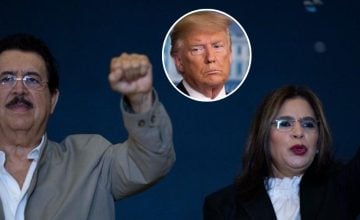
"Trump's Foreign Interference Ignites Electoral Coup Allegations in Honduras, Claims Ex-President Zelaya"
Hace 3 meses