Original article: Kast se cuadra con EE.UU. en la ONU y pierde batalla cultural en debate sobre género
Kast Aligns with the U.S. at the UN, Losing Cultural Battle in Gender Debate
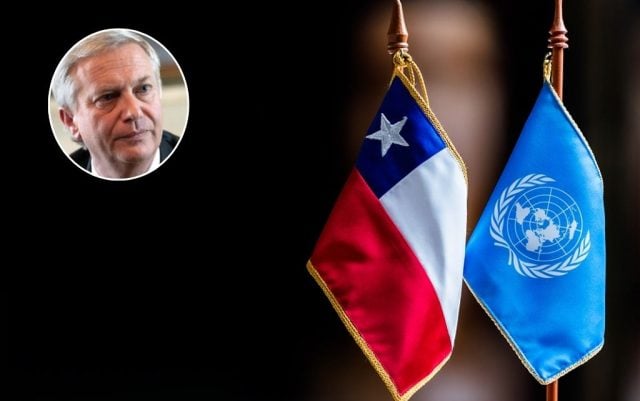
In the concluding session of the Commission on the Status of Women at the UN (CSW), Chile’s diplomatic representation broke ranks with the majority by aligning with the United States on a critical definition of gender.
This move, justified by the government of José Antonio Kast on procedural grounds, has been interpreted by analysts and political figures as a step in a “cultural battle” driven by the far-right, extending beyond what he termed an “emergency government.”
The rising diplomatic tension at the UN stemmed from a resolution proposed by the U.S. delegation, which sought to establish a strict and limited interpretation regarding the commission’s work.
The proposal defines “gender” strictly in binary terms based on biological sex, explicitly stating that “the term ‘gender’ should refer to men and women,” adding that this term “has no different meaning or connotation.”
Launched during Donald Trump’s administration, this initiative was viewed by various delegations as an attempt to dismantle historical consensus on women’s rights and sexual diversity.
In light of this development, Belgium and Brazil decided to present a “no-action motion,” aimed at blocking the opportunity for a substantive vote on the U.S. proposal.
Both countries argued that the U.S. was attempting to reinterpret, without due debate, the language and agreements established during the 1995 Beijing Conference, which gathered over 17,000 participants worldwide, including governmental delegates and activists, to agree on a global action plan for legal equality and women’s empowerment.
Sources familiar with the multilateral negotiation intricacies suggest that the resolution pushed by Trump’s government is part of an anti-gender policy strategy. The rationale behind this diplomatic offensive seeks to anchor the use of “gender” solely in the distinction between men and women from a biological perspective, a move that aligns with the far-right leader’s public rejection of gender identity policies and measures aimed at advancing trans rights.
It is worth noting that since his return to the White House, the Republican magnate has signed decrees reversing gender and diversity initiatives implemented during the previous Democratic administration under Joe Biden.
Trump has made it clear that his government will recognize only two genders: male and female, asserting that these are “immutable and based on a fundamental and incontrovertible reality.”
The president has even eliminated federal programs related to Diversity, Equity, and Inclusion (DEI).
Amid the tension, the UN committee voted on the no-action motion presented by Brazil and Belgium. The voting process was clear and left no room for interpretation: those voting “Yes” supported the blockade initiative, preventing the substantive proposal from the U.S. from being discussed and formally voted on. Conversely, those voting “No” were backing the U.S. delegation’s intent to bring their resolution to the table for subsequent debate and formal voting.
Chile Finds Itself in a Minority and Isolated Position
At this critical juncture, the Chilean delegation made a decision that placed it in a minority and isolated stance, opting to vote against the blockade motion, which effectively aligned it with Washington to allow the restriction of the gender concept to be voted on.
The outcome left Chile’s representation sharing a position only with three countries: the United States, the Democratic Republic of Congo (DRC), and Pakistan. In contrast, 23 other countries sided with Brazil and Belgium, while 16 nations chose to abstain.
Despite Chile’s support for the U.S. strategy, the no-action motion prevailed thanks to the majority support of the committee members.
As a result of this outcome, the initiative presented by the northern nation was withdrawn from the discussion table. Consequently, the vote regarding the definition of the term “gender” was postponed, at least for the moment, thwarting the U.S. delegation’s attempt to force a reinterpretation of multilateral agreements.
When questioned about this controversial vote, the Kast government defended its diplomatic representation’s actions, framing them as strictly procedural and aimed at safeguarding multilateral debate.
In an explanation that sought to dissociate the decision from any substantive implications, the Ministry of Foreign Affairs stated, “Chile voted against the ‘no-action’ motion, meaning in favor of allowing the resolution to be put to a vote, in line with standard practices in multilateral settings that aim to ensure that proposals presented by member states can be considered by the membership.”
The foreign ministry elaborated on its defense, arguing that since the blockade motion was approved, the country never expressed a position on the content of the controversial resolution.
“However, the ‘no-action’ motion was approved, and therefore the resolution was never voted on. Consequently, there is no substantive position expressed by Chile on the specific content of that text,” they specified, as reported by La Tercera.
Nevertheless, the administration’s own explanation revealed a contradiction regarding Chile’s historical stance on these issues.
According to the Foreign Relations department, “Chile had worked on a position where any reference to the term ‘gender’ must be understood strictly within the framework agreed upon in the 1995 Beijing Conference, without implying reinterpretations or modifications of the existing language.”
Kast Government Does Not Adhere to LGBTIQ+ Rights Declaration
The foreign policy stance coincides with Kast’s interest in strengthening bilateral relations with the United States. However, as noted by La Tercera, concerns began to arise within political right circles regarding the implications of this alignment, especially since this is not the only move in that direction.
Adding to the situation, just a day prior, the executive abstained from signing the LGBTIQ+ rights declaration at the Organization of American States (OAS).
In that instance, the far-right government argued that the text “created division.”
The combination of the vote at the UN alongside the abstention at the OAS paints a clear picture: the administration led by José Antonio Kast is willing to take minority positions in the multilateral arena to mark a substantive difference in gender and identity debates, prioritizing alignment with the more conservative currents of international politics led by the United States, even if it means being in the minority and losing, at least for now, the cultural battle within the UN commission.
Artículos Relacionados

Cuba Links Ecuador's Diplomatic Expulsion to U.S. Pressures Ahead of Miami Summit: "Not a Coincidence"
Hace 2 semanas
Kast Attends Trump Summit Amid Bilateral Crisis as U.S. Faces Accusations Over Deadly Attack on Iranian School
Hace 2 semanas