
Original article: Premio al gran capital y recorte al Estado: así parte la ofensiva económica de Kast
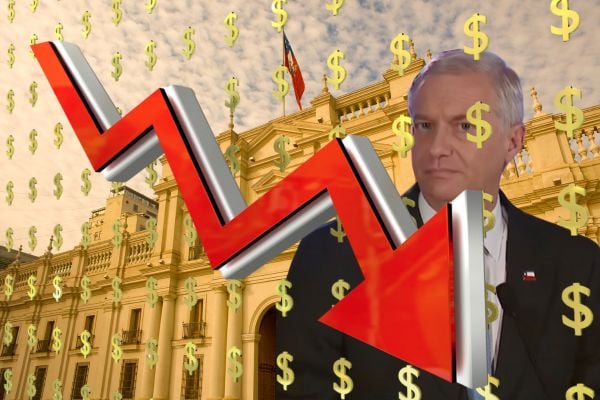
Just hours before taking office, José Kast made it clear what the economic focus of his administration will be: lower taxes for capital, cuts in public spending, and reduced state regulation on private investment. More than a set of technical measures, the plan his team is preparing for the early months of his presidency represents a clear political commitment on how the Chilean economy should be organized.
Kast’s economic plan is built upon a familiar premise from the most liberal economic tradition: growth largely depends on liberating the private sector from taxes, regulations, and state restrictions. In this framework, the role of the state diminishes, and economic power shifts towards private capital.
However, beneath this diagnosis lies a political decision with concrete distributive effects: when corporate taxes are lowered and public spending is simultaneously cut, it results in a fiscal transfer to capital. This means less funding for the state and increased financial leeway for the business sector.
Kast’s Economic Plan: Cutting the State as Starting Point
The first sign of the new government appeared even before the transfer of power. The future Minister of Finance, Jorge Quiroz, requested incoming ministers to implement a universal budget cut of 3% across each department.
This measure is part of a fiscal austerity program aimed at reducing nearly USD 6 billion in public spending over the first 18 months of governance.
The new government’s command has indicated that the adjustment will initially target what is known as ‘political spending.’ Yet, in budgetary terms, a cut of this magnitude is unlikely to be limited to administrative positions.
Public spending in Chile funds a wide network of social policies, support programs, and state services. Therefore, any significant budget reduction involves political decisions regarding which areas of the state are prioritized and which can be reduced or eliminated.
The fiscal adjustment, therefore, is not just an accounting tool. It also serves to redefine the scope of the state in the country’s economic and social life.
Tax Cuts: Benefits to Capital Alongside Fiscal Adjustment
While the new government plans cuts in public spending, Kast’s economic plan simultaneously includes a significant tax reduction for businesses.
Among the first initiatives to be submitted to Congress is a cut in the first-category tax from the current 27% to 23%, along with new tax incentives for companies that formalize their workers.
The program also proposes a preferential rate for small and medium-sized enterprises and the elimination of capital gains tax on certain stock market transactions.
Furthermore, the new government seeks to reinstate full integration of the tax system, a reform long advocated by the business community.
The combination of these measures reflects a fairly defined economic logic: to reduce the tax burden on capital to stimulate private investment. However, this strategy also implies lower fiscal revenues in the short term, making the accompanying public spending adjustment even more critical.
Politically, the message is clear: as the state contracts, capital gains more financial space.
Deregulation: Fewer Controls to Accelerate Projects
The third cornerstone of the program aims to modify regulations that the new government sees as obstacles to investment.
The initial actions include administrative changes in environmental regulations, procedures from the Environmental Impact Assessment Service (SEIA), and rules related to project processing.
The stated goal is to reduce approval times and simplify regulatory processes. Yet, the fundamental discussion extends beyond administrative efficiency.
Environmental, territorial, or labor regulations serve precisely to balance economic interests with social rights, environmental protection, and citizen participation.
When such regulations are relaxed in the name of investment, it is not just bureaucratic simplification that occurs: the balance of power between the state, communities, and companies is also altered.
The Return of a Familiar Economic Recipe
The new government’s initial measures reopen a debate that has permeated Chilean politics for decades: to what extent should economic growth depend on reducing the state and expanding the market’s power?
Kast’s economic plan clearly fits within that tradition. His bet is that a more favorable environment for private capital will energize the economy in a context of moderate growth.
However, this strategy also revives one of the central tensions of the Chilean model: economic concentration and the unequal distribution of economic power.
For decades, economic growth coexisted in Chile with high levels of inequality and a state limited in its capacity to redistribute wealth or intervene in strategic sectors.
Thus, the new government’s first decisions not only open a technical debate on taxes or regulations but also reactivate a deeper political discussion about the type of development the country aims to build.
A Government Start that Sets the Course
The decisions made in the early months of an administration often set the tone for its entire tenure. In this regard, the initial signals from the new government leave little doubt about the economic direction it seeks to establish.
Public spending cuts, tax reductions for capital, and deregulation to accelerate investments are all part of the same political architecture.
More than isolated measures, it is an attempt to re-establish an economic model where the state retreats and the market regains prominence as the primary organizer of economic life.
Starting this Wednesday, November 11, with Kast already in office at La Moneda, this agenda will begin to be tested. It will also open a new chapter in the political debate over the role of the state, wealth distribution, and economic power in Chile.
Relacionados



The Truth Behind Kast's Budget Cuts: Carter Acknowledges Impact on Sensitive Social Programs
Hace 3 meses