Original article: ¿Ley Longueira 2.0?: Comisión aprueba 60 indicaciones calcadas de Sonapesca impulsadas por diputado Bobadilla (UDI)
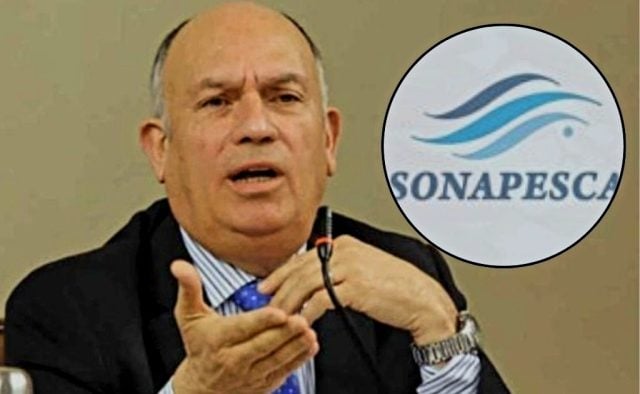
A CIPER investigation revealed that the Fishing Committee of the Chamber of Deputies approved 60 amendments to the new Fishing Law presented by Sergio Bobadilla (UDI), which verbatim reproduce a report from the business group Sonapesca, covering significant aspects of sanctions and the regulatory authority of the maritime authority, a practice previously employed by the parliamentarian.
In a legislative environment striving to overcome the heavy legacy of corruption and unregulated lobbying that tainted the current fishing law, a new discovery reignites concerns about the influence of business interests in Congress. After meticulously reviewing 87 sessions of the Fishing Committee held between June 12, 2024, and January 21, 2026, it has been confirmed that the committee approved exactly 60 proposals presented by Deputy Sergio Bobadilla (UDI) that are word-for-word matches to the proposals in a technical-legal report commissioned by the business group Sonapesca.
This revelation, brought to light by a CIPER investigation, recalls the ghosts of the «Corpesca case,» which led to the former senator Jaime Orpis being convicted of bribery and fraud after it was established that the fishing company paid the then-parliamentarian to secure his vote.
This situation places the drafting process of the new Fishing Law, aimed at abolishing the so-called Longueira Law, under scrutiny. The Longueira Law was introduced during Sebastián Piñera’s first term and became the subject of investigation for bribery, fraud, and illegal campaign financing, with emblematic cases such as convictions against Orpis (5 years in prison) and former UDI deputy Marta Isasi. A report from CNN Chile revealed that 35 politicians —including former presidential candidates— received contributions from fishing companies between 2009 and 2013, benefitting seven families: Angelini (Corpesca), Lecaros, Yaconi – Santa Cruz, Sarquis, Stengel, Fernández, and Izquierdo, who have transitioned from owning individual fleets to merging into four large conglomerates: Orizon, Blumar, Camanchaca Pesca Sur, and Mar Food – with foreign capital.
«Copy-Paste» from the Sonapesca Report
The facts revealed by CIPER do not represent an isolated incident but rather a continuation of a practice reported by the digital outlet in 2024. At that time, it was documented that Bobadilla, along with deputies Cristhian Moreira (UDI) and Bernardo Berger (independent-RN), had submitted a package of 211 proposals that was a «copy-paste» of the same 226-page document prepared by the consulting firm Acuiestudios for Sonapesca.
Of that initial total, 76% was a verbatim copy of the business report. Now, as the legislative process advances, it has been confirmed that 60 of those proposals, specifically pushed by Bobadilla, have successfully passed through the committee filter and amended the content of the project.
The impact of these approved amendments is significant. The 60 proposals have altered 42 articles of the future law, concentrated in sensitive and high-impact areas: sanctions and oversight regimes, administrative procedures, and fishing governance.
An emblematic article is No. 279, which defines what will be considered severe infractions. In the sessions of October and November 2024, Bobadilla managed to have the committee approve at least nine changes to this article, all extracted verbatim from Sonapesca’s report.
Another illustrative case is the amendment to article No. 362, concerning the powers of the National Fishing and Aquaculture Service (Sernapesca). One of Bobadilla’s proposals, copied from the business group, succeeded in eliminating a key paragraph that granted officials of the Service and the Navy «the status of ministers of faith» in the exercise of their oversight duties, a designation that provided greater authority and legal backing to their actions.
Additionally, in article No. 360, related to transparency, the deputy pushed —as proposed by Sonapesca and with the support of the Executive— for the removal of the obligation to publish online the list of industrial owners and vessels authorized for extractive fishing.
When consulted by CIPER regarding this new evidence of the correspondence between his proposals and the text from the business group, Deputy Bobadilla declined to comment.
«They Are Going to Force Me to Vote on a Proposal from the Company»
However, in the past, he has not hidden his connections to the sector. In a committee session on August 14, 2024, while presenting an amendment to the article on vulnerable marine ecosystems, he was explicit: «I want to say that this proposal is not mine; it has been communicated to me by important leaders in industrial fishing and also artisanal fishing. Therefore, I have made it my own, but I am not the intellectual author of this proposal, and that is why I will vote for it.»
The deputy’s attitude even elicited humorous reactions from his peers. On January 20, 2025, during the debate on a proposal from Bobadilla that was very similar to one from Sernapesca, Deputy Leonidas Romero (PNL) asked the legal subdirector of the service, Felipe Ruiz, which was better. Followed by the service official’s response that favored the UDI deputy’s wording, Romero commented: «Okay, perfect, it’s going to force me to vote on a proposal from the company.»
The original revelation by CIPER in 2024 had already triggered a strong political reaction. On September 4 of that year, the Minister of Economy, Nicolás Grau, appeared before the committee, directly addressing Bobadilla, questioning: «Deputy Bobadilla claims to represent the interests of the Biobío region and his voters. I am very skeptical that the interests of your voters align so closely with the interests of the industry, such that more than 200 proposals must be copied verbatim to represent those interests.»
For his part, Deputy Cristhian Moreira announced that he would withdraw his support for the presented proposals, a commitment that, according to records, has not been fully realized, as his name still appears as a sponsor on several of the 60 approved proposals.
More Proposals from Bobadilla?
According to sources from the Chamber consulted by CIPER, the number of Bobadilla’s proposals originating from Sonapesca incorporated into the law could significantly increase in the coming months. The critical point will be the discussion of transitional regulations, where —the sources warn— part of the substantial «core» of the new legislation is defined.
Meanwhile, the secretary of the Fishing Committee, Roberto Fuentes, confirmed to the cited media that the project, which was originally scheduled for completion in December 2025, has not yet ended its debate in the committee, with no exact date for its conclusion.
Deputy Bobadilla, regional president of the UDI in Biobío, is no stranger to controversies linked to the fishing industry. In 2019, he was summoned to testify by the Public Prosecutor’s Office in connection with the Corpesca case, due to his ties to the Biobío Fishing Industrialist Association (Asipes).
The investigation established that between 2014 and 2016, the association paid $26 million to a consulting firm directed by Bobadilla, when he was not a parliamentarian. That facet was closed without formal charges, but the shadow of those connections seems to loom again in the drafting of the law that will govern the future of the fishing sector in Chile.
Relacionados
¿Ley Longueira 2.0?: Comisión aprueba 60 indicaciones calcadas de Sonapesca impulsadas por diputado Bobadilla (UDI)
Hace 3 minutos

Congress Advances New Fishing Law: Voting Begins on General Access Regime for Artisanal Fishermen
Hace 1 mes