Original article: Pensiones bajas para la mayoría, $3,7 millones para Krassnoff: así paga el Estado a condenados por DD.HH.
In Chile, discussions about pensions often revolve around financial struggles: inadequate amounts, delayed medications, and mounting bills. However, a starkly different reality exists—funded by public resources—that resurfaces whenever the pension system for the Armed Forces is scrutinized.
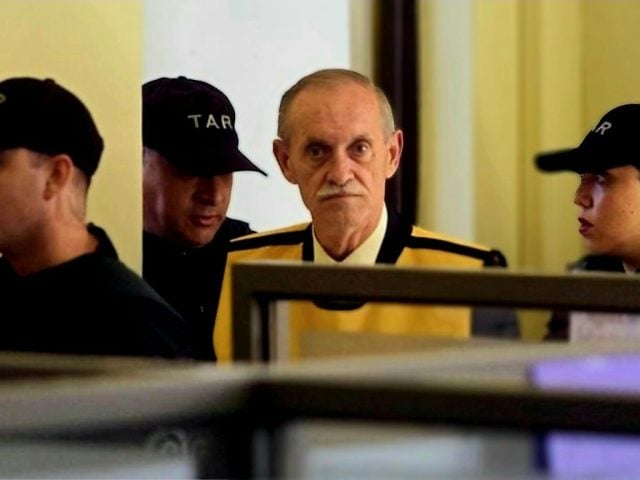
According to information obtained through Transparency by Contrapoder, the National Defense Pension Fund (Capredena) disbursed $121,606,334 over the past year in retirement pensions to four convicted individuals for human rights violations currently serving sentences at the Tiltil Penitentiary Center, formerly known as ex Punta Peuco: Miguel Krassnoff, Raúl Iturriaga, Álvaro Corbalán, and Carlos Herrera.
This staggering figure emerges just after the Supreme Court ordered the elimination of privileges within the ex Punta Peuco prison: removing televisions, refrigerators, and hundreds of appliances along with dozens of mattresses from common areas. The message was clear: conviction is conviction. Yet, the contrast becomes painfully evident when examining the other side of the same state: while these comforts are curtailed inside the prison, retirement pensions—paid by Capredena—continue to flow to those convicted of human rights violations.
Krassnoff: Up to $3.7 Million Monthly
From the data compiled by Contrapoder, the most striking case is that of Miguel Krassnoff, a former agent of the DINA. Between January and November 2025, his monthly pension was $3,636,918. In December 2025 and January 2026, this amount increased to $3,762,028.
In total, Krassnoff amassed $47,530,154 in just one year from his military retirement. In other words, in a country where most receive pensions that barely suffice for a decent living, the state continued to provide a privileged retirement to someone convicted of human rights violations.
Iturriaga: Over $40 Million in 12 Months
The second-highest amount belongs to Raúl Iturriaga, another former DINA member. From January to November 2025, he received $3,131,949 monthly. Then, in December 2025 and January 2026, his pension rose to $3,239,688 (an increase of $107,739).
When summed up over the last year, Iturriaga’s pension totals $40,930,815. Combined, the pensions for Krassnoff and Iturriaga amount to over $88 million in a year, paid by Capredena to two ex-agents convicted of crimes against humanity.
Corbalán and Herrera: Smaller Amounts, Yet Still Millions
In the case of Álvaro Corbalán, former operational chief of the CNI, the records indicate he received $1,046,587 monthly between January and November 2025, rising to $1,082,590 in December 2025 and January 2026. At this rate, Corbalán accumulated $13,677,637 over the year.
Finally, former CNI agent Carlos Herrera received $1,489,634 monthly from January to November 2025. His pension increased to $1,540,877 in December 2025 and January 2026, totaling $19,467,728 in the last year.
The amounts vary among each former agent, but the core issue remains the same: these pensions are funded by the state for individuals convicted of serious human rights violations.
An Open Debate
The figures disclosed by Contrapoder Chile reignite an uncomfortable but unavoidable question: how is it justified that, while the civil pension system offers payments that force many to “make ends meet” every month, there are still retirement pensions that remain intact for those convicted of dictatorship-era crimes?
It is not merely about the amounts. It is about the implications. The message conveyed by these payments is harsh: in Chile, impunity can also manifest in monthly installments, deposited regularly, even in the face of convictions for human rights violations.
Relacionados
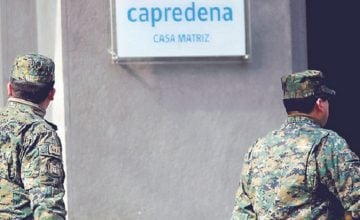
Audit Reveals Financial Irregularities in 73 Public Entities, Capredena Tops with $49 Billion Deficit
Hace 2 mesesWhen Capital Consumes Everything: The Million-Dollar Transfer of Resources from Pension Funds to Extractive Companies Amid Disastrous Pensions
Hace 3 meses
President Boric: "Pension Reform is Already Making a Difference for Seniors and Their Families"
Hace 2 semanas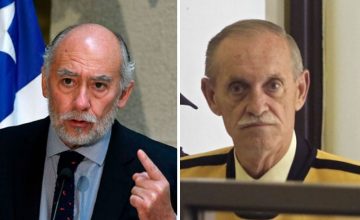
Senator Flores Opposes Bill That Could Release Krassnoff from Prison Amidst Human Rights Concerns
Hace 2 meses