Original article: Golpe al corazón de Gendarmería: 42 gendarmes de Santiago 1 bajo investigación por cohecho, drogas y lavado de activos
In one of the most significant operations against prison corruption, the Public Prosecutor’s Office and the Police Investigations (PDI) launched a massive raid early Tuesday morning, targeting 77 locations and leading to the formal indictment of 77 individuals, including at least 42 guards who currently serve or have served at the High Security Prison (CAS) Santiago 1. The investigation, spearheaded by the Metropolitan West Regional Prosecutor’s Office, involves allegations of bribery, money laundering, and illegal enrichment, revealing a scheme that allegedly enabled criminal organizations to control the facility.
As reported by CIPER, the investigation has been ongoing for at least eight months, addressing crimes that occurred between 2023 and 2025, and exposing a systemic corruption network within the supposedly most secure prison in the country.
Furthermore, investigators have gathered phone intercepts and images obtained from cameras specially installed around CAS Santiago 1. Concurrently, the operations have included surveillance of individuals, infiltration of witnesses, requests for banking secrecy, and asset analysis of the 42 guards under investigation.
According to findings from the investigation, the guards, acting in unstructured small groups, offered a variety of illegal services to inmates in exchange for money. These services included smuggling drugs and cell phones, coordinating intimate visits, and providing high-end food and alcohol, as well as access to a WiFi network that could circumvent the prison’s signal jammers.
Additionally, visits were facilitated to meet with members of criminal organizations, including leaders from the so-called Tren de Aragua.
$60,000 for Evading Biometric Controls
One of the most alarming findings of the investigation includes images in the possession of the Public Prosecutor’s Office showing how guards allowed unauthorized individuals to enter the High Security Prison (CAS) Santiago 1, bypassing all security protocols, including the biometric fingerprint registration.
«What is seen in those images shows guards simulating the execution of required protocols: verifying the identity documents of individuals wishing to enter, checking if they are on the authorized visitor list for inmates, and taking their fingerprint for access records,» described CIPER based on testimonies from sources close to the investigation.
The conduct of the guards, aware of the surveillance cameras, was depicted as a complete sham: «They engage in an outright pantomime, waving their arms and hands, pretending as if they were indeed checking identity cards and recording fingerprints.» This maneuver came at an established price of $60,000 per undocumented visit.
The extent of this practice’s damage is incalculable, with sources consulted reporting that «it is impossible to determine who entered in this way to meet with members of criminal organizations under preventive detention – including leaders of Tren de Aragua – who could have used this method to relay instructions outside and orchestrate crimes such as kidnappings, contract killings, drug trafficking, prostitution, human trafficking, and extortion.»
«The Market» and the Illegal Catalog of Santiago 1
The investigation details the existence of an active illegal market within CAS Santiago 1, a sector known as «the market» among inmates, where products were traded with complete impunity. CIPER accessed the established fee list set by the implicated guards:
– Undocumented person entry: $60,000.
– Use of bathroom for sexual relations: $15,000.
– Module transfer: $100,000.
– One kilogram of huachalomo meat: $60,000.
– Cell phone: $350,000 to $400,000.
– Cell phone charger: $50,000.
– Phone chip: $15,000.
The scheme also included arrangements such as «rescue» – the resale of items previously confiscated by the guards – and «delivery,» in which guards purchased items requested by inmates, including drugs, to smuggle them inside.
Payments were made in cash or through bank transfers to personal or front accounts. The investigation identified at least nine guards involved in the «rescue» scheme and seven pairs of officers, along with two other individuals, acting as fronts.
The «Flower Crown» that Raised Alarms
The investigation that triggered the raids conducted early this morning had a turning point on April 5, 2024. On that day, three Venezuelans fired shots at the door of a CAS Santiago 1 officer’s house in Cauquenes, leaving a flower crown and a letter with death threats.
“Rest in peace (scratched initials). Your family bids farewell, soon dead. Just as you are dead, we will go after your friends, SNITCHES. We have all the locations of everyone. Regards: The Anti-Abuse Squad,” read the message.
This attack, the first recorded instance of organized crime targeting a public official in this context, revealed an internal leak.
As revealed by CIPER last August, the personal details of the threatened officer were provided to Tren de Aragua by colleagues from CAS Santiago 1. This incident led the prosecution to deepen investigations in the prison, establishing that the assailants had been contracted from within.
Raids and 42 Guards from Santiago 1 Under Investigation
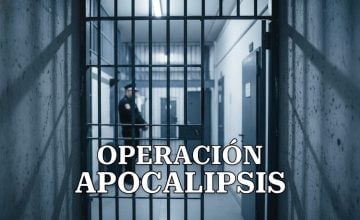
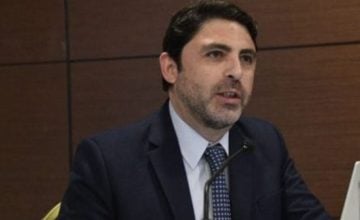
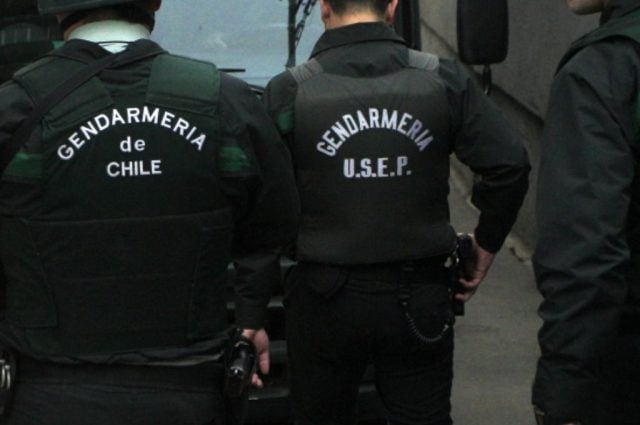
The early morning operation, dubbed «Operation Apocalypse,» ordered by the regional prosecutor of the West, Marcos Pastén, involved 690 officials: 500 from the PDI and 190 from Gendarmería. The actions spanned across seven regions (Metropolitan, Maule, Ñuble, Biobío, La Araucanía, Los Ríos, and O’Higgins) and at least seven correctional facilities, including not only CAS Santiago 1 but also the former Penitentiary, Punta Peuco, the REPAS, Colina 1, and the complexes in Biobío and Rancagua.
The gravity of the case is immense: the 42 guards investigated represent approximately 10% of the total staff at CAS Santiago 1.
Specifically, the list of investigated officials is as follows:
- Luis Rodrigo Santana Gutiérrez
- Rubén Alejandro Zúñiga Burgos
- Carlos Ricardo Marín Hueche
- José Hernán Cisternas Pino
- Eduardo Alfredo Espinosa Ramos
- Fernando Andrés Morales Retamal
- Miguel Ángel Tejo Atenas
- Ricardo Andrés Gutiérrez Acuña
- Ricardo Antonio Riveros Matus
- Boris Francisco Rodríguez Osses
- Humberto Darío Sandoval León
- Ariel Sebastián Mallea Alvarado
- Aaron Octavio Hernández Martínez
- Richard Andrés Medel Alvear
- Fernando Maunes Chamorro Morales
- Joel Alejandro Lagos Olivares
- Stefania Fernanda San Martín Rivera
- Sergio Reinaldo Zúñiga Briones
- Bárbara Natalia Yévenes Vásquez
- Pedro Francisco Malverde Rodríguez
- Marcelo Pinilla Aroca
- Ignacio Araneda Muñoz
- Moisés Contreras Contreras
- Luis Ruiz González
- Elvis Astudillo Hormazábal
- Julio César Henríquez Villalobos
- Cristian Alexis Valenzuela Quezada
- Carlos Eduardo Martínez Rodríguez
- Leandro Antonio Díaz Sanhueza
- Luis Gastón Bravo Piggati
- Guillermo Andrés Velozo Díaz
- Adolfo Antonio Jiménez Sierra
- Nicolás Armando Ayala Chamorro
- Fernando Antonio Uribe Martínez
- Iván Andrés Ramírez Ramírez
- Felipe Eduardo Chávez Olivares
- Misael Felipe Castro
- Juan Francisco Neculman Flores
- Claudio Alejandro Vivieros Ñanco
- Óscar Alejandro Marimán Caniupán
- Pedro Hernán Huechupan Cárdenas
- CIPER indicated that they could not confirm the identity of one of the officials.
This, according to the evidence, is the gravest case of organized crime infiltration within Gendarmería, a key institution in public safety.
Warnings about the situation in the prison had already existed. During a visit to the facility, Judge Fernando Guzmán of the Santiago First Guarantee Court noted in a report the «explicit acknowledgment» of internal corruption and the undue influence of unions, stating that gangs controlling illegal trafficking operate in modules filled with foreign inmates.
The Public Prosecutor’s Office now seeks, through the formalizations, to dismantle a network that jeopardized not only prison security but that of the country.
According to the regional prosecutor Marcos Pastén, of the total detained guards, 40 had active arrest warrants, while the rest were caught in the act inside Santiago 1.
“In two penitentiary centers in the Metropolitan Region, Santiago 1 and the CPF of San Joaquín, Gendarmería officials colluded with individuals to carry out acts intended to smuggle prohibited products into the facilities,” explained the prosecutor.
As part of the judicial proceedings, authorities successfully froze 183 bank accounts, seized nine properties, 16 vehicles, and approximately $50 million in cash.
(*) The details presented refer to an ongoing criminal investigation. The individuals mentioned should not be considered guilty until a final judicial decision is reached.
Relacionados
Corruption Scandal in Gendarmería: Seven Officials Granted Preventive Detention in Puerto Montt Jail Corruption Network
Hace 2 semanas


Supreme Court to Prison: Preventive Detention Ordered for Ángela Vivanco in Belarusian Doll Case
Hace 13 horas