Original article: “Graves irregularidades” y $1.100 millones: Fiscalía abre causa penal por demoliciones tras megaincendio en Valparaíso
The Prosecutor’s Office made this decision after receiving final audit reports prepared by the Comptroller’s Office, which uncovered a web of irregularities, unsubstantiated payments, and control deficiencies in the use of public resources allocated to address the February 2024 mega-fire catastrophe.
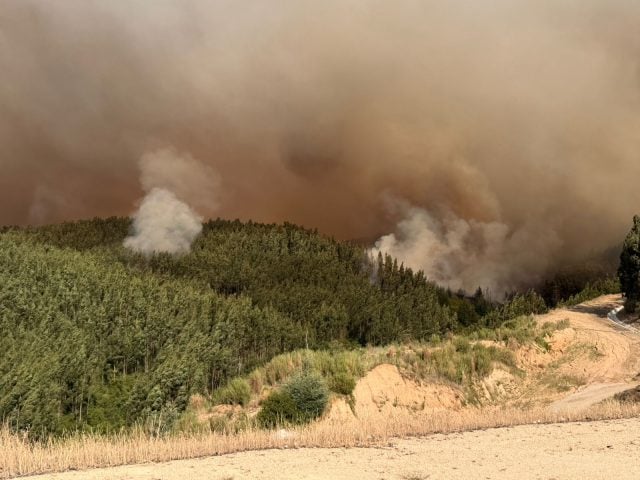
Nearly a year after the tragedy that devastated thousands of homes and resulted in 137 fatalities, the management of public resources aimed at reconstruction and emergency efforts is at the center of controversy. The National Prosecutor’s Office has decided to open a criminal case to investigate possible crimes related to the execution of public funds after the mega-fire that impacted the Valparaíso Region in February 2024.
This decision was made following the receipt of final audit reports prepared by the Comptroller’s Office, whose findings—involving over 1.8 billion pesos in questioned resources—have been deemed extremely serious by the authorities themselves.
The Director of the Anti-Corruption Unit of the National Prosecutor’s Office, Eugenio Campos, confirmed that the information was analyzed at a central level and subsequently referred to the Regional Prosecutor’s Office of Valparaíso, which will be responsible for carrying out the necessary procedures.
Campos specified that the prosecutorial body received «various reports from the Comptroller General of the Republic regarding final reports executed by the Regional Architecture Directorate,» all linked to processes implemented following the fires that occurred last February.
«Given the severity of the evidence received and analyzed by the National Prosecutor’s Office, which may potentially constitute crimes, they were forwarded to the Regional Prosecutor’s Office of Valparaíso for the development of the necessary procedures and the success of the investigation,» added the prosecutor, according to statements reported by El Mostrador.
Web of Irregularities
The Regional Comptroller’s Office of Valparaíso has launched an extensive supervisory offensive regarding the emergency. Through five audit reports, the oversight body revealed systemic failures involving municipalities, the Regional Presidential Delegation, and the Regional Architecture Directorate, calling into question the efficiency and legality of actions taken following the tragedy that affected thousands.
The reports, which have already been sent to both the Public Ministry and the State Defense Council (CDE) for evaluation of appropriate judicial actions, describe a consistent pattern of internal control weaknesses, unjustified use of direct contracting mechanisms, and, in the worst cases, payments for services that were never performed or were performed only partially.
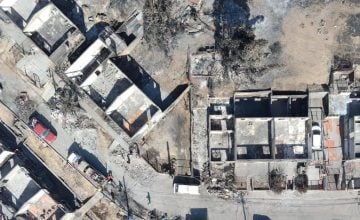
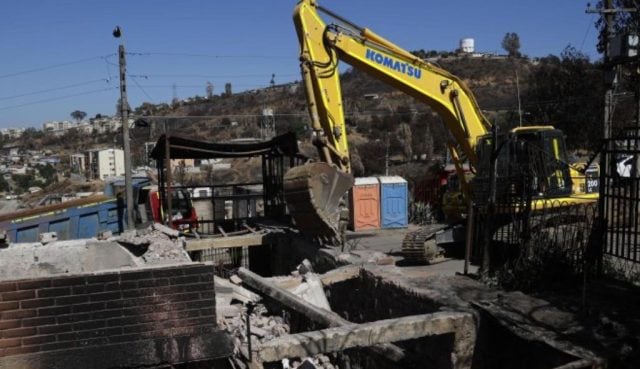
The core of the observations is concentrated on the demolitions of damaged homes. According to the Comptroller’s documents, irregularities in this area alone exceed $1.216 billion, a figure that highlights a highly vulnerable financial and contractual management in one of the most critical post-fire tasks.
Demolitions in El Olivar: Unsubstantiated Payments of $782 Million
The audit contained in Final Report N°500/25 specifically focused on the demolitions carried out in the hard-hit area of El Olivar, where the Comptroller found «unsubstantiated payments of over $782 million» for these works, expenditures that, according to the document, lack adequate documentation and are marked by «irregularities in the awarding process, overpricing, and deficiencies in the backups.»
The magnitude of the failures led the Comptroller’s Office not only to order an administrative inquiry but also to request the file of an internal investigation conducted by the National Prosecutor’s Office of the Ministry of Public Works (MOP), so that the Comptroller’s Office assumes the comprehensive processing of the case.
Additionally, Final Report N°805/25 detected «improper payments exceeding $434 million» for demolitions that were reportedly «not executed or partially completed.» This was compounded by «serious deficiencies in contracting and internal control,» which also led to the initiation of an administrative inquiry.
The irregularities identified by the oversight body in this area include payments for services that reportedly were not performed, the use of machinery whose existence could not be documented, unauthorized subcontracting, and overpricing that, in some cases, exceeds 500% of the estimated market value for equivalent work.
Presidential Delegation: $586 Million in Unsubstantiated Payments
The Regional Presidential Delegation of Valparaíso, a key organization in coordinating the emergency and channeling early assistance to affected individuals, was also the subject of an audit, the results of which uncovered further irregularities.
Report N°528/25 found «unsubstantiated payments and contractual deficiencies of over $586 million» for acquisitions made during the crisis. The Comptroller expressly warned of «possible overpricing and unjustified use of direct contracting,» a legal figure that allows contracting without public bidding in emergency situations but that seems to have been applied excessively and without proper justification in this case.
The reports also include specific concerns regarding the municipalities of Quilpué and Viña del Mar, pointing to deficiencies in procurement processes, improper expenses, and lack of oversight in the distribution of aid intended for affected individuals. In both cases, the Comptroller instructed administrative inquiries to determine potential responsibilities of officials and authorities.
Over 1.8 Billion Pesos Questioned
Collectively, the five audit reports issued by the Comptroller’s Office to date question a total amount of resources exceeding $1.8 billion. However, the Prosecutor’s Office has decided to initially focus its attention on the area of demolitions, where the materiality of the involved resources—at least $1.1 billion, as detailed by Eugenio Campos—and the clarity of the observations allow for a more certain advance in classifying potential crimes.
As noted by the director of the Anti-Corruption Unit, the received reports reveal «serious irregularities in the demolition process of the damaged homes,» a process that involved nearly a hundred properties.
Artículos Relacionados


Concepción Court Orders Nighttime House Arrest and National Travel Ban for Suspect in Mega Fire Incident
Hace 2 meses