Original article: Retorno de la zanja: El cuestionado intento de cavar la frontera
The government has begun excavation work along the border with Peru and Bolivia as part of efforts to curb irregular migration, reviving a measure first implemented in 2017.
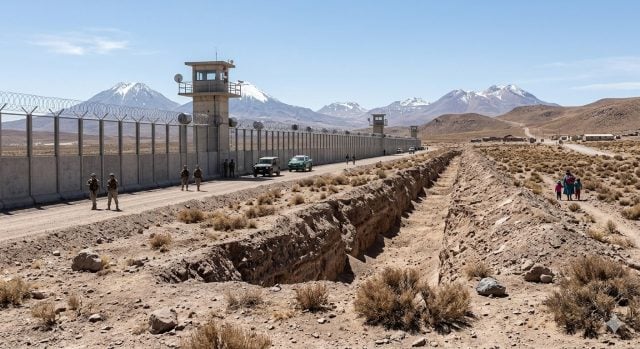
On Monday, March 16, the government deployed the Military Labor Corps (CMT) and heavy machinery in areas such as Chacalluta and Colchane to launch the «Border Shield Plan.» This initiative aims to fulfill campaign promises made by José Kast to install permanent physical barriers to prevent the unauthorized movement of people and vehicles.
This technical and military action involves the use of excavators to dig trenches that are three meters deep, accompanied by fences, watchtowers, and drones. With the signing of decrees that militarize the area, officials hope that increasing the presence of uniformed personnel in the regions of Arica, Tarapacá, and Antofagasta will significantly reduce unauthorized crossings within 90 days.
A Project with History and Military Significance
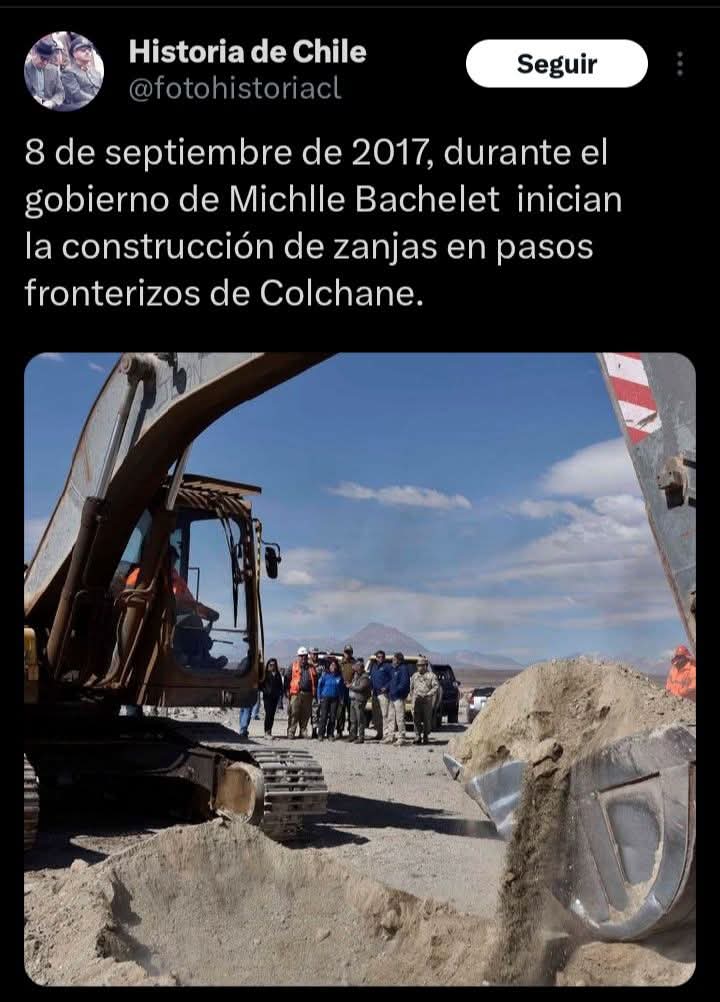
While currently at the core of Republican José Kast’s program, the strategy of digging trenches in the north is not new. In 2017, during Michelle Bachelet’s second presidency, similar excavations were initiated in the Tarapacá region to curb vehicle theft and smuggling into Bolivia.
At that time, regional authorities indicated that the focus was to «address the criminal issue» rather than prevent pedestrian crossings. However, the infrastructure established then serves as a direct precedent for what is now intended to extend over 1,000 kilometers of border.
Kast, having overseen the construction at the start of his term, defended the military’s role in this task, asserting, «We want to use excavators to construct a sovereign Chile that has been compromised by illegal immigration and organized crime,» while addressing the troops.
A Balance Between Public Support and Expert Skepticism
The initiative enjoys significant backing, with recent data from the Cadem survey indicating that 74% of respondents favor building trenches to prevent migrant crossings. This support increases to 85% when aimed at stopping vehicle smuggling, reflecting a high level of concern for security.
However, migration experts caution that the effectiveness of these barriers is limited when used in isolation. Rodrigo Sandoval, former director of Migration, noted in Radio Pauta that «the trench does not stop irregular migration; instead, it inhibits vehicle traffic,» warning that foot travelers often seek more dangerous routes.
Meanwhile, sociologist and academic at the Department of Political Studies at the University of Santiago de Chile (Usach), Lucía Dammert, termed the measure as «symbolic,» noting it fails to address the underlying problem, stating, «It is a shovel policy that alleviates anxiety but does not halt organized crime.» Additionally, she remarked, «We know it won’t be very effective, but we are at a moment of symbolism,» highlighting the limited impact of the excavations in the desert.
The Human Impact on the Border
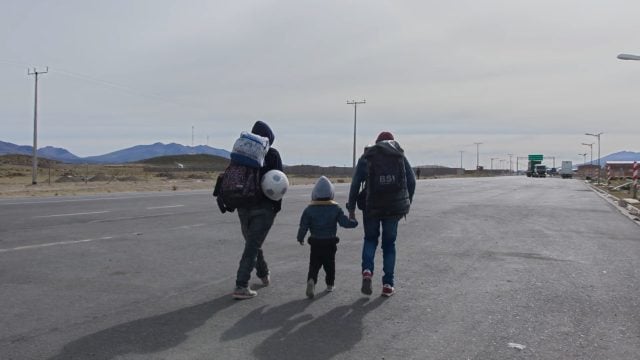
One of the sharpest criticisms comes from border communities, where everyday life is disrupted by these barriers. In towns like Visviri and Pisiga, historical ties between Bolivian and Chilean families are now confronted with physical obstacles that complicate children’s access to local schools.
Human rights organizations have warned that hardening the border only increases the cost imposed by human trafficking mafias. Adriana Palomera from the Usach Center for Migration Studies explained in Diario de Cooperativa that such measures «displace flows» to more extreme geographical areas, heightening the risk of deaths and disappearances.
International experiences, such as those in Melilla, Spain, or the wall between the Dominican Republic and Haiti, show that despite trenches and fences reaching up to 10 meters, crossings do not cease. On the contrary, they often precipitate humanitarian crises around boundaries that require ongoing intervention from international organizations.
The Cost of Fighting the Desert
Excavating a 1,000-kilometer trench in northern Chile poses not just a political challenge but a technical battle against nature. Due to the hardness of the «caliche» soil and volcanic rock in northern Chile, it is estimated that construction would require at least three years of continuous work using multiple fronts of heavy machinery.
However, the greatest expense would come later, as the high-altitude winds and the lack of soil cohesion would lead to the trench naturally filling with sediments. Without mechanical maintenance every 12 to 18 months, the effectiveness of the three-meter-deep excavation would diminish over time.
If significant sums are not invested in regular cleaning, the trench could disappear under dust in less than a decade, turning into a ramp. Thus, the «Border Shield Plan» appears to be an investment in perpetual maintenance to prevent the desert from reclaiming its territory.
Artículos Relacionados
Chile and Peru Activate Migratory Committee Amid False "Crisis" Claims at Northern Border
Hace 4 meses
Military Deployment and State Audit: Kast Takes His Initial Steps as Chile's President from La Moneda
Hace 2 semanas
Defense Reports 54% Decrease in Illegal Crossings at Northern Border by 2025: From 56,000 to 26,000
Hace 1 mes