Original article: El “caso Guerra”: querellas, operadores y redes que rodean la ofensiva judicial contra Daniel Jadue
«Guerra Case»: A Network of Lawyers, Prosecutors, and Political Operators Behind the Complaints That Triggered the Jadue Case
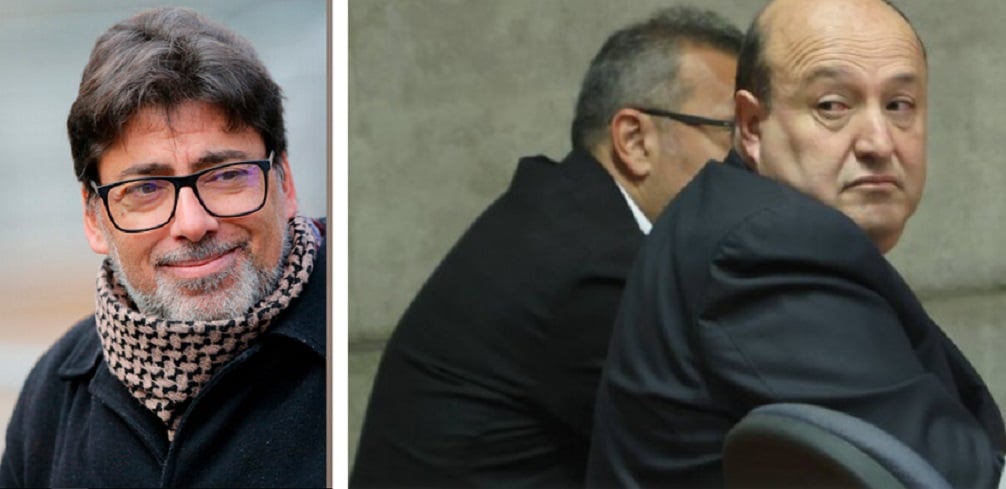
The initial allegations against the former mayor of Recoleta opened a complex web of judicial and political actions that eventually involved complainant lawyers, prosecutors, and operators from varying sectors. Notably, one of the first plaintiffs was lawyer María Paz Guerra, sister of ex-prosecutor Manuel Guerra, who is currently in preventive detention amid investigations into alleged networks of influence and is publicly identified as a political operator close to Andrés Chadwick and the Independent Democratic Union.
The judicial investigation surrounding former mayor Daniel Jadue has not only focused on events connected to the Chilean Association of Popular Pharmacies (Achifarp) but has also examined the circumstances that led to the initial complaints that launched the criminal process.
As time passed, various names began to emerge within the context of these initial legal actions, forming what some analysts and political figures have termed the “Guerra Case,” named after lawyer María Paz Guerra and her legal ties tracing back to the origin of the complaints.
Origins of the Complaints
The first judicial actions against Jadue arose from contractual disputes and allegations from suppliers linked to Achifarp’s operations. These complaints were sponsored by private lawyers, paving the way for a criminal investigation into alleged crimes including fiscal fraud, theft, and bribery.
During this initial phase, lawyers Mario Vargas and Eduardo Lagos emerged, now in preventive detention accused of judicial corruption, who acted as plaintiffs or representatives of various complainants within the case. Their engagement was crucial for escalating the allegations to the Public Prosecutor’s Office and transforming them into a politically significant criminal case.
Subsequent judicial records reveal that legal actions surrounding these complaints also implicated lawyer María Paz Guerra, whose name surfaced in public discussions about the network of lawyers advancing the initial lawsuits.
The Role of the Public Prosecutor’s Office
The investigation was initially overseen by prosecutor Giovanna Herrera, who led inquiries concerning Achifarp’s financial functioning and contracts signed during Jadue’s administration in Recoleta.
Herrera’s involvement sparked political controversy due to her familial ties with socialist leader and former minister Carlos Montes, leading some factions to question potential conflicts of interest. However, the Public Prosecutor’s Office has consistently maintained that the investigation followed standard procedures. Herrera’s connections to the pharmaceutical business were highlighted; her brother-in-law owns Fracción SQM pharmacies, a direct competitor to the Popular Pharmacies model advocated by Jadue.
New Names in the Network
As the case progressed and became one of the most sensitive investigations in Chilean municipal politics, additional players within the legal and political landscape began to surface.
Among them was lender Fernando Cassorla, increasingly analyzed in public discussions due to ties with litigators and legal operators involved in the lawsuits and defenses relating to the case. He has been identified as a financier for the father-in-law of prosecutor Giovanna Herrera, ex-minister Carlos Montes.
The complexity of the case intensified as several individuals initially involved in the lawsuits began to face judicial investigations in other matters, raising suspicions of potential operator networks within the judicial system.
Jadue’s Judicial Counteroffensive
In response to the advancing proceedings, Daniel Jadue’s defense subsequently filed legal actions accusing the existence of an alleged “setup” or coordination among public and private actors to promote complaints against him.
These filings once again mentioned plaintiff lawyers, prosecutors, and legal operators, rekindling debate concerning the political motivations behind some of the initial legal actions.
Meanwhile, the primary investigation into alleged irregularities at Achifarp continues its course in court, seeking to clarify whether any crimes occurred during Jadue’s management of public resources.
Academic, Judicial, and Political Networks
Amid these controversies, attention has also turned to the network of academic, professional, and corporate connections linking various key figures in the case to the University of San Sebastián.
Different analyses have indicated that individuals such as national prosecutor Ángel Valencia, former law dean Xavier Armendáriz, ex-prosecutor Manuel Guerra, lawyer Luis Hermosilla, attorney for ex-colonel Labbe, recognized for human rights violations during Pinochet’s dictatorship, Christian Espejo, ex-minister Andrés Chadwick, lawyer Gabriel Zaliasnik, and former Recoleta councilor Mauricio Smok have all had academic, judicial, or corporate ties to the institution.
Case observers suggest that several of these individuals have appeared directly or indirectly in discussions, investigations, or controversies linked to the judicial process involving Daniel Jadue and the institutional conflict with the Municipality of Recoleta.
The Conflict with the University of San Sebastián
Another element featured in the discussion is the conflict between the Municipality of Recoleta and the University of San Sebastián over its campus located in the Bellavista neighborhood.
This administrative and urban dispute has persisted for over a decade, involving various legal and political actors who, according to different interpretations, have also appeared within the context of the Jadue case.
For some analysts, the overlap of names in academic, judicial, and political realms suggests the existence of influential networks that have operated for years within the Chilean institutional system. Others view it merely as the natural convergence of lawyers and authorities participating in differing professional realms.
A Network Still Under Scrutiny
Thus, the so-called “Guerra Case” has emerged as a parallel dimension trying to explain how the initial complaints originated and who propelled them, leading to the criminal investigation against the ex-mayor.
Some observers regard it as an illustration of how networks of lawyers, plaintiffs, and political actors interact in high-impact judicial cases. Others see it as simply the natural consequence of contractual disputes that escalated to criminal justice.
What is clear is that as the judicial process continues, the relational map surrounding the origins of the complaints continues to expand, keeping one of the most controversial chapters of recent Chilean politics and justice wide open.
Artículos Relacionados
Same "Modus Operandi": Lawyers Charged in Belarus Case Were Plaintiffs Against Daniel Jadue in Achifarp Scandal
Hace 3 meses
El “caso Guerra”: querellas, operadores y redes que rodean la ofensiva judicial contra Daniel Jadue
Hace 2 minutos