Original article: Lo que pasaba en Chile “antes del Golpe”: 10 mil niños vagabundos a inicios de los ‘60 en Santiago
In a remarkable and essential historical-social rescue, the Instagram account Memoria en Color has shared a collection of information on crime in Chile, bringing to light relevant data from the past that underscores the scope of a problem that remains unresolved today.
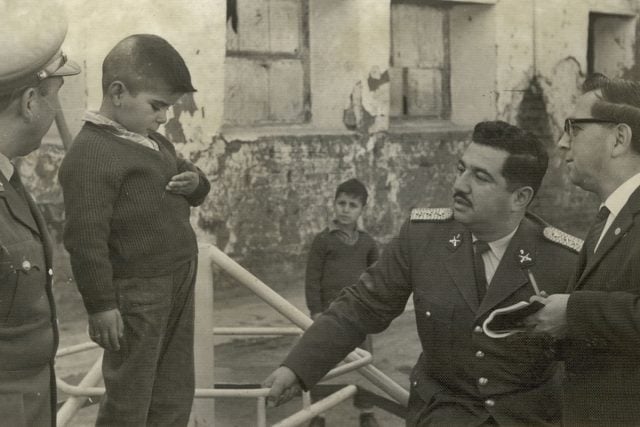
Under the title «Crime in the 20th Century,» divided into four segments (Homicides, Juvenile Delinquency and Child Neglect, Prison System, and Female Offenders), the work highlights that by the end of the 1950s and early 1960s, it was estimated that there were between 4,000 and 10,000 homeless children in Santiago, a situation that «did not change much in the ensuing decades.»
Another alarming statistic reveals that «40% of these children experienced parental abandonment. In order to survive, many banded together, living in abandoned houses or under bridges, falling into vices such as alcoholism, tobacco use, or becoming victims of sexual abuse in exchange for money or food.»
This dire situation was faced by successive governments, first of Frei (1964) and then of Allende (1970). In the previous decades, the situation was even more desolate due to laws that penalized, among other things, vagrancy.
Many children were incarcerated for engaging in survival activities: shining shoes, selling newspapers, begging, or even playing in the streets could result in police detainment and imprisonment during those harsh early decades of the last century.
Education as a Way Out
Memoria en Color highlighted that one of the main policies implemented to counter this situation was the Compulsory Primary Education Law of 1920, which faced numerous delays due to opposition from conservative factions (current right-wing) who argued that this law would lead to “fewer tenants” (to exploit) in their fields and businesses.
«This law established the obligation and free access to public primary education, ensuring that all children in the country could receive schooling. Its implementation was directly linked to declines in illiteracy and juvenile crime,» emphasizes the publication.
The work of Memoria en Color illustrates how social media can play a significant role in the political, social, and cultural education of communities, paving the way for new forms of knowledge and a collective voice capable of challenging the narratives of powerful elites entrenched in major media outlets.
Check out the complete series on «Crime in the 20th Century» (4 parts) below:
El Ciudadano / Cover Photo: Museo Histórico Nacional, a child speaks with police officers and a journalist in Santiago in 1960.
