Original article: Washington se pasó de la raya: sanciones por el cable chino reabren la pelea por soberanía digital y ponen a Kast contra la pared
The United States moved decisively before Chile could finalize its decision, leaving a political bombshell just days before the leadership transition. The revocation of visas for three Chilean officials involved in evaluating a submarine cable backed by a Chinese consortium cannot be viewed merely as an administrative act; it serves as a clear warning. It sets a boundary for Chile and presents a challenge for the president-elect José Kast before he even assumes office, forcing him to respond.
The official response was unequivocal. The Foreign Ministry stated that the project should be assessed on its own merits and that Chile cannot accept «unilateral threats or sanctions» as a means to influence sovereign decisions. The message was clear: discussing concerns is one thing; using punishment to twist an arm is another.
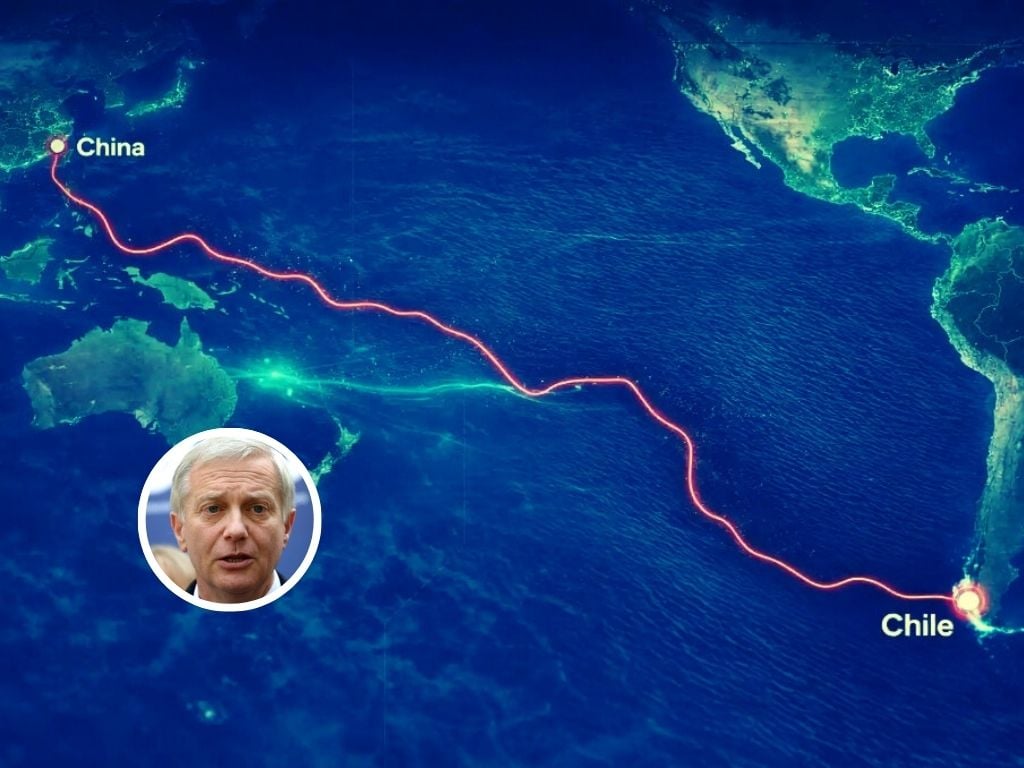
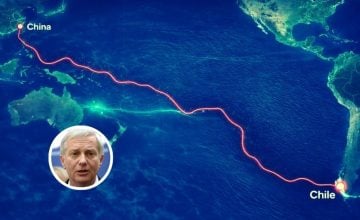
The project aims to lay fiber optic cable from Hong Kong to Valparaíso, creating a direct route across the Pacific that would diversify the nation’s international connections. This underscores a deeper issue: when discussing the Hong Kong-Valparaíso cable, it’s not just about technology but about digital sovereignty and the actual ability of the next government to defend it when opposing Washington comes with immediate and concrete costs.
The crisis was triggered not by a definitive decision from the Chilean state but by the mere act of evaluating the project. This makes the sanction particularly sensitive; if reviewing an investment can provoke penalties, then the message is not technical but political. For Kast, the dilemma will be apparent from day one: maintain that Chile makes its own rules or accept that, in strategic matters, the final say comes from outside.
The Hong Kong-Valparaíso Cable and the Line That Washington Crossed
The consortium of Chinese state-owned companies formally submitted its request to Subtel to construct the cable, with significant investment aimed explicitly at reducing dependence on routes that currently rely heavily on the United States. Like any project of this scale, it must undergo technical, regulatory, and security evaluations.
However, the U.S. response was to impose sanctions on Chilean officials, arguing that the project could impact «regional security». This stance was reinforced by Ambassador Brandon Judd, who defended the measure, stating that the United States will sovereignly decide who enters its territory.
The issue is not that the U.S. expresses concern; that is part of diplomacy. The problem arises when that concern translates into direct punishment against officials simply for participating in an administrative evaluation. This is where many see that Washington has overstepped.
Digital Sovereignty: The Debate Returns with More Force
The discussion is neither ideological nor binary. It’s not about choosing between China or the United States as if Chile were merely a foreign chessboard. It boils down to a more fundamental question: who defines the rules concerning critical infrastructure.
Submarine cables carry the vast majority of global data traffic. They facilitate financial transactions, institutional communications, digital services, and an increasingly large part of the economy. Connectivity is no longer a luxury; it is a backbone.
This is why the Hong Kong-Valparaíso cable holds strategic significance. A direct connection to Asia alters historical dependencies and broadens the maneuvering space. In this context, U.S. pressure is perceived not as a mere technical opinion but as an attempt to influence a sovereign decision.
The Precedent That Cannot Be Forgotten
The current controversy inevitably recalls the path taken by the Humboldt Cable. At that time, alternatives involving Huawei were explored, but the project ultimately developed in partnership with Google, amid an international climate shaped by U.S. offensives against Chinese technological expansion.
The outcome was a redesign of the trans-Pacific connectivity map under conditions different from those initially considered. This precedent weighs heavily today because it illustrates that the geopolitical dispute is not abstract; it has already had concrete effects on Chilean strategic decisions.
This raises the question again with urgency: will this time be different?
Rapa Nui and What Is at Stake Beyond the Conflict
The debate gained further importance with the news of the possibility of including a branch that connects Rapa Nui and Juan Fernández at no fiscal cost to the State. Currently, these territories rely on satellite connections, which pose evident limitations for digital development, education, and services.
This aspect renders the issue less theoretical and more tangible. It’s not just about great powers vying for influence; it’s also about real opportunities for connectivity for communities that have historically been isolated.
When the conflict is viewed from this perspective, it shifts from distant diplomatic wrangling to a decision that directly impacts the nation.
Kast in a Tight Spot
Here is where the conflict evolves from being a mere inheritance to a definition. José Kast will face this scenario in the early days of his government. The signal he sends will be interpreted both within Chile and beyond.
He may choose to quickly close the chapter, dismissing the project to avoid friction with Washington. Alternatively, he could maintain that Chile assesses strategic investments under its own rules and that sanctions are not a means to influence sovereign decisions.
This is not a simple decision. It involves weighing diplomatic and economic costs while also establishing the tone of his foreign policy from the outset of his term. In other words, it will reveal whether the incoming government is willing to take a stand or if it prefers to avoid conflict at all costs.
Because if external pressure tips the balance before institutional decisions are made, the message will be clear: sanctions work. And this sets a complicated precedent for the future.
Active vs. Diluted Sovereignty
Chile has the right to evaluate the Hong Kong-Valparaíso cable with stringent security standards, total transparency, and solid regulatory safeguards. What it should not accept is having that assessment conditioned by punishment.
Washington expressed its concerns. But by converting that concern into sanctions, it crossed a political line that reopens the discussion on the real autonomy of the country.
Ultimately, the question is not just whether a submarine cable will be built. The question runs deeper: does Chile make its strategic decisions based on its own criteria or under duress?
And that answer, today, has a name and surname.
Relacionados

Washington se pasó de la raya: sanciones por el cable chino reabren la pelea por soberanía digital y ponen a Kast contra la pared
Hace 2 minutos

Jeannette Jara's Digital Campaign Surpasses José Antonio Kast in Followers Thanks to Viral Success
Hace 4 meses
Key Breakfast: Michelle Bachelet Offers Explicit Support to Jeannette Jara Just Days Before Runoff
Hace 3 meses
Nazi Past and Allegations in Paine Revive Debate Over Kast Family Just Days Before Elections
Hace 2 meses