Original article: ¿Qué está pasando en el Salar de Maricunga? Comunidad Colla Finca del Chañar aclara su posición
By Cindy Quevedo Monardez – Community Colla Finca del Chañar
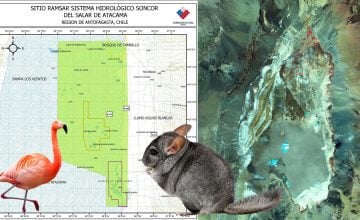
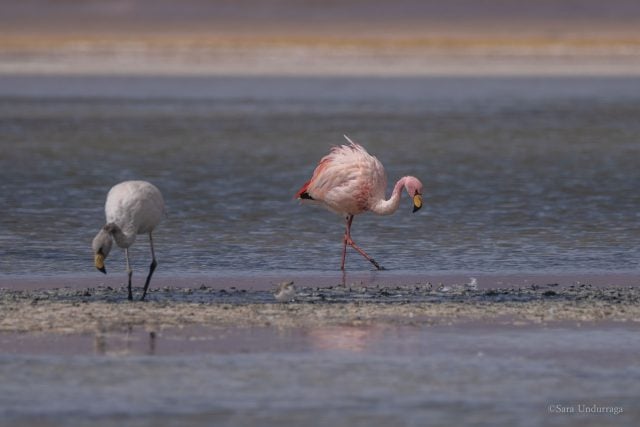
Recent publications regarding the consultation process aimed at protecting 13,000 hectares of Salar de Maricunga have sparked various claims that deserve scrutiny in light of verifiable facts, particularly in a territory that hosts one of the most significant populations of high Andean flamingos in the country. The water and biodiversity are at stake due to lithium exploitation.
On the accusation of «illegal binding» and the closure of the consultation: The legal advisor for the Pai Ote community has claimed that the closure of the consultation process was «untimely» and that the proposed protection would constitute an «illegal binding» that violates indigenous rights.
However, verifiable records indicate that the process adhered to the stages outlined in Convention 169, with documentation of calls, minutes, and participation from communities within the territory. To date, there has been no ruling from the Controller’s Office declaring its closure illegal.
While the discussion surrounding the outcomes is valid, it must distinguish between political dissent and illegality. It is also a public fact that in the Special Lithium Operation Contracts (CEOL) related to Maricunga and Laguna Verde, there was active participation from those now questioning the environmental consultation.
It raises a legitimate question: Why was there fluid participation when it came to processes associated with exploitation and economic compensation, yet controversy arises when the consultation had a strictly environmental objective with no monetary benefits involved? Particularly when comparing the timelines of each consultation: the CEOL process concluded in four months, while the environmental consultation did not reach completion in eight months and is considered an «illegal rush.»
Labeling this outcome as an illegal rush does not align with reality. The State not only allowed sufficient time but also extended the process beyond its original schedule.
The closure was not hasty but rather a logical consequence of a process that cannot remain open indefinitely when valid agreements are in place and commitments have been fulfilled while environmental protection is required against imminent exploitation of the territory.
Regarding the debate on territorial representativeness: It was later asserted that the Ministry of Environment may have reached agreements with «non-territorial» communities, referring to the only community that completed the consultation process for protecting over 13,000 hectares in Salar de Maricunga.
In response, the Community Finca del Chañar presents sufficient documentation demonstrating its relevance in the Salar. It’s important to note that participation in indigenous consultations is determined by verified connection rather than solely by physical residence, according to the standard of ILO Convention No. 169.
Thus, the minutes from the process record the participation of communities that later voluntarily withdrew from providing final reports and from the final dialogue process, seeking to pressure the ministry against closing the consultation, in a scenario where every day counts to protect the remnants of the salar. The debate on representativeness cannot be resolved solely through unilateral public statements.
About the protection of 13,000 hectares and the flamingo colony: The protection proposal from the Community Finca del Chañar is based on the existence of a lagoon system of high ecological fragility that harbors:
- Nesting areas for Andean flamingos
- Interconnected high Andean wetlands
- Sacred sites of the Colla People
- Transhumance routes and current occupation of the space
- Essential hydric balances for biodiversity
This measure is not driven by business interests but by technical conservation criteria and the need to apply the precautionary principle in critical ecosystems.
The report presented by Finca del Chañar to protect the lagoon system, amid the pressures of expanding lithium projects in the territory, formulated a proposal aimed at safeguarding the aforementioned elements. This report for consultation is framed within legal tools available for environmental defense rather than a strategy of community exclusion.
On the ‘two simultaneous processes in’ Maricunga: While the protection of part of Salar de Maricunga was questioned, the State advanced modifications to the CEOL for lithium extraction in the same territory, establishing mechanisms for «economic contributions» and «governance» with the same communities that now claim «illegal binding and rush.»
This scenario is not overly complex, as it shows the coexistence of two highly relevant processes. On one hand, there is the discussion about expanding protection measures for a wetland that hosts one of the most important breeding colonies of high Andean flamingos in the country; on the other, conditions for the administrative and contractual exploitation of lithium within the same ecological system are being enabled.
The simultaneous nature of both processes requires coordination and adherence to particularly high standards of transparency, information traceability, and public access to documentation. It is not about opposing development model discussions but ensuring that decisions are made based on complete information, effective participation, and assessments of cumulative impacts in a fragile ecosystem.
In this context, a legitimate question arises for public debate: How are the discourses questioning environmental protection articulated with the extractive negotiation processes advancing in parallel?
Answering that question necessitates access to documents, minutes, and complete agreements in both the CEOL consultation processes and those concerning protected salars. It involves understanding the representativeness criteria used, the defined participation mechanisms, the proposed mitigation measures, and how available scientific information regarding the salar’s biodiversity has been considered.
In indigenous territories and strategic ecosystems, the standard must be even higher, both in compliance with existing legal frameworks and in respecting the principles of good faith and informed consent.
What is at stake in Maricunga is not just a productive project or a specific protection figure, but the coherence of public policy and the State’s capacity to harmonize its own instruments without creating sacrifice zones in high-value ecological and cultural high Andean wetlands, respecting the cohesion and values of the communities culturally linked to them.
Cindy Quevedo Monardez – Community Colla Finca del Chañar
Relacionados
Colla Pai Ote Community Accuses Government of Illegal Rush for Maricunga National Park Approval
Hace 2 semanas
Chilean Supreme Court Upholds Indigenous Land Rights, Rejects Claims from Communities Lacking Historical Ties
Hace 2 meses
Rapa Nui Overwhelmingly Rejects Government's Special Statute Proposal Amid Indigenous Consultation
Hace 2 semanas