Original article: La República Árabe Saharaui Democrática a 50 años de su proclamación: Análisis jurídico de un proceso de descolonización inconcluso
By Hafdala Chadad Brahim, Sahrawi Diplomat
1. Introduction
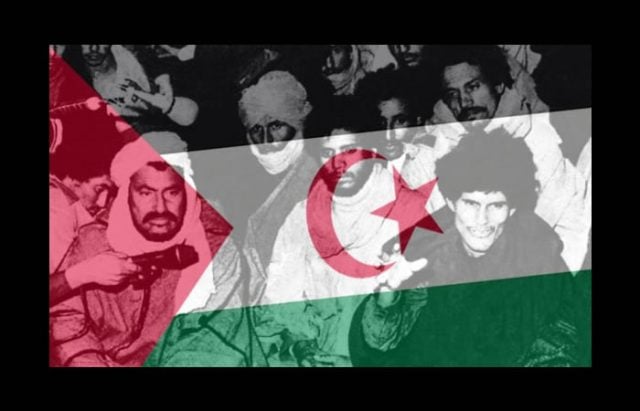
The proclamation of the Sahrawi Arab Democratic Republic (SADR) on February 27, 1976, by the Popular Front for the Liberation of Saguia el Hamra and Río de Oro (Polisario Front) is part of one of the most prolonged and legally defined decolonization processes—though politically stalled—of contemporary international order.
Fifty years later, Western Sahara remains a paradigmatic case of disconnection between international legal norms and their effective application.
As noted by Antonio Cassese, the right to self-determination for peoples is considered «one of the structural principles of international law post-1945,» and its prolonged violation undermines the coherence of the international legal system as a whole.
Western Sahara does not represent an ordinary territorial conflict; rather, it is a direct application of the right of peoples to freely determine their political destiny, recognized as a norma erga omnes and, according to a significant portion of doctrine, as a norma of ius cogens.
2. The Legal Status of Western Sahara
Since 1963, Western Sahara has remained listed as a Non-Self-Governing Territory by the United Nations, awaiting decolonization, and is subject to the legal regime outlined in Articles 73 and 74 of the UN Charter. Under this normative framework, the administering power has a legal obligation to lead the territory toward the effective exercise of self-determination.
General Assembly Resolution 1514 (XV) firmly established self-determination as a legally enforceable right. In the words of James Crawford, this resolution transformed self-determination «from a political aspiration into a fully operational legal norm.»
In the case of Western Sahara, the General Assembly has continuously reiterated that the Sahrawi people are the only legitimate holders of this right, and territorial claims from third States cannot prevail.
3. The 1975 Advisory Opinion of the ICJ
The Advisory Opinion of the International Court of Justice (ICJ) on October 16, 1975, is one of the most significant rulings in the jurisprudence on self-determination. The Court concluded that there were no territorial sovereignty links between Western Sahara and Morocco or Mauritania that could affect the application of the principle of self-determination.
As emphasized by Alain Pellet, the legal significance of this opinion lies in the Court’s explicit rejection of the instrumentalization of the pre-colonial past as a legal basis for denying a colonized people’s self-determination. The ICJ established that the political fate of the territory should be determined solely through the free and authentic expression of the Sahrawi people’s will.
4. Spain’s Withdrawal and the Invalidity of the Madrid Agreements
Spain’s withdrawal from Western Sahara in 1976, articulated through the so-called Madrid Agreements, raises serious objections from the standpoint of international law. These agreements were not registered in accordance with Article 102 of the UN Charter and did not result in a valid transfer of sovereignty or the status of administering power.
As Dr. Carlos Ruiz Miguel has pointed out, the Madrid Agreements «lack international legal efficacy and did not alter the status of Western Sahara as a territory pending decolonization.»
This interpretation has been consistently reiterated by UN practice, which has affirmed that Spain could not dispose of the territory without the prior expression of the Sahrawi people’s will.
5. The Proclamation of the SADR and International Legal Personality
In this context, the proclamation of the SADR must be interpreted as a legal-political act aimed at preserving the entitlement to self-determination in the face of a situation of de facto occupation. From the perspective of international law, the SADR has developed substantial elements of statehood, although the effective exercise of sovereignty is constrained by external factors.
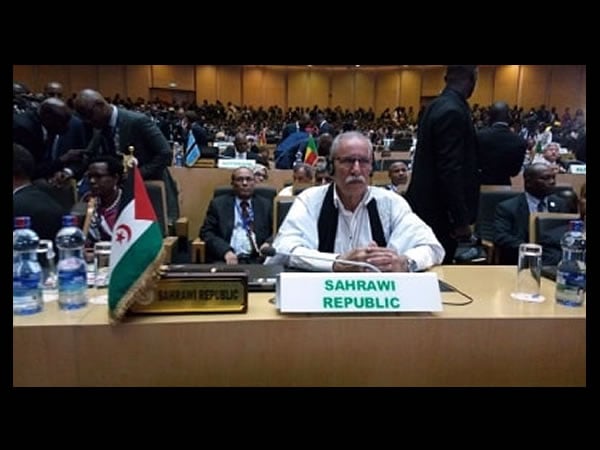
James Crawford has indicated that in decolonization contexts, the lack of effective territorial control does not necessarily prevent an entity’s recognition as a State when such lack results from a violation of international law. The admission of the SADR as a full member of the African Union on February 22, 1982, reinforces its international legal personality, at least regionally.
6. The United Nations, MINURSO, and the Stalemate of the Referendum
The ceasefire on September 6, 1991, between the conflicting parties and the establishment of the United Nations Mission for the Referendum in Western Sahara (MINURSO), created under UN Security Council Resolution 690 on April 29, 1991, aligned with the settlement proposals accepted by Morocco and the Popular Front for the Liberation of Saguia el-Hamra and Río de Oro (Polisario Front) on August 30, 1988, formalized an international legal commitment aimed at concluding the decolonization process.
However, the failure to hold the referendum over three decades, due to Morocco, has generated a situation of prolonged legal exceptionalism. Christine Chinkin has described this phenomenon as a «normalization of illegality through institutional inaction,» particularly grave when it comes to obligations related to self-determination.
This situation raises pertinent questions regarding the international responsibility of States and the United Nations itself.
7. Jurisprudence of the CJEU and Natural Resources
The jurisprudence of the Court of Justice of the European Union (CJEU) has introduced a particularly relevant legal dimension, asserting that Western Sahara possesses a «distinct and separate» status from the Kingdom of Morocco. The CJEU has established that no international agreement can be applied to the territory or its natural resources without the consent of the Sahrawi people.
As Erika de Wet underscores, these decisions reinforce the enforceability of the right to self-determination against third parties and consolidate the principle of permanent sovereignty over natural resources as a legally binding norm, thereby expanding the practical scope of this right in international economic relations.
8. International Humanitarian Law and Human Rights
The classification of Western Sahara as an occupied territory, as established in UN General Assembly Resolution 34/37, necessitates the application of the Fourth Geneva Convention of 1949. Marco Sassòli emphasizes that prolonged occupations generate enhanced obligations to protect the civilian population, and violations may compromise the international responsibility of the occupying State.
One fundamental cause of the systematic human rights violations committed by the Moroccan regime against the Sahrawi civilian population in the occupied territories of Western Sahara is the absence of a specific human rights mandate for MINURSO, which represents an anomaly within the UN peace operations system and has been subject to repeated criticism by specialized doctrine, as it is the only peacekeeping mission without a mandate for monitoring and overseeing human rights.
9. Conclusions
Fifty years after the proclamation of the Sahrawi Arab Democratic Republic, Western Sahara continues to be an emblematic case of structural non-compliance with international law.
The normative clarity of the right to self-determination starkly contrasts with its lack of practical effectiveness, questioning the credibility of the contemporary international legal order.
Hafdala Chadad Brahim, Sahrawi Diplomat
The Citizen
Relacionados

President Petro Advocates for Western Sahara: Supports Self-Determination Referendum Amid Ongoing Moroccan Blockade
Hace 3 meses
Zohran Mamdani Makes History as New York's Mayor with Over 50% Vote: A Young, Migrant Socialist
Hace 4 meses