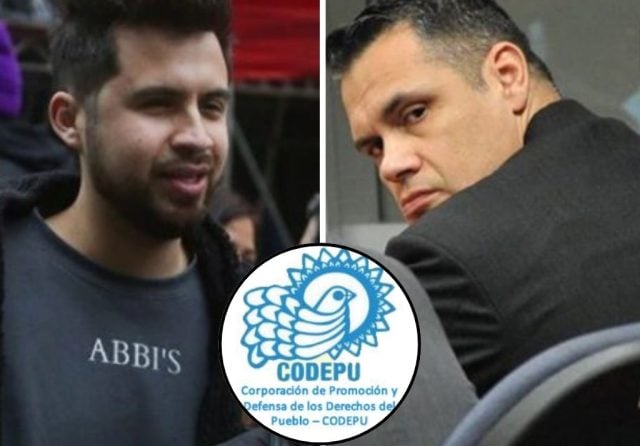
Original article: «Fue un juicio al estallido social”: Codepu denuncia que absolución en caso Gatica consagra la impunidad y “legitima la violencia estatal”
This case, emblematic of the «most severe human rights crisis since the dictatorship» according to Codepu, transcends the assault on Gatica that resulted in his total blindness, serving as a critical examination of the Chilean state’s capacity to investigate, penalize, and remedy human rights violations committed by its agents amidst social unrest.
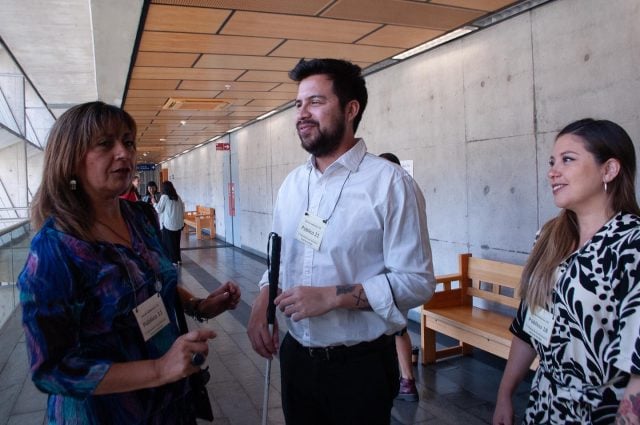
In a ruling that has shaken public trust in the judicial system and reignited discussions on the state’s response to social protests, the Fourth Court of Oral Criminal Justice in Santiago acquitted former lieutenant colonel Claudio Crespo of attempted homicide, despite acknowledging that he fired the service weapon that blinded elected deputy Gustavo Gatica on November 8, 2019.
On January 13, the capital court concluded that Crespo acted out of legitimate defense and legal use of force, stating that Gatica was involved in «violent demonstrations» and was carrying a stone.
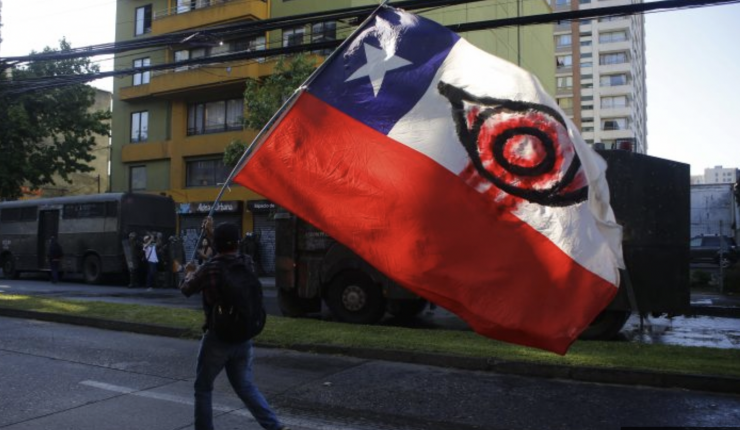
After over a year of trial and a six-month investigation, this judicial resolution has been labeled by Codepu’s legal team as a verdict that represents «a trial of the social explosion» and warrants a thorough critique of how the judicial system responded to one of the most significant social mobilization processes in the country’s recent history.
This case, emblematic of the «most severe human rights crisis since the dictatorship,» according to Codepu, transcends the assault on Gatica that resulted in his total blindness, serving as a crucial examination of the Chilean state’s ability to investigate, penalize, and remedy human rights violations committed by its agents during times of social crisis.
The Verdict and the Shadow of the Naín-Retamal Law
The court determined that while Crespo was the direct perpetrator of the shots, he acted in «self-defense and defense of others.» This conclusion is situated in a legal context substantially altered following the social upheaval: the so-called Naín-Retamal Law, enacted in 2023.
For Codepu, this legal framework is not a minor detail, but the cornerstone of an «impunity that builds through judicial practices which, under a facade of legality, distort or manipulate the law.»
«Given the verdict, it is evident that the Naín-Retamal law was conceived and transformed into a tool for legitimizing state violence. Under this law, so-called privileged self-defense provides extensive powers to state agents, and by altering how conditions justifying the use of force are accredited, it complicates and often renders impossible investigations into state agents,» stated the corporation’s lawyers.
This procedural change, they argued, is part of a «conservative wave» post-uprising that enables punitive laws and uses criminal law to manage social order; hence explaining the decisions to halt investigations into thousands of complaints of human rights violations.
In a «Trial of the Uprising,» Gatica Ceases to be a Victim
One of the most controversial aspects of the ruling, alarming to Codepu, is the court’s characterization of Gustavo Gatica’s actions at the time of the incident.
The judges concluded that on November 8, 2019, the young student allegedly engaged in «illegitimate, immediate, and potentially lethal aggression amidst a massive and organized attack.»
For the corporation’s lawyers, this judicial interpretation is precisely evidence that the process was, in essence, a political trial of social mobilization.
«This opinion or interpretation of events by the court is a judgment against social upheaval and fits within the conservative wave that sees this social mobilization process as nothing but violence and crime, thus criminalizing it,» the legal team pointed out.
«The judges, instead of focusing on the individual suffering from the mutilation of his eyes and, therefore, on the illegitimate violence exercised by the state through its agents, directed their attention towards the protest and public disorder. Thus, the one who suffered the violence, in this case Gustavo Gatica, stops being seen as a victim and is treated as part of the problem,» they questioned.
Furthermore, they warned that this logic sets a dangerous precedent.
«The court’s reasoning could justify, in the future, serious human rights violations committed by state agents under the guise of legitimate defense, which transgress their own operational protocols in contexts of social protest or act with the permissiveness of their superiors and political authorities,» they argued.
Crisis of Credibility in the Judicial System
The ruling in the Gatica case comes at a time of deep public distrust towards judicial institutions. In this regard, Codepu referred to two key references to contextualize this scenario.
On one hand, they recalled a study by IPSOS published in January 2025, based on a panel of more than 137,000 people, which revealed that 78% believe court decisions are influenced by those with power and money; 75% feel that without financial resources, achieving justice is very difficult; 66% believe there’s influence from political parties; and 61% indicate that in Chile, it is possible to pay for a favorable verdict.
On the other hand, they noted the preliminary report from the UN Special Rapporteur on the Independence of Judges and Lawyers, Margaret Satterthwaite, published in August 2024, which suggested that in light of the allegations of influence-peddling in appointments to the Supreme Court and the Attorney General’s office, public skepticism has intensified, painting a troubling picture of a judiciary where political or personal considerations can eclipse merit-based appointments.
Satterthwaite indicated in the document, citing her Chilean interlocutors, that «there exists justice for the rich and another for the poor, and the experiences of justice users depend on their economic means, social class, and connections.»
According to the rapporteur, «the wealthy benefit from an efficient judicial system that enables rapid processing of their cases to avoid prison sentences, while the less fortunate are trapped in lengthy proceedings and receive harsher punishments.»
«This differentiated experience worsens when economic hardships intersect with discrimination, and racial profiling hinders fair treatment for indigenous, migrant, and Afro-descendant communities,» she emphasized.
A Call for Reflection
For Codepu, the Gatica case is not an isolated incident, but the tip of an iceberg revealing the collusion between a repressive legal framework, biased judicial practices, and a political climate that penalizes protest.
Their conclusion is an urgent call for collective reflection «on our judicial system and the judiciary in particular,» which must include the factors that «foster impunity and hinder the achievement of justice, such as repressive laws and judicial practices,» while also contributing to the search for solutions.
«The judicial system cannot merely limit itself and ‘adapt’ to political contexts; it must respond to a higher mandate, which is the protection of human dignity. Otherwise, it happens that through a façade of legality (…) this application becomes merely instrumental, distorting its protective function and sense, leading to impunity,» they stated.
«That is, the legal framework is applied formally, but diverges from its essential role of protecting human dignity. This practice affects not only the specific victim of the case but society as a whole and, of course, democracy,» the lawyers indicated.
The acquittal of Claudio Crespo, therefore, does not close the Gustavo Gatica case. Instead, it transforms it into a permanent symbol of the Chilean state’s debt for justice to the victims of the social explosion and serves as an uncomfortable witness to the deep cracks in a judicial system whose independence and fairness are increasingly questioned by a skeptical public. The political, social, and legal debates that the verdict has intensified seem, for now, to be the only path toward the solutions that the ruling has denied.
Relacionados

Gustavo Gatica's Heartfelt Letter: "We Have the Truth, But Justice Remains Elusive" After Claudio Crespo's Acquittal
Hace 2 meses
Gustavo Gatica Attends Closing Arguments in Trial Against Former Carabinero Claudio Crespo
Hace 3 meses
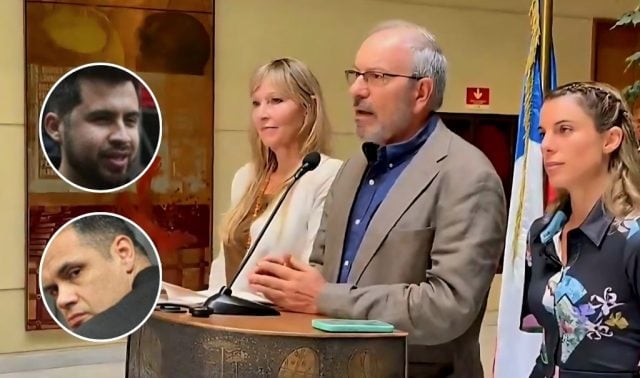

Impunity: Court Acquits Former Carabinero Claudio Crespo for Illegitimate Coercion Against Gustavo Gatica
Hace 2 meses