Original article: Camila Vergara: cooperativismo y organización plebeya como alternativa al modelo actual
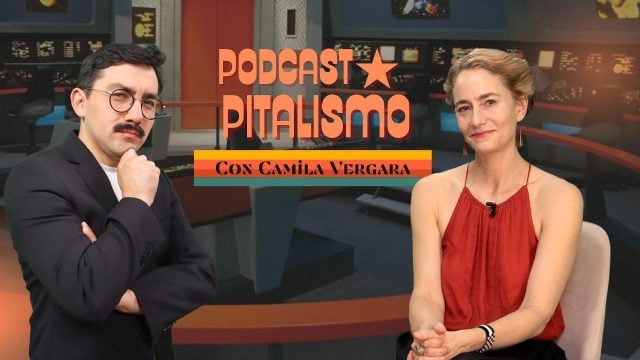
On Wednesday, the 31st, in the PodcastPitalismo program, Javier Pineda spoke with Camila Vergara, an academic from the University of Essex and a doctor in political theory, who discussed how cooperative models and grassroots organization enable the reimagining of economic and political democracy beyond capitalism.
Today’s society faces significant challenges—such as inequality, the climate crisis, and labor precarity—that compel us to look beyond established economic models. In this context, transformative alternatives like cooperativism are emerging, pointed out Javier Pineda in the program’s editorial.
Cooperatives originated in 1844 in England when a group of workers established a store grounded in democratic management and collective well-being. Over the years, this model has expanded globally, now engaging over 12% of the world’s population and generating nearly 10% of employment. Their resiliency has been highlighted in times of crisis, although not all contemporary cooperatives adhere fully to their foundational principles.
Camila Vergara explained that populism has historically been used in Latin America as a pejorative term to delegitimize popular leftist leaders. In Europe, since 2012, the concept has been redefined to describe the far right, obscuring its ideological content.
Vergara noted that drawing from Laclau, populism is understood as a way to construct the people, valid for both the left and right. The academic criticized this European perspective, which obscures the Latin American tradition of leftist populism.
It is in this context that the notion of the “plebeian” arises. Through a historical review, Vergara highlighted the experience of ancient Rome, where the tribunes of the plebs represented the working class.
However, many of these representatives ended up upholding the existing order, while figures like Tiberius Gracchus pushed for profound reforms, giving rise to what became known as the populares or populists.
From this tradition, populism is understood as a political force emerging outside traditional parties, seeking to represent excluded sectors. In today’s context, characterized by high levels of informal labor, this logic allows for the articulation of diverse groups—such as women, migrants, and Indigenous peoples—into a broad alliance challenging existing power structures.
Cooperatives: A Collective Response to Crises
Vergara explained that cooperatives emerged in Britain as a collective response to crises, when communities began organizing to purchase together and secure basic goods. Since their inception, they have been based on principles such as equality among members, democratic decision-making, and reinvestment of surpluses for the benefit not only of participants but also the community as a whole.
Moreover, she noted that this model proposes an ethical alternative to traditional capitalism, as it does not seek to maximize profits at the expense of people or the environment. Cooperatives prioritize sustainability, solidarity among similar organizations, and the well-being of their members, allowing for collective decisions on aspects like working hours and conditions.
«The problem is that surviving in an oligarchic and capitalist system is extremely difficult. When attempting to compete as a traditional business, the essence of cooperativism is lost. The goal is to change the social logic, how we understand ourselves, and what kind of society we desire.”
The academic asserted that this model empowers participants, enabling them to exercise democracy more frequently than just through voting.
In cooperatives, individuals deliberate and make collective decisions within the productive sphere, which functions as a political learning experience. Thus, they become spaces of self-governance where the community develops the capacity to make decisions and govern.
In this regard, Vergara argued that cooperativism and grassroots organization serve not only as economic responses but also as everyday political practices. In her view, these spaces allow for experimentation with forms of direct democracy, strengthen self-governance, and challenge the prevailing logic of capitalism. Hence, rather than isolated alternative models, they present concrete experiences for rethinking how society and power are organized.
Check out the full interview below:
Relacionados
Camila Vergara: cooperativismo y organización plebeya como alternativa al modelo actual
Hace 2 meses

EZLN Warns: "Progressive Left Governments' Mistakes Fueling the Return of 'Fascist' Right in Latin America"
Hace 2 meses
Political and Economic Balance 2025: Geopolitics of Resistance and the Urgent Need for Popular Reconstruction
Hace 2 meses