Original article: Chile y Perú activan comité migratorio en medio del falso discurso de “crisis” ya descartado en la frontera norte
The governments of Chile and Peru activated the Binational Migration Cooperation Committee on December 1st, aimed at addressing migration-related issues collaboratively, amidst misleading rhetoric regarding a «crisis» at the border between the two nations.
Despite a military buildup by Peru at the Chacalluta border crossing ordered by interim President José Jerí, calls for calm have emerged from various sectors. These include Foreign Minister Alberto van Klaveren; Public Security Minister Luis Cordero; Government Spokesperson Camila Vallejo; Interior and Public Security Undersecretaries Víctor Ramos and Rafael Collado; Arica Mayor Orlando Vargas; Director of the National Migration Service Eduardo Thayer; as well as Peruvian Foreign Minister Hugo de Zela and legal director of the Jesuit Migrants Service, Gabriela Hilliger, all of whom have rejected claims of an ongoing migration crisis in northern Chile.
Van Klaveren stated that both countries “maintain a continuous dialogue and cooperation on migration, which intensifies during complex situations like the current one at the northern border.”
“Peru made a sovereign decision regarding its borders and migratory management, not just with Chile but also with its other neighboring countries,” he noted.
He emphasized that officials from both nations are discussing through existing diplomatic channels to find the best way to collaboratively manage irregular migration, a challenge faced not only by Chile and Peru but the entire region.
The Peruvian Foreign Minister highlighted that “the situation is under control” and they hope that “there will no longer be interruptions of the flow on the road,” reference to the situation that occurred last Friday on the Pan-American South highway when a group of stranded Venezuelan migrants was reported.
“The coordination we are doing is with the government of Chile’s President Gabriel Boric, and it is with this government that we aim to cooperate and overcome this situation,” De Zela remarked in statements to the press from the Government Palace in Lima.
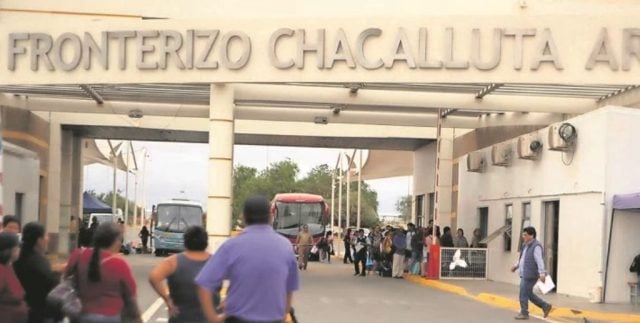
Undersecretaries of the Interior and Public Security, Víctor Ramos and Rafael Collado, visited the Chacalluta Border Complex this past weekend to assess the situation following Peru’s emergency declaration and military deployment. They ruled out the existence of a critical or unprecedented scenario concerning migratory flows, emphasizing that the crowds observed are typical at any border crossing worldwide.
Ramos stated that indicators show no significant alterations in the transit of individuals. “Currently, there are twelve people unable to cross due to issues with their papers. Can that be called a migration crisis?” he remarked, addressing narratives aimed at creating panic among the public.
He explained that the flow observed at the Chacalluta Border Complex is consistent with what is typically recorded at this time of year. “We aren’t seeing any unusual movement. The only difference is that there are many more media outlets covering the area than before,” he noted in comments collected by Publimetro.
He believes that the situation does not reflect a real increase in migrants but rather the change in Peru’s policy, which declared a state of emergency and deployed military forces to its southern border.
“We anticipated changes in Peru and prepared various scenarios. Chile has solid institutions and a long democratic tradition to manage this situation,” he asserted, while highlighting that the mechanisms implemented by President Gabriel Boric’s government have functioned adequately, keeping the situation under control.
For his part, Arica Mayor Orlando Vargas assured that the situation is «normal» and dismissed any notion of a crisis.
“We see the situation as very normal, so normal that it’s like every day, and the only real difference from last week is that the country of Peru deployed about 50 military personnel (…) that’s the only change because everything else continues as usual,” he said in an interview with Radio Universidad de Chile.
“What I see as the city’s first authority is that there is no crisis. A crisis would arise when there are 500, 600, or a thousand migrants. This municipality conducted a Cogrid this week (…) we are prepared and ready to respond and assist migrants, with doctors, food, and even veterinary care for pets if necessary,” he added.
“The truth is that I can’t attribute it to anything more than that when December arrives, people start to visit their families in the north, Ecuador, Colombia, Venezuela, and then they return and cross through unregulated paths again. This has been the case for years,” he continued, emphasizing the need for stricter immigration policy laws.
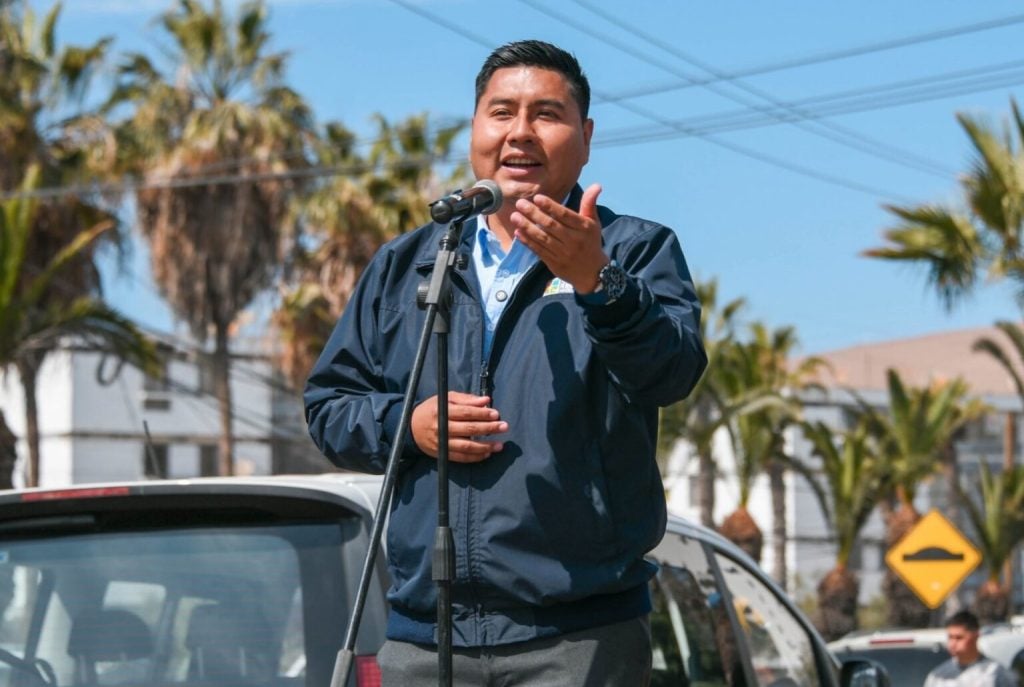
Data Disputes False Migratory Surge Towards Peru
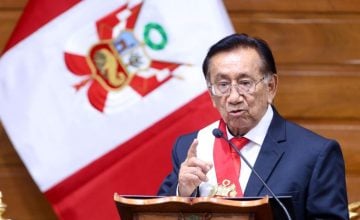
From Tacna, Peru’s interim president, José Jerí, announced last week that his government declared a state of emergency at the border with Chile, citing an increase in irregular migration.
He indicated that the National Police and migration officials should intensify controls at the border to ensure “tranquility” for the population.
Following the announcement of militarization by Peru, the regional governor of Arica and Parinacota, Diego Paco Mamani (RN), began posting videos on social media and providing statements to morning shows from the Line of Concordia, warning of an alleged “reverse migratory surge” resulting from increased Peruvian border controls.
One incident contributed to the establishment of this narrative of an alleged migration crisis at the northern border.
Last Friday, a group of around twenty Venezuelan migrants temporarily blocked the passage to Peru for about an hour by placing wood and stones on the pavement, claiming that Peruvian police were preventing them from crossing due to visa issues and were even charging them $100 each to cross.
Concurrently, it was revealed that the PNP’s Internal Affairs Department was auditing the border detachment due to such practices, which led to a backlog of migrants at the Chile-Peru border; the enforcement agents had opted to temporarily halt charges to avoid being expelled from the institution, according to El Mostrador.
However, following the arrival at the border complex by Undersecretaries Víctor Ramos and Rafael Collado, a working group was established, addressing the supposed surge while presenting data confirming that from January to February 2025 there was a peak of 1,328 and 1,033 migrants departing, while in September, October, and November there were 559, 733, and 644 departures respectively, showing a reduction in movement and completely ruling out a scenario similar to that experienced between 2019 and 2022 when a significant flow of Venezuelan migrants gathered along the track and even at the Chacalluta Border Complex to enter and exit Chile.
Nevertheless, authorities projected an anticipated increase in departures in December due to year-end festivities, just as has regularly occurred in this month.
It is worth noting that the legal director of the Jesuit Migrants Service, Gabriela Hilliger, reported that after a recent visit from the organization’s team to the border area in Arica, a migratory flow similar to the usual was observed.
“Yes, there are some individuals who have been trying to leave for several days,” she stated, while acknowledging the presence of children and adolescents whose humanitarian needs must be assessed.
In statements to Diario U. de Chile, she cautioned that “the State must adequately intervene, beyond the discussions regarding the situation that Peru may be deciding and militarization; there is also a humanitarian effort to be made in border areas.”
In the same vein, Eduardo Thayer, director of the National Migration Service, indicated that on average, between 5,000 and 6,000 foreigners depart daily through Chacalluta, indicating that there are no disruptions in migration flows out of Chile.
Impact of Kast on Peru’s Reaction
El Mostrador revealed the repercussions in Peru following the ultimatum issued on November 20 by presidential candidate of the Republican Party, José Antonio Kast, to migrants, stating they had only 111 days to leave the country.
Four days later, interim President José Jerí Oré’s exaggerated reaction occurred, as he went to the Peruvian border control and then to Marker 1, to announce the militarization of that area in anticipation of an eventual surge of Venezuelan migrants owing to the ultraright’s candidate’s announcement.
Sources close to Jerí indicated to Aquí Arica of El Mostrador that a particular photo of Kast drinking Inca Kola, a soda considered a national emblem in Peru, that was posted on his Instagram ignited tensions and motivated Jerí, whose mandate is questioned due to his interim status, to “make a patriotic gesture to defend the brand and territory.”
In light of this scenario, Fernando Rojas, former ambassador of Peru to Chile, suggested that Kast’s statements, in which he has publicly pressed for the immediate exit of irregular migrants, have exacerbated the situation.
In conversation with Canal N, he deemed these actions inappropriate and motivated by campaign interests, which, in his view, negatively affect both migrants and bilateral relations between Peru and Chile.
Meanwhile, six former foreign ministers from different governments expressed their “deep concern” regarding radical migratory proposals and warned about the risks of damaging decades-long relationships with neighboring countries.
In a public statement, Soledad Alvear, Mariano Fernández, José Miguel Insulza, Heraldo Muñoz, Antonia Urrejola, and Ignacio Walker criticized the Republican candidate Kast’s stance.
In the text, they asserted that “Chile has a fundamental interest in preserving relations based on respect, cooperation, and good neighborliness with Peru and Bolivia,” particularly to manage phenomena such as “irregular migration, organized crime, and drug trafficking.”
The former ministers stressed the rejection of any actions that undermine bilateral trust. They pointed out that the idea of “pushing” or diverting thousands of individuals towards neighboring countries with no coordination mechanisms or clear bilateral agreements represents an unfriendly gesture that could be perceived as a form of political pressure.
Given the complexity of the situation, the diplomats admitted that “irregular immigration is unacceptable” and indicated that “Chile has a duty to strengthen border control effectively.”
However, they made it clear that responses and measures must be “firm but feasible,” dismissing the “mass expulsions” proposed by Kast as lacking “diplomatic feasibility” and practical support.
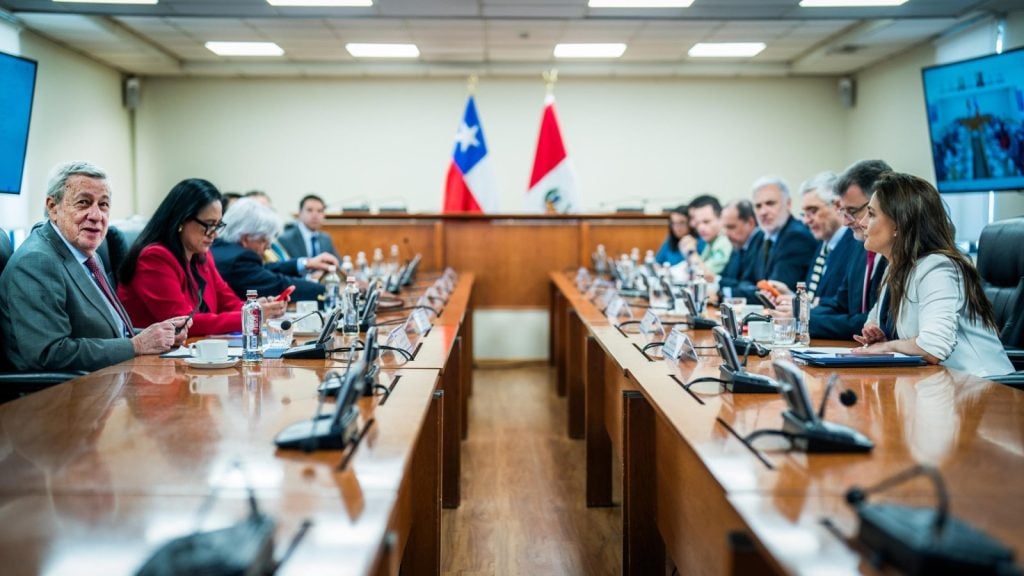
Chile-Peru Migration Committee
Foreign Minister Alberto van Klaveren, along with his counterpart from Peru, Hugo de Zela, led the first meeting of the Binational Migration Cooperation Committee on Monday. This body aims to jointly coordinate migration matters. Also participating were Undersecretary of Foreign Relations Gloria de la Fuente and Peru’s Deputy Foreign Minister Félix Denegri.
At the meeting, the delegations from both countries expressed their willingness to work based on a shared diagnosis, focusing their efforts on formulating practical and effective solutions through a committee-led process that will involve actions directed by deputy ministers and undersecretaries.
As part of this initiative, specific operational coordination mechanisms between Chile’s Carabineros, the Investigative Police, and the Peruvian National Police (PNP) are planned to facilitate and promote joint actions for better migration management and border control.
According to a press release from the Ministry of Foreign Relations, both parties have agreed to move forward with joint patrols and deepen existing information sharing to strengthen operational response capacity and police cooperation in areas of mutual interest.
Additionally, they agreed to establish methodologies for migration verification and address cases of individuals in irregular migration situations, while ensuring the opening and operation of border crossings and migration services in general.
To this end, a joint meeting regarding consular and migration issues is planned in Tacna.
Moreover, Chile and Peru committed to a follow-up meeting of the Binational Migration Cooperation Committee on December 19 to review the agreements reached in Monday’s meeting.
Representatives of both governments highlighted the importance of strengthening a permanent bilateral dialogue grounded in the historical mutual trust of the two countries.
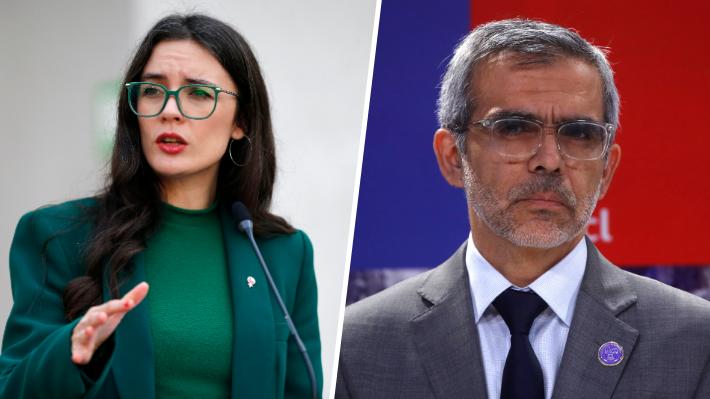
Cordero and Vallejo Criticize Politicization of Border Issues for Electoral Gain
During Tuesday’s session, Public Security Minister Luis Cordero criticized the politicization of migration for electoral purposes, stressing that these are long-term state policies.
“I believe that border issues, which encompass not only boundaries and migration, but also crimes committed at the border, smuggling in all its forms, are long-term state relations,” he stated during a conversation with Radio Infinita.
“That’s why those who run for the Presidency of the Republic, regardless of who they are, must be cautious when delving into such areas, because they commit stable state policies, especially when there are countries that maintain very stable dialogues on this point, like Chile and Peru,” he emphasized.
The Secretary of State reiterated that the number of people at the border is normal while responding to Governor Diego Paco’s criticism, pointing out that “when this becomes so insistent, when the permanent institutions of the State are operational, when the President has instructed his ministers and authorities, and the chancellors have met, frankly, I believe this is part of a campaign context.”
“Election times are what they are. What’s crucial is that there is ongoing work with Peru. The situation at the border today is completely normal, as it has been in previous days,” he stressed.
Government spokesperson Camila Vallejo insisted that immigration issues are used as “electoral spoils,” a recurring theme in every electoral cycle.
“We have a problem, I believe, in Chile and probably worldwide, that immigration is used as electoral capital because it is a very sensitive concern for people,” she remarked, urging the public to “study, read, and become well-informed on the different proposals to avoid being misled.”
She also referred to the Chile-Peru Binational Committee, stating that “these issues cannot be resolved unilaterally, as that may create more problems instead of order.”
“As a country, we have had to adopt a serious migration policy that has considerably strengthened our borders, reducing irregular entries by 48%, while maintaining ongoing dialogue with neighboring countries,” Vallejo stated.
Relacionados
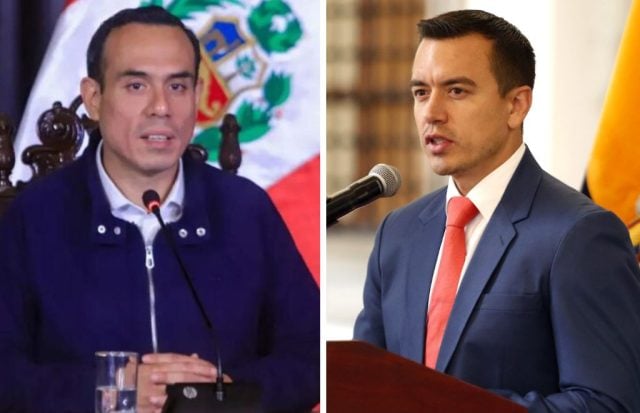
Right-Wing Leaders Unite in Quito: Jerí and Noboa to Lead Binational Cabinet Focused on Security and Border Issues
Hace 3 meses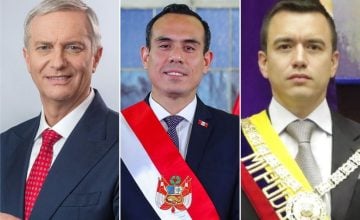
Peru: Congress Set to Choose New President Following Interim Leader José Jerí's Dismissal Amid Political Instability
Hace 2 semanas
Kast's Migration Policy Shift: From Expulsion to 'Inviting' Migrants to Leave Sparks Controversy
Hace 3 meses
José Jerí Faces Uncertain Future as 79 Signatures Gathered for Parliamentary Vote on His Continuity as Interim President
Hace 3 semanas