Original article: Chile eleva a 54% la protección de su mar con nuevos parques marinos en Juan Fernández y Nazca Desventuradas
Chile Boosts Marine Conservation to 54% with New Juan Fernández and Nazca Desventuradas Marine Parks
In a historic move for global marine conservation, Chile has made a significant leap in protecting its oceans. On Tuesday, the Council of Ministers for Sustainability and Climate Change approved the establishment of the Mar de Juan Fernández II and Nazca Desventuradas II National Marine Parks, both located in the Valparaíso Region.
This decision not only safeguards invaluable ecosystems but also positions Chile at the forefront of international conservation efforts, as the country now has 54% of its exclusive economic zone under some form of environmental protection, making it the fourth country worldwide with the highest percentage of its exclusive economic zone in a state of conservation.
A Milestone for Biodiversity
Environment Minister Maisa Rojas emphasized the biological wealth of these areas, which fully justifies the council’s decision. She explained that «this archipelago harbors a unique biodiversity, with a high degree of endemism, and it is extremely valuable that we need to protect.»
«We are very happy and proud because with the Council of Ministers’ decision on Sustainability and Climate Change, Chile is now among the top five countries globally that have the highest percentage of their marine areas—within the exclusive economic zone—protected,» stated the Secretary of State in a press release.
This pride extends beyond the central government and resonates with the local communities that have historically been the guardians of these territories.
The creation of these marine parks is the result of a long-standing aspiration and persistent community work. This was echoed by Juan Fernández Mayor Pablo Manríquez, who celebrated the decision.
“We are very happy because today the Mar de Juan Fernández II and Nazca Desventuradas II marine parks were established, a deep aspiration of our community. This positions our country among the greatest protectors of its jurisdictional waters, with over 50% of its marine areas under protection. This is a legacy of the current generation of islanders, who, following the work of previous generations, have worked diligently to protect the most pristine seas of Chile,” he stated.
The mayor emphasized the unified nature of the project and expressed special gratitude to President Gabriel Boric, whose term ends on March 11.
“My thanks to the President of the Republic for making this a project not only of Government but also of State, one which began with President Michelle Bachelet, continued under President Sebastián Piñera, and is now decreed by President Gabriel Boric,” the mayor affirmed.
Dimensions of Protection
This agreement translates into concrete figures that reflect the magnitude of the environmental commitment. The new Mar de Juan Fernández II National Park covers a vast area of 193,998 square kilometers. This area is complemented by the Nazca Desventuradas II Park, which protects an additional 143,323 square kilometers of ocean.
Together, the creation of these two new marine protected areas represents a substantial increase in conservation at the regional level.
Specifically, the total area under protection in the Valparaíso Region now reaches 10% of its marine territory, equivalent to 260,416 square kilometers.
This advancement is part of a trend over the last few decades, where the State of Chile has demonstrated a commitment to protecting these fragile island and ocean ecosystems.
Exceptional Features of the New Parks
Beyond the figures, the value of the Mar de Juan Fernández II and Nazca Desventuradas II National Parks lies in their unique ecological characteristics. These areas are described as biogeographic enclaves of exceptional value not only environmentally but also scientifically and culturally.
In their waters, key ecological processes develop that are critical for balancing the marine ecosystem of the southeastern Pacific. They function as essential biological corridors and harbor critical habitats for a wide variety of species, many of which are highly migratory, endangered, or endemic to the region.
The most distinctive feature of these ecoregions is their high endemism. This means that a significant proportion of the species that inhabit these areas do not exist anywhere else on the planet. The data is striking: 87% of the fish present in the Juan Fernández archipelago and 72% of the fish from the Nazca Desventuradas Islands have this characteristic of being unique to the world. This biological uniqueness makes them particularly vulnerable to current environmental conditions and external pressures, justifying the urgent need for their comprehensive protection.
The new delineation of these protected areas is not arbitrary. The proposed expansion was specifically designed to incorporate sectors that had previously remained unprotected within the exclusive economic zone. Special attention was placed on conserving vulnerable habitats and the migratory routes of key species. These include mako sharks, various species of tuna, lobster larvae, and even endemic species like the two-haired seal.
This sought ecological connectivity is fundamental, as it sustains the populations of vital resources for the island community, such as the Juan Fernández lobster (Jasus frontalis), which constitutes the backbone of the local fishing industry and an important economic and cultural sustenance for the inhabitants of the archipelago.
Additionally, the submarine geography of these parks adds another layer of ecological value, as the ecosystems of Juan Fernández and Desventuradas are characterized by the presence of seamounts, which serve as true oases of biodiversity.
On the slopes and peaks of these geological formations thrive communities of invertebrates, including cold-water corals that can be millennia old, hexactinellid sponges, and extensive fields of crinoids.
With this decision, Chile not only protects its marine areas but also ensures the perpetuation of this biodiversity for future generations.
*Featured photography: Andy Mann/ Ministry of the Environment.
Relacionados
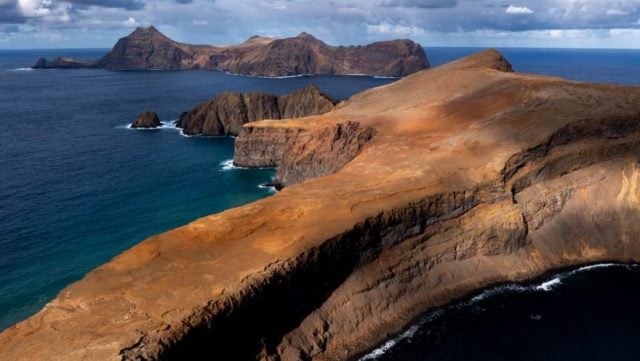
Chile eleva a 54% la protección de su mar con nuevos parques marinos en Juan Fernández y Nazca Desventuradas
Hace 2 minutos
Latin American Magazine Highlights Oceanósfera's Impact on Transformative Marine Education in Chile
Hace 4 semanas
Scientific Alert: Study Warns Over Half of Kelp Forests Along Chile and Peru Coasts May Disappear by 2050
Hace 3 meses