Original article: Cuando Allamand agradeció la ayuda de Fidel: el doble estándar de la derecha que arremete contra el aporte humanitario de Chile a Cuba
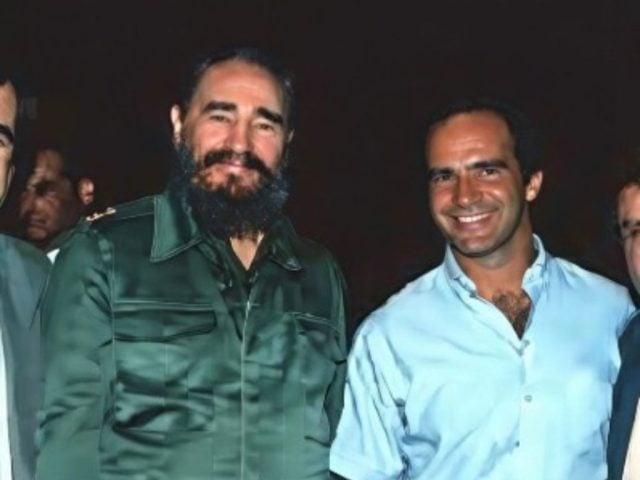
“He was a true angel for our family.” This statement did not come from a leftist supporter or a nostalgic voice from Havana. It was made by Andrés Allamand, a prominent figure from Chile’s National Renewal party, recalling how Fidel Castro intervened—according to his own account—when his son suffered a serious accident in the 1990s. “My very young son had a terrible accident… and my wife and I received a direct call from Fidel Castro, who offered assistance for our child’s treatment and recovery.”
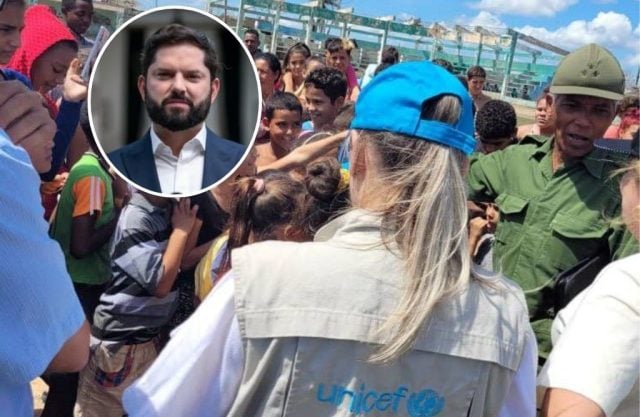
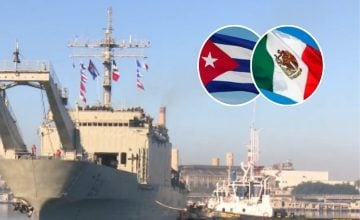
Today, this account resurfaces just as right-wing factions question Chile’s support for the Cuban people. On Thursday, February 12, 2026, the Ministry of Foreign Affairs announced that the government would donate one million dollars to UNICEF, through the Chile Fund Against Hunger and Poverty (AGCID), to address the “critical situation” on the island: providing water, health care, nutrition, equipment, and supplies for essential services, “with a special focus on children and adolescents.”
Here lies the crux of the matter: while this assistance is funneled through the United Nations and aimed at basic needs, opposition sectors interpret it as political support. For many, it reflects a double standard: when help knocks at their own door, it is welcomed; when it reaches other families, it is questioned, and calls for punishment are made.
Humanitarian Aid from Chile to Cuba: What Was Announced and Who It Affects
The Foreign Ministry’s statement does not refer to direct transfers to the Cuban government, but rather to a contribution to UNICEF. Furthermore, the Executive noted that the humanitarian catastrophe “has been exacerbated by the tightening of the economic and energy blockade” and reiterated its condemnation of “any unilateral measure or sanction” that directly impacts people’s living conditions. Specifically, when water, medical supplies, or nutrition are lacking, the burden multiplies for those who care—mostly women—and for children who cannot “wait” for political agreements.
Humanitarian Aid from Chile to Cuba: The Criticism Chorus and Hardline Stance
From the Republican Party, its president Arturo Squella argued that if the Chilean government “truly wants to provide real aid, it should support international initiatives that finally put an end to one of the harshest and most violent dictatorships […]”. Felipe Kast (Evópoli) raised the stakes: the government is “once again on the wrong side of history […] choosing to help with handouts to the cruelest and longest-lasting dictatorship in the Americas.” And Jorge Alessandri (UDI) ended with calls for sanctions: “The Cuban regime deserves the harshest sanctions for keeping that country in poverty for over 70 years.”
This was accompanied by pressure from the United States. Lawmaker Carlos Giménez wrote on X: “Chileans should primarily stand with democracy and not with a military dictatorship. Chile will face the consequences of this pathetic action.” Even from the Christian Democracy party, Eric Aedo stated that “the government […] is being directed by the PC to send aid to Cuba,” distinguishing between helping the people and “supporting a regime.” Under these circumstances, the discussion shifts from issues of water, health, and nutrition—the core of humanitarian aid—to a trench warfare dispute, where solidarity becomes a political trophy.
The Allamand–Fidel Memory That Returns Uncomfortably
And this is where the testimony that disarms the script reemerges. After that initial contact, Allamand stated that the relationship did not end with a phone call: he traveled to the island for 10 years and, according to his account, the follow-up was consistent and personal. In his words, “Fidel Castro not only helped us, but for many years he personally cared about Juan Andrés’ recovery. Often he would show up at the hospital without notice, talk to the medical teams, and make sure the medications and therapies were provided.”
Yet, Allamand left a challenging ethical hint when he recounted that after informing Fidel Castro he was an opposition leader, the Cuban leader replied: “I completely understand, and this has nothing to do with that.” Conclusion: humanitarian aid cannot be administered according to convenience. When weaponized for petty conflicts, once again, it is those with the least who bear the cost.
Watch the Interview of Andrés Allamand on Fidel Castro:
Relacionados
"Liam is Home Now": 5-Year-Old Boy Detained by ICE Becomes Symbol Against U.S. Immigration Raids
Hace 2 semanas