Original article: La pieza chilena del tablero: Kast y el escenario de extrema derecha continental
By Leopoldo Lavín Mujica
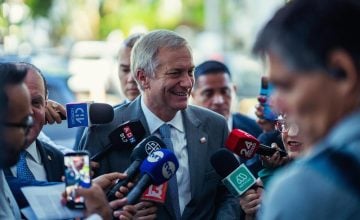
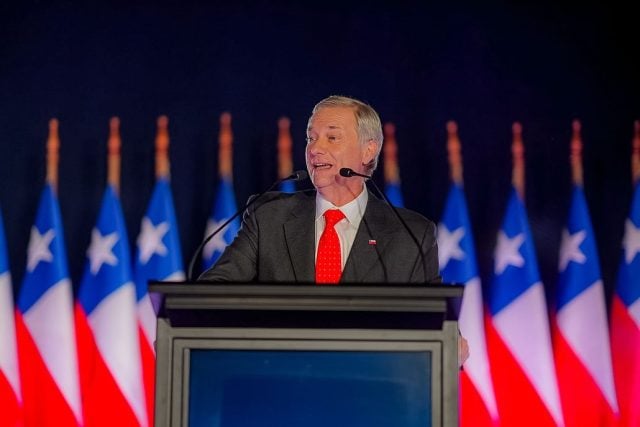
A far-right scenario is being established from which José Antonio Kast’s government will operate.
This is neither an exaggeration nor a rhetorical flourish: the actual events surrounding the installation of Chile’s next government are shaping a geopolitical landscape designed by and for the continental extreme right, where Chile will function not as a sovereign nation but as a subordinate administrator of imperial interests in the region.
The evidence is compelling. While Chile decides who will be its next ambassador in Washington—Andrés Ergas, a businessman; Rodrigo Yáñez, a former undersecretary under Piñera; or a third name kept confidential—the Trump administration has already set clear rules of engagement.
The revocation of visas for three high-ranking Chilean officials, led by Minister Juan Carlos Muñoz, was not a minor diplomatic incident or a careless act by Ambassador Brandon Judd. It was an explicit message, a warning that any technological or commercial engagement with China will bear immediate political consequences. It was, in short, the horse’s head on the table before the conversation even began.
In response, Kast’s inner circle has not defended national sovereignty nor called for a diversification of international relations that would benefit the Chilean people. Instead, there was a hasty dispatch of a delegation—comprising future authorities from Foreign Affairs, Finance, and Economy—to present themselves to the Washington Chamber of Commerce, resembling more a feudal act of submission than a diplomatic endeavor between independent nations.
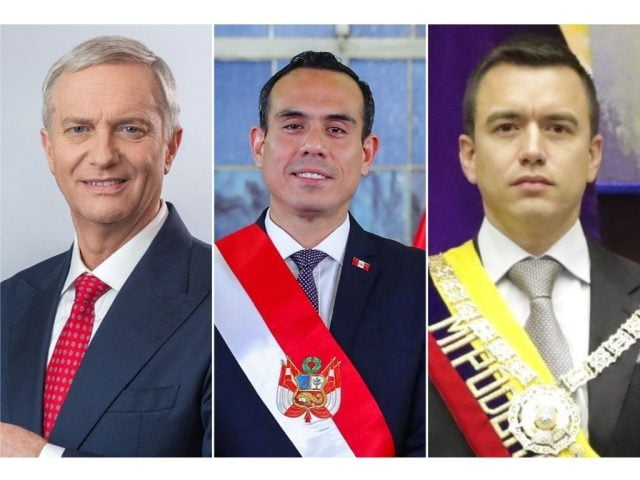
This extreme right scenario has a historical reference: the Monroe Doctrine, now resurrected under the Trump administration with the explicit aim of reaffirming U.S. dominance over the Western Hemisphere. However, unlike in past eras, today it has local collaborators who not only accept these rules but celebrate them.
Kast’s participation in the ‘Shield of the Americas’ summit in Miami is not merely symbolic: it formally incorporates Chile into a far-right political-military alliance that acts as an instrument of American interests in the region. The former diplomats calling it a ‘kissing of Trump’s hand’ fall short: it represents a public assumption of strategic subordination.
The central contradiction revealed by this process is unavoidable. China purchases 40% of Chile’s exports and is a vital commercial partner for sectors such as copper and agribusiness. The national business elite needs to keep that market open. However, the ideological alignment with Trump pushes in the opposite direction, demanding that Chile ‘choose sides’ under the imperial premise that ‘the hemisphere belongs to us.’
The future ambassador—whether Ergas, Yáñez, or another—will face the impossible task of reconciling the irreconcilable: managing Washington’s pressure without provoking commercial reprisals from Beijing.
But this ‘crisis management’ is not impartial. The ambassadorial candidates do not come from a tradition of state diplomacy but from the business world and previous right-wing governments. These men operate under the logic that international relations serve as a sales department for large enterprises, where national interests are subordinated to the business motives of export sectors.
What is truly at stake, and what the dominant narrative hides, is national sovereignty or the political responsibility of the Chilean state. The submarine cable project Chile-China Express, which the United States has blocked under accusations of ‘malignant foreign piracy’ and ‘actors threatening citizens’ privacy’, is merely an excuse to prevent Chile from developing independent technological infrastructure.
Behind the rhetoric of national security lies the real contest over which power controls data, communications, and ultimately the ability to make decisions affecting the people.
The so-called ‘pragmatic strategic autonomy’ that some experts propose as a solution—favoring the U.S. in defense and cybersecurity while maintaining technical conditions not to discriminate against China commercially—amounts to an empty formula. There can be no autonomy when a foreign power decides which technological projects a country can develop or when it participates as a subordinate in military summits orchestrated in Washington. It is simply a euphemism for describing a foreign policy that surrenders sovereignty in exchange for scraps.
Meanwhile, the Chilean people—who have fought for decades for real independence, who need jobs, development, and control over their resources, who demand that the wealth generated from their natural resources and labor be redistributed for the benefit of the majority, not just to swell the coffers of extractive and exporting oligarchies—are watching their future being negotiated in Washington offices and business salons.
The ‘rough navigation chart’ that the next ambassador will have to steer is not a technical challenge; it is the roadmap of a right that has decided that Chile will, once again, be a colony, but this time with rulers who applaud their own subjugation.
The question we must ask from the progressive and leftist perspectives is: Where is the popular will in all this? Where are the mechanisms for Chile to decide its own destiny, to diversify its international relationships without succumbing to any empire, so that the wealth we generate from our work and natural resources remains with those who produce it?
As the far right prepares to operate from the scenario it has helped build—of voluntary subordination, of renunciation of sovereignty, of handing over our resources to transnational corporations—our task is to denounce this setup and construct the alternatives our people deserve.
Alternatives that prioritize the interests of the majority, not those of export elites or foreign powers. Alternatives that defend a truly independent, dignified, and sovereign Chile where wealth is finally redistributed with social justice.
Leopoldo Lavín Mujica
Relacionados


Return of Pinochet's Ideology to Power in Chile: Statement from the New Anti-Capitalist Party – France
Hace 2 meses