Original article: China se inicia el año del Caballo de Fuego: el plan para el nuevo período de la milenaria nación
Amidst a backdrop of geopolitical tensions, rapid technological advancements, and a reconfiguration of global power dynamics, the People’s Republic of China has outlined its strategic roadmap for the coming five years. The Proposal from the Central Committee of the Communist Party of China for the 15th Five-Year Economic and Social Development Plan was approved on October 23, 2025, and sets forth the guidelines that will steer the nation towards the fundamental achievement of socialist modernization by 2035.
By Bruno Sommer
The document designates the 15th Five-Year Plan as a crucial period for laying solid foundations and fully unleashing productive forces, aiming for significant advancements in socialist modernization.
Following a 14th Plan overshadowed by a global pandemic and a complex international environment, authorities emphasize they have consolidated economic growth, bolstered scientific and technological innovation, made strides in ecological transition, and reinforced national security.
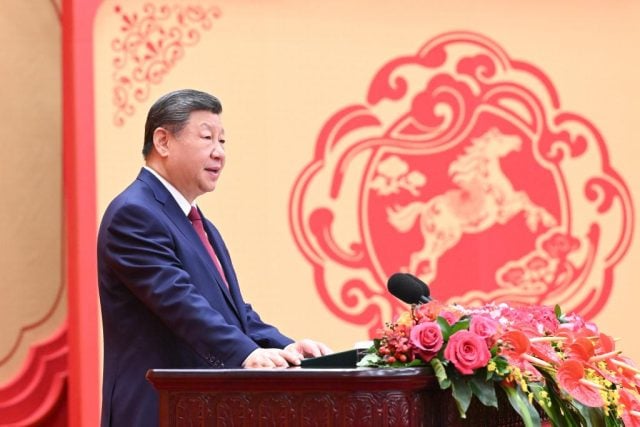
In his New Year’s address, President Xi Jinping remarked that the Year of the Snake, which is coming to a close, has been remarkable, noting that China faced challenges and achieved new milestones despite a complex and ever-changing domestic and international context. He highlighted the enhancement of the nation’s economic strength, scientific and technological capabilities, defense strength, and overall national integrity, as reported by Xinhua.
As the Year of the Fire Horse begins, the strategic goal is clear; by 2035, China aims to achieve, among other objectives, a per capita GDP comparable to moderately developed countries, realize a substantial leap in economic, scientific, technological, and defense power, and secure a «happier and more beautiful» life for its population.
High-Quality Development: The New Paradigm
One of the central concepts of the 15th Plan is high-quality development. This focuses not merely on growth but also on transforming the productive structure and enhancing efficiency.
Among the primary objectives are:
- Maintaining growth within a reasonable range.
- Increasing total factor productivity.
- Strengthening domestic demand as the main driver.
- Building a large unified national market.
The document insists on overcoming structural «bottlenecks,» reducing regional imbalances, and boosting resilience to external risks.
The strategy also emphasizes strengthening domestic demand as a strategic pivot. This includes reviving consumption through income increases and improved public services, expanding investment in strategic infrastructures, and removing barriers that fragment the national market.
China Gallops Towards Building Harmony
In this determined new five-year plan, China reflects on its millennia-old history and resolves to advance in a programmed and responsible manner. The 15th Plan is more than just a technical document; it serves as a compass pointing towards 2035, a roadmap towards the promise of socialist modernization that seeks to harmonize economic strength, social stability, and cultural renewal. Within its pages lies the conviction that development should not only be rapid but also solid, balanced, and capable of weathering global storms.
The key term is «quality.» Quality in growth, innovation, and the everyday lives of the people. It focuses on transforming the vast internal market into a reliable engine, enhancing productivity, and revamping traditional industries through intelligence and technology. Progress is no longer measured only by statistics but by efficiency, resilience, and shared well-being.
At the heart of the plan burns the flame of scientific and technological self-improvement. Semiconductors, artificial intelligence, clean energy, and future networks position China at the forefront of the new industrial revolution. Thus, science is presented as the backbone of the nation, with talent as its circulating lifeblood, driving a transformation that aims to be profound and enduring.
However, it is not all about laboratories and steel. The plan also envisions fertile fields, renewed villages, and more human-centered cities. It strives to bridge regional gaps, modernize agriculture, and protect land and water while building a green and low-carbon economy. Modernization, in this vision, should not tear apart the landscape but reconcile growth with nature.
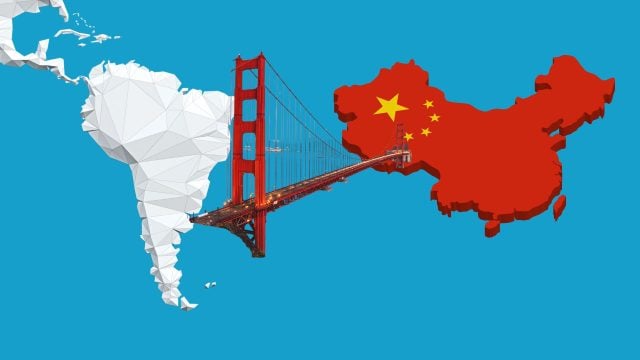
Finally, the horizon opens outward. High-level openness, renewed trade, and cooperation with the world under the banner of mutual benefit characterize the 15th Plan, which emerges as a bridge between the past and the future. It is a commitment to stability in uncertain times where China continues to promote peace and the development of a shared future.
A future that is not an individual destination achieved in isolation, but a bridge we weave together from the present. Every step we take, every dream we spin, and every shared struggle is a cornerstone of that construction. For a future built not by all hands is merely a chimera; only in the meeting of our hopes, in the melting pot of our differences, can we forge a tomorrow that accommodates not only our steps but also those to come.
By Bruno Sommer
Relacionados

From Barracks to Prison in Brazil: Military Sentenced for Plotting Lula's Assassination
Hace 3 meses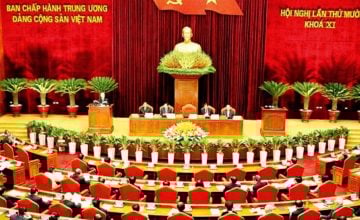

Positive Outcome in La Araucanía: 1,500 Fewer Crimes in December and Historic Drug Trafficking Bust
Hace 2 meses