Original article: Embajador de China niega riesgos del cable submarino y descarta que “socave la seguridad regional”
Chinese Ambassador Dismisses Concerns Over Submarine Cable, Affirms No Threat to Regional Security
The Chinese diplomat defended the fiber optic submarine cable project aimed at directly linking Valparaíso with Hong Kong, asserting that it complies with Chilean legislation and does not pose a threat to third countries, referencing the United States. Additionally, he supported the government authorities, emphasizing their efforts to maintain Chile’s leadership in the digital economy and connectivity.
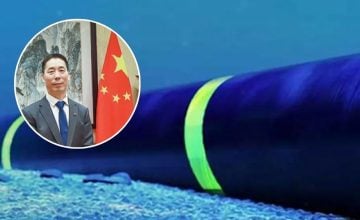
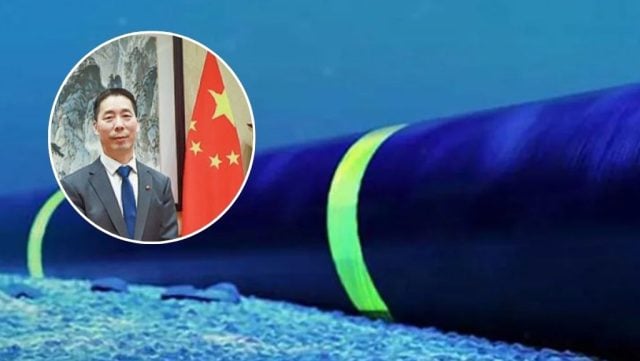
Amidst controversy surrounding the submarine cable project intended to connect China and Chile, the Chinese ambassador to Chile, Niu Qingbao, staunchly defended the initiative, denied it poses any risk to regional security, and categorically dismissed any impact on third-party interests, clearly addressing criticisms from the U.S. government.
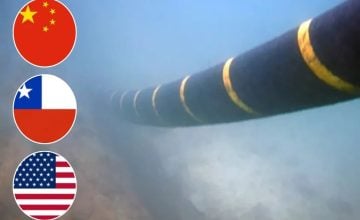
It is important to note that on November 26, 2035, a consortium comprised of major Chinese tech companies—including China Telecommunications Corporation, China Mobile Communications Group, and China United Network Communications Group—submitted a formal request to the Undersecretariat of Telecommunications (Subtel) for a concession to develop the Chile-China Express, a submarine fiber optic cable project aimed at connecting Valparaíso directly with Hong Kong, establishing a direct data route across the Pacific.
This initiative, which involves an investment of nearly $500 million and is currently under evaluation, has sparked ire in Washington. Last Friday, U.S. Secretary of State Marco Rubio stated that it could “undermine regional security” and announced the revocation of visas for three senior Chilean officials: the Minister of Transportation and Telecommunications, Juan Carlos Muñoz, the Undersecretary of Telecommunications, Claudio Araya, and his chief of staff, Guillermo Petersen.
To justify this controversial measure, the administration of U.S. President Donald Trump argued that these officials “with knowledge, directed, authorized, financed, and provided substantial support and/or engaged in activities that compromised critical telecommunications infrastructure and undermined regional security in our hemisphere.”
From the government of President Gabriel Boric, it was made clear that they will not yield to the pressures of the Republican magnate and will continue the evaluation of the Chile-China Express.
“We reject any form of interference in the sovereign decisions we may make in our country,” Foreign Minister Alberto van Klaveren stated to the press.
The chancellor noted that Washington’s actions in this case have been “inexplicable” and “arbitrary,” reaffirming that “Chile’s security and sovereignty are not at risk, let alone that of the U.S. due to any actions taken by our country.”
Chinese Ambassador: Submarine Cable ‘Will Not Undermine Regional Security or That of Other Countries’
During a visit to Tomé, Concepción Province, Ambassador Niu Qingbao responded to inquiries from Radio Bío Bío, emphasizing that the submarine cable project linking Valparaíso directly with Hong Kong benefits both parties, adheres to Chilean legislation, and does not harm the United States.
The diplomat framed the initiative within the context of strong bilateral relations, stating that “above all, China and Chile are very important partners.”
Based on this, he argued that “there is a significant need to improve connectivity between China and Chile, even between Chile and Asia.” These remarks aim to position the submarine cable not as an isolated event, but as a logical step in deepening commercial and technological ties between the two nations.
The ambassador went further by highlighting the concrete benefits the project would bring to Chile, suggesting that constructing this infrastructure would not only enhance communication but also solidify “Chile’s position as a leader in the digital economy across Latin America.”
In his statements to Radio Bío Bío, Niu Qingbao reiterated the reciprocal nature of the agreement, asserting that “this project meets the needs of both parties and is beneficial for both.”
To reinforce his argument, the Chinese representative praised the efforts of local authorities in the process, highlighting their commitment to national development.
“What Chilean officials are doing, in our view, is very favorable to Chile’s national interests, the friendship between China and Chile, as well as being beneficial to maintaining Chile’s leadership in the digital economy and connectivity,” he added, contrasting with the accusations from Washington.
The central point of his defense, however, focused on dispelling doubts regarding security and external interference. In this regard, Niu Qingbao was emphatic in stating that the initiative strictly adheres to national sovereignty and Chilean regulations.
“Any project must comply with the laws of each country. Projects like this submarine cable fully comply with Chilean laws and do not harm any third party (the United States); thus, they will not undermine regional security or the security of other countries,” he asserted, dismissing claims that this initiative could “undermine the security or safety of other countries,” as alleged by the U.S. government.
Relacionados

Boric on the Chinese Cable: "Chile Will Not Bow to Threats" as Decision Passes to Kast
Hace 56 minutos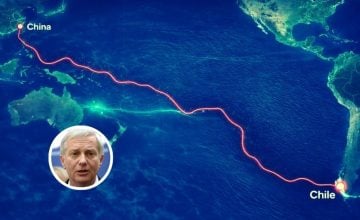
Washington Oversteps: U.S. Sanctions on Chinese Cable Ignite Digital Sovereignty Dispute and Corner Kast
Hace 19 horas